
The difference between a bathroom renovation that pays off and one that doesn't usually comes down to scope control, material selection, and knowing which upgrades are visible and valued versus which ones are gratifying but financially neutral. This guide walks through the planning principles and specific decisions that consistently produce the strongest returns.
Understand What ROI Actually Means in This Context
When renovation resources talk about ROI for bathroom projects, they're typically referencing cost recoupment at resale – how much of what you spend you get back when you sell. According to Remodeling Magazine's annual Cost vs. Value report, a mid-range bathroom remodel nationally returns approximately 66–70% of its cost at resale. An upscale remodel returns closer to 45–55%. That gap matters: the more you spend beyond what the market supports for your neighborhood and home price tier, the worse your financial return gets.
ROI in renovation isn't just about recoupment percentage, though. It also includes the daily-use value you get from the improvement while you're living in the home, the risk reduction that comes from fixing problems before they become expensive (water damage, failing fixtures, inadequate ventilation), and the reduction in buyer objections when you eventually list the home. A bathroom that's visibly dated, even if fully functional, gives buyers a negotiating point. A renovated bathroom removes that point and supports your asking price.
The practical implication is that ROI optimization requires a clear view of your timeline. If you're renovating to sell in the next six to eighteen months, your decisions should skew toward what photographs well and removes buyer objections. If you're staying for ten years, the equation shifts toward durability, daily functionality, and upgrades you'll genuinely use and appreciate.
Set the Right Budget for Your Home's Value Tier
One of the most common ROI mistakes in bathroom renovation is over-investing relative to the home's overall value. A $30,000 bathroom renovation in a home worth $250,000 almost never returns its cost, because buyers in that price range don't expect or pay a premium for a luxury bathroom. The renovation creates a mismatch between one room and the rest of the home that sophisticated buyers actually discount rather than reward.
A reasonable rule of thumb is to target a bathroom renovation budget of 5–10% of your home's current market value for a full remodel, and 1–3% for a cosmetic refresh. On a $400,000 home, that means a full remodel budget of $20,000–$40,000 is defensible; going beyond that pushes into over-improvement territory unless comparable sales in your area demonstrate that buyers are paying for it.
Cost level framing for reference:
Cosmetic refresh (paint, fixtures, mirror, hardware): $1,500–$5,000, high ROI
Mid-range remodel (vanity, flooring, lighting, tile, toilet): $8,000–$18,000, solid ROI
Full renovation (layout change, new shower, complete fixture replacement): $18,000–$40,000+, ROI depends heavily on home value tier
Prioritize the High-ROI Upgrades First
Not all bathroom improvements return equal value. The upgrades with consistently strong financial return share a common trait: they're visible, they remove obvious buyer objections, and they're difficult to rationalize away during a showing or in listing photos.
Vanity and Countertop Replacement
The vanity is the first thing most people look at in a bathroom, and an outdated or builder-grade unit with a laminate top signals that the room hasn't been touched in years. Replacing it with a modern shaker-style cabinet in white, gray, or navy with an undermount sink and quartz top transforms the perceived quality of the entire room. Budget $400–$1,200 for the vanity unit and $200–$500 for a quartz or marble-look top. This is a high ROI investment because buyers can't easily look past it, and it's often a primary reason a bathroom feels dated or current.
Flooring Replacement
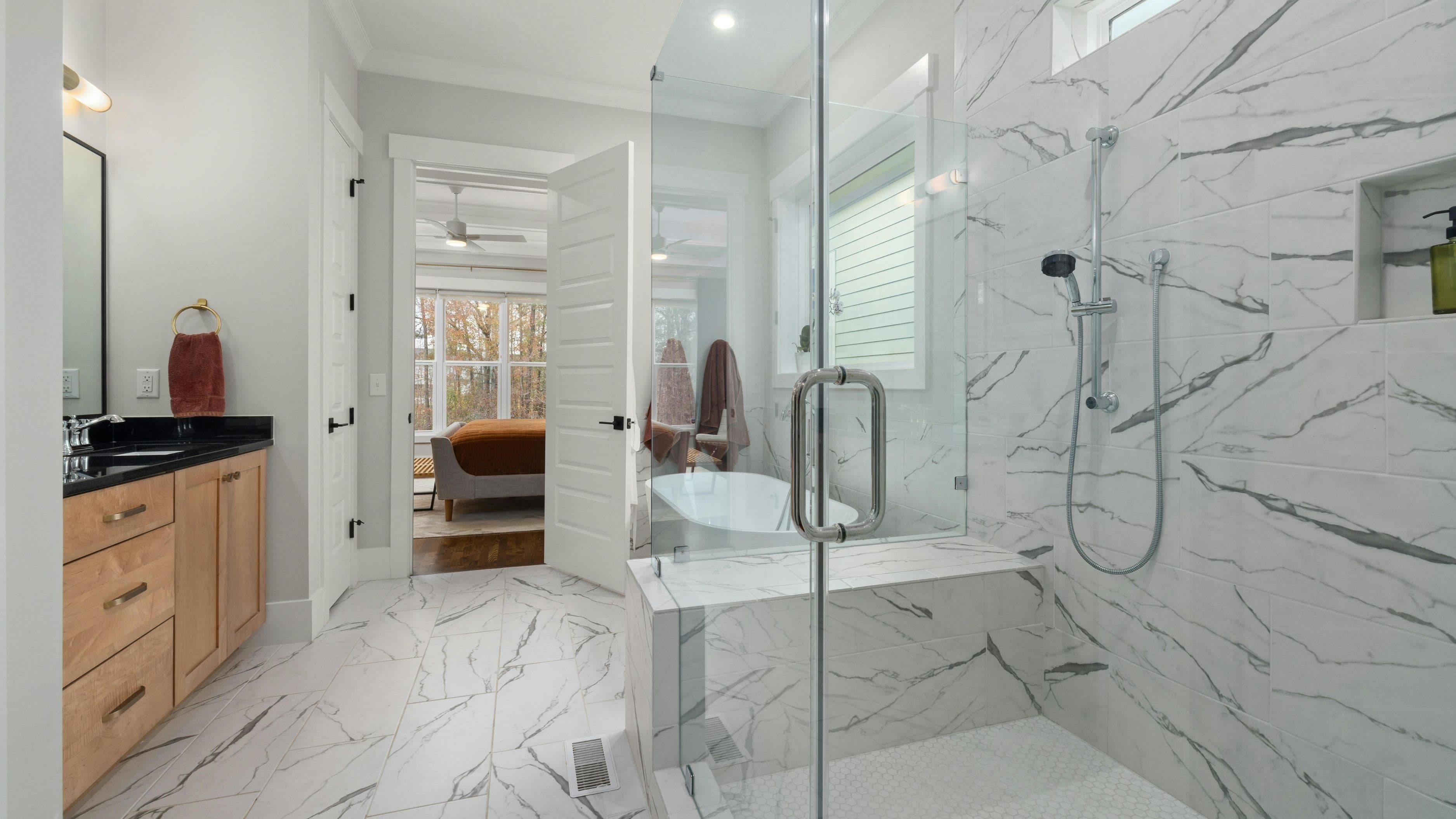
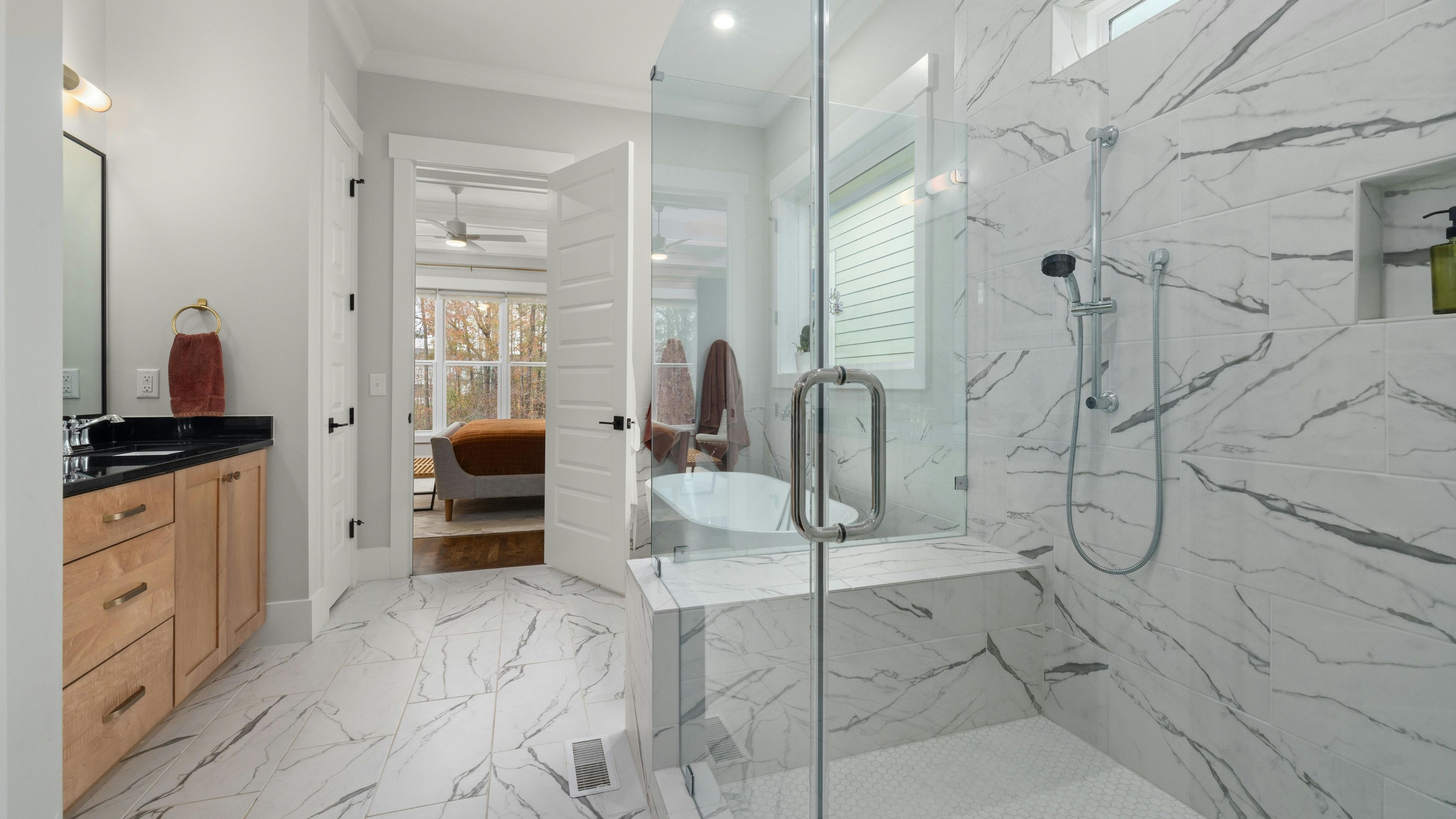
Peeling vinyl, cracked ceramic, or visibly stained grout are among the fastest ways to lose value in a bathroom showing. Luxury vinyl tile (LVT) at $2–$6 per square foot in material is a practical, waterproof replacement that photographs well and feels premium without requiring the cost of large-format porcelain. For a primary bath where you're investing more, 12x24 or 24x24 porcelain tile creates a genuinely high-end result that most buyers associate with significantly more expensive renovations.
Shower Upgrade
A dated, curtained, or tiled-in shower with cracked grout and a weak showerhead creates a strong negative impression regardless of what else is updated. The highest-impact improvement short of a full retile is replacing the shower curtain or framed glass with a frameless glass enclosure ($800–$2,000 installed). This single change opens the space visually and reads as premium immediately. If the tile is in poor condition, re-grouting and re-caulking combined with new glass can dramatically improve appearance for $500–$1,000 in labor and materials.
Lighting
Builder-grade bar lights create harsh shadows and make a bathroom feel institutional. Replacing with flanking sconces at mirror height or a high-quality LED vanity bar with warm color temperature (2,700–3,000K) typically costs $100–$300 in materials and an hour of installation. The improvement in appearance and photography is disproportionate to the cost, and poor lighting is something buyers feel even when they can't articulate why a space looks off.
Fresh Paint, Caulk, and Fixtures
New caulk around the tub, base of the toilet, and any tile transitions costs $15–$25 in materials and takes two hours. Fresh paint in a neutral, timeless color (warm white, soft greige, pale sage) costs $30–$55 for a gallon of mold-resistant bathroom paint. Replacing mismatched or dated towel bars, toilet paper holders, and robe hooks with consistent brushed nickel or matte black hardware runs $100–$200 for a full set. Together, these updates cost under $300 and complete the visual cohesion that makes the rest of the renovation look intentional.
Understand What Doesn't Return Its Cost
Some bathroom upgrades feel significant but don't translate into proportional financial return. Knowing which ones to avoid or deprioritize prevents budget from going to the wrong places.
Radiant floor heating adds real daily-use comfort but rarely moves the needle on appraisal or buyer offers in most markets. Cost: $500–$1,500 in materials plus installation. Return: minimal unless you're in a high-value home in a cold climate where it's a standard expectation.
High-end smart technology (voice-activated mirrors, smart shower controllers, digital faucets) is appealing to a specific buyer profile but polarizing to others. Most appraisers don't add value for technology features that buyers may prefer to choose themselves. Unless the target buyer profile for your home strongly skews tech-forward, this budget is better spent elsewhere.
Luxury finishes in a mid-range home – book-matched marble slabs, custom cabinetry, steam showers – return well in luxury homes where buyers expect them. In a standard three-bedroom home in a $300,000–$500,000 neighborhood, they create a mismatch that appraisers and buyers view skeptically rather than as a premium.
Layout changes are expensive and rarely necessary unless the existing layout has a serious functional problem. Moving a toilet, relocating a shower, or reconfiguring plumbing routing adds $2,000–$6,000+ in labor and materials that rarely returns at comparable value. Work with the existing layout wherever possible.
Get the Execution Right
Even the right scope and materials can produce mediocre ROI if the execution is poor. A few principles that make a meaningful difference.
Hire trades for tile, plumbing, and electrical. Poorly set tile, improperly sealed wet areas, and plumbing connections that fail shortly after sale are expensive problems that generate liability and eat into your return. The premium for professional installation in a bathroom – where the consequences of poor work are water damage and code violations – is worth it.
Maintain consistent finishes throughout the room. Mixing chrome fixtures with matte black hardware, or pairing a modern vanity with traditional towel bars, creates visual dissonance that buyers register even if they can't name it. Choose one metal finish and apply it to every hardware element in the room.
Don't skip the small things before photography. A beautiful new vanity photographed with a cracked caulk line next to the tub and a hollow-core door with scuffed paint still looks like a renovation that wasn't finished. The final 10% of a bathroom renovation – touch-up paint, new outlet covers, a clean caulk line, a fresh toilet seat – costs almost nothing but dramatically affects how the space photographs and shows.
What to Avoid
Renovating the bathroom while leaving obvious deferred maintenance elsewhere in the house creates a contrast that actually draws attention to problems rather than hiding them. A sparkling new bathroom next to a damaged ceiling, stained carpet in the hallway, or a clearly outdated kitchen doesn't raise overall value as much as a more balanced set of improvements across the home.
Starting a renovation without permits for work that requires them – particularly electrical and plumbing changes – creates problems at resale when buyers request permit records. Work done without permits can delay closings, require remediation, and create liability.
Choosing finishes based purely on personal preference without considering resale. Bold, trend-forward choices – vivid colored tile, statement wallpaper, unconventional vanity shapes – can look stunning in a design context but narrow your buyer pool. In a bathroom you're renovating for resale, neutral and timeless always outperforms distinctive and specific.
FAQ
How much does a bathroom remodel increase home value? According to Remodeling Magazine's Cost vs. Value report, a mid-range bathroom remodel typically adds roughly $13,000–$18,000 in resale value on a $10,000–$20,000 investment in most US markets. Results vary by region, home value tier, and the specific upgrades made. The strongest returns come from projects that address visible obsolescence and align with neighborhood comps.
Is it better to remodel one bathroom fully or update multiple bathrooms partially? Prioritize the primary bathroom first – it carries the most weight with buyers and appraisers. A full update to the primary bath typically returns more value than spreading the same budget across two or three partial updates. Secondary bathrooms benefit most from cosmetic refreshes (paint, fixtures, caulk, mirror) that remove obvious age without requiring full renovation budgets.
Do I need a contractor for a bathroom remodel? For a cosmetic refresh – painting, hardware replacement, mirror swap, caulk – competent DIY is appropriate and saves significant money. For tile work, shower installation, vanity plumbing, or any electrical changes, licensed trades are strongly recommended. The consequences of poor workmanship in a wet environment include water damage, mold, and code violations that cost far more to fix than the labor savings.
What's the most cost-effective single upgrade for bathroom ROI? Fresh paint, new caulk, and updated fixtures consistently deliver the highest ROI of any bathroom upgrade because the cost is low and the visual impact is high. If you can only spend $500 on a bathroom, spend it here before anywhere else.
The Bottom Line
Getting strong ROI from a bathroom renovation means spending on the right things, at the right quality level, for your home's value tier – and having the discipline to stop before crossing into over-improvement. The upgrades that return best are the ones buyers see first, feel confident about, and can't easily look past: a current vanity, clean flooring, updated lighting, and a bathroom that looks finished rather than assembled. Keep the scope controlled, the finishes neutral, and the execution professional, and a bathroom renovation is one of the most reliable home investments you can make.
📚 Sources
Remodeling Magazine – 2024 Cost vs. Value Report: https://www.remodeling.hw.net/cost-vs-value/2024/
National Association of Realtors – Remodeling Impact Report: https://www.nar.realtor/research-and-statistics/research-reports/remodeling-impact
This Old House – Bathroom Remodeling Cost Guide: https://www.thisoldhouse.com/bathrooms/reviews/bathroom-remodel-cost
Consumer Reports – How to Renovate a Bathroom: https://www.consumerreports.org/home-garden/home-improvement/bathroom-renovation-guide/
HomeAdvisor – Bathroom Remodel Cost Guide: https://www.homeadvisor.com/cost/bathrooms/remodel-a-bathroom/
-jhajrFUGfI3zCQGjpAWcxuNPi1zUTB.jpg&w=3840&q=75)