
Assess the Damage First
Walk around your room with a bright flashlight held at an angle to the wall. This technique creates shadows that reveal every dent, crack, and nail hole you might miss in normal lighting. Run your hand gently across suspicious areas—you'll feel imperfections your eyes can't detect. Make a mental map or snap photos of problem spots so you don't miss any during repairs.
Fill Nail Holes with Spackling Paste
Grab a container of lightweight spackling paste (about $5 at any hardware store) and a putty knife. Press the paste into each nail hole using your finger or the knife, slightly overfilling each spot. Let it dry for 30 minutes, then sand smooth with 220-grit sandpaper until you can't feel the repair when you run your fingers over it.
Repair Hairline Cracks
Those thin, spiderweb-like cracks need attention before painting. Use a flexible acrylic caulk instead of spackling—it moves with the wall and prevents the crack from reopening. Cut the caulk tube tip at a 45-degree angle, squeeze a thin bead along the crack, then smooth it with your wet finger. The moisture keeps it from sticking to your skin while creating a seamless finish.
Fix Medium Cracks with Joint Compound
Cracks wider than a credit card edge require joint compound (also called drywall mud). First, widen the crack slightly with a utility knife—this gives the compound something to grip. Apply joint compound with a 4-inch putty knife, pressing it deep into the crack, then scrape excess off the surface. After it dries (usually 24 hours), apply a second thin coat feathered 2-3 inches beyond the first application. Sand smooth once completely dry.
Patch Large Holes with a Repair Kit
Holes larger than a quarter need mesh or a drywall patch kit (around $8-12). Peel-and-stick aluminum patches work beautifully for holes up to 4 inches—just stick it over the hole and apply three thin coats of joint compound, letting each dry between applications. Sand between coats with increasingly fine sandpaper (120-grit, then 220-grit) for a surface that disappears under paint. For bigger holes, consider using a California patch technique where you cut a square around the damage and insert a backing board.
Address Corner Damage
Banged-up corners are common and surprisingly easy to fix. For small chips, use corner bead repair compound that's designed specifically for these high-impact areas. Apply it with a corner knife (or two putty knives held at right angles) to recreate that crisp edge. If the corner is severely damaged, consider installing a new metal or plastic corner bead—it's surprisingly affordable at $3-5 per piece and provides a guide for your compound application.
Sand Everything Smooth
After all repairs are bone-dry, sand every patched area using 220-grit sandpaper on a sanding block. Sand in circular motions, blending the edges of your repairs into the surrounding wall so there's no visible boundary. Wear a dust mask—drywall dust is extremely fine and irritating to breathe. Wipe down walls with a slightly damp cloth afterward to remove all dust particles that would otherwise show through your paint.
Prime Your Repairs
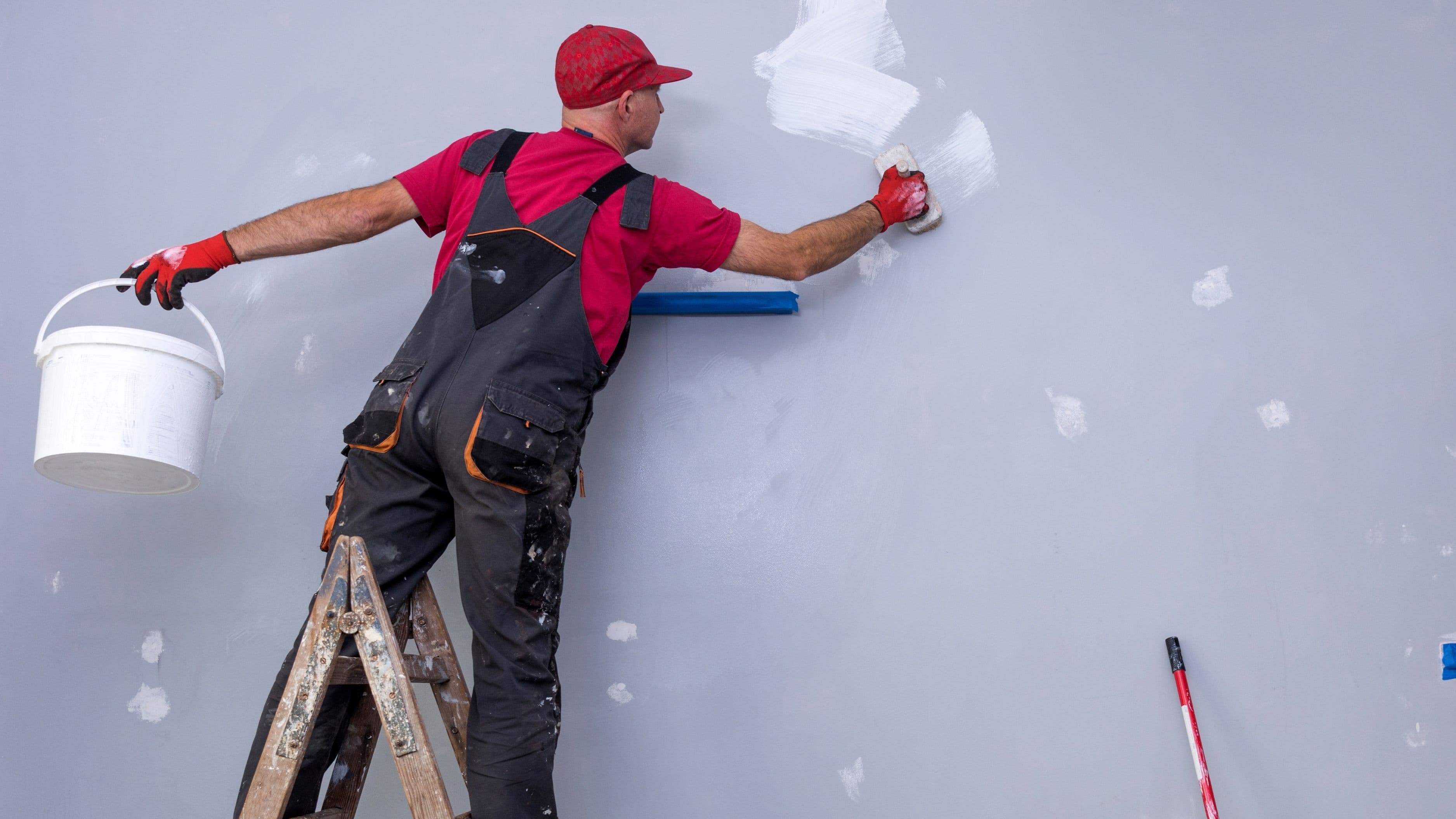
Here's where many DIYers cut corners and regret it: unpainted repairs will absorb paint differently than the existing wall, creating visible patches even after multiple coats. Use a stain-blocking primer on all repaired areas, brushing it an inch or two beyond each repair. This creates a uniform surface texture and prevents those telltale "mystery spots" where repairs show through your finished paint job.
Check for Texture Matching
If your walls have texture (orange peel, knockdown, or popcorn), you'll need to replicate it after repairs. For orange peel texture, use diluted joint compound in a spray bottle. For knockdown texture, apply joint compound with a trowel and partially flatten it with a blade after a few minutes. Practice on cardboard first—texture matching takes a light touch but dramatically improves your results.
Clean Wall Surfaces Thoroughly
Even walls without visible damage need cleaning before painting. Mix warm water with a drop of dish soap and wipe down all walls with a sponge, working from bottom to top to prevent drip marks. Pay special attention to areas around light switches, doorknobs, and baseboards where oils from hands accumulate. Let walls dry completely—painting over damp surfaces causes adhesion problems and can lead to mildew growth later.
Tackle Stubborn Stains
Water stains, marker, or crayon won't disappear under regular primer. Use a shellac-based primer (like BIN or Kilz) on these spots—it seals in stains that would otherwise bleed through your beautiful new paint. These primers smell strong, so ventilate well, but they're absolute magic for problem areas. One coat usually does the job, even on the worst stains.
Protect Your Investment
After all this prep work, protect your repairs with quality painter's tape along trim and edges. Remove tape while the final coat is still slightly tacky (not wet, not fully dry) to prevent peeling. Your walls are now prepped better than many professional jobs, ready to showcase that paint color you've been dreaming about. The time you invested in proper wall repair will pay dividends in a flawless finish that lasts for years.
Pick one damaged spot on your wall right now—just one—and fix it today. You'll feel the satisfaction immediately, and that momentum will carry you through the rest. Your transformed room is just a few simple repairs away.
📚 Sources
1. National Association of Home Builders. (2023). "Cost Value Report: Interior Paint Projects." Remodeling Magazine.
2. This Old House. (2024). "The Complete Guide to Drywall Repair." Time Inc.
3. Family Handyman. (2023). "Professional Painting Prep Techniques That Make a Difference." Trusted Media Brands, Inc.
-jhajrFUGfI3zCQGjpAWcxuNPi1zUTB.jpg&w=3840&q=75)