If you've been going back and forth on this, here's the structured breakdown you need to make the right call for your situation.
What You're Actually Choosing Between
Before comparing the two, it helps to be clear about what each one actually involves – because "built-in bookcase" can mean several different things depending on how it's constructed.
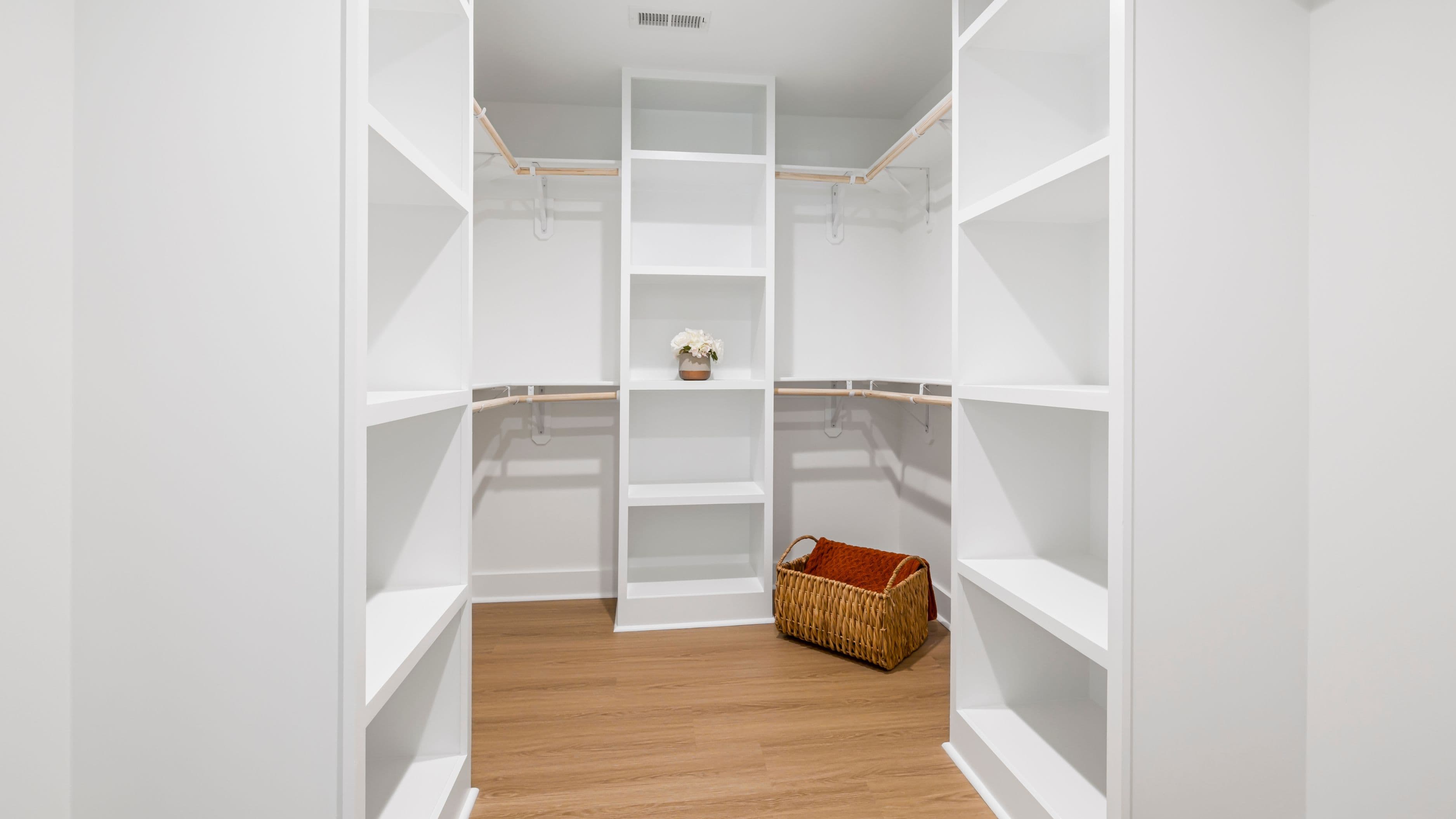
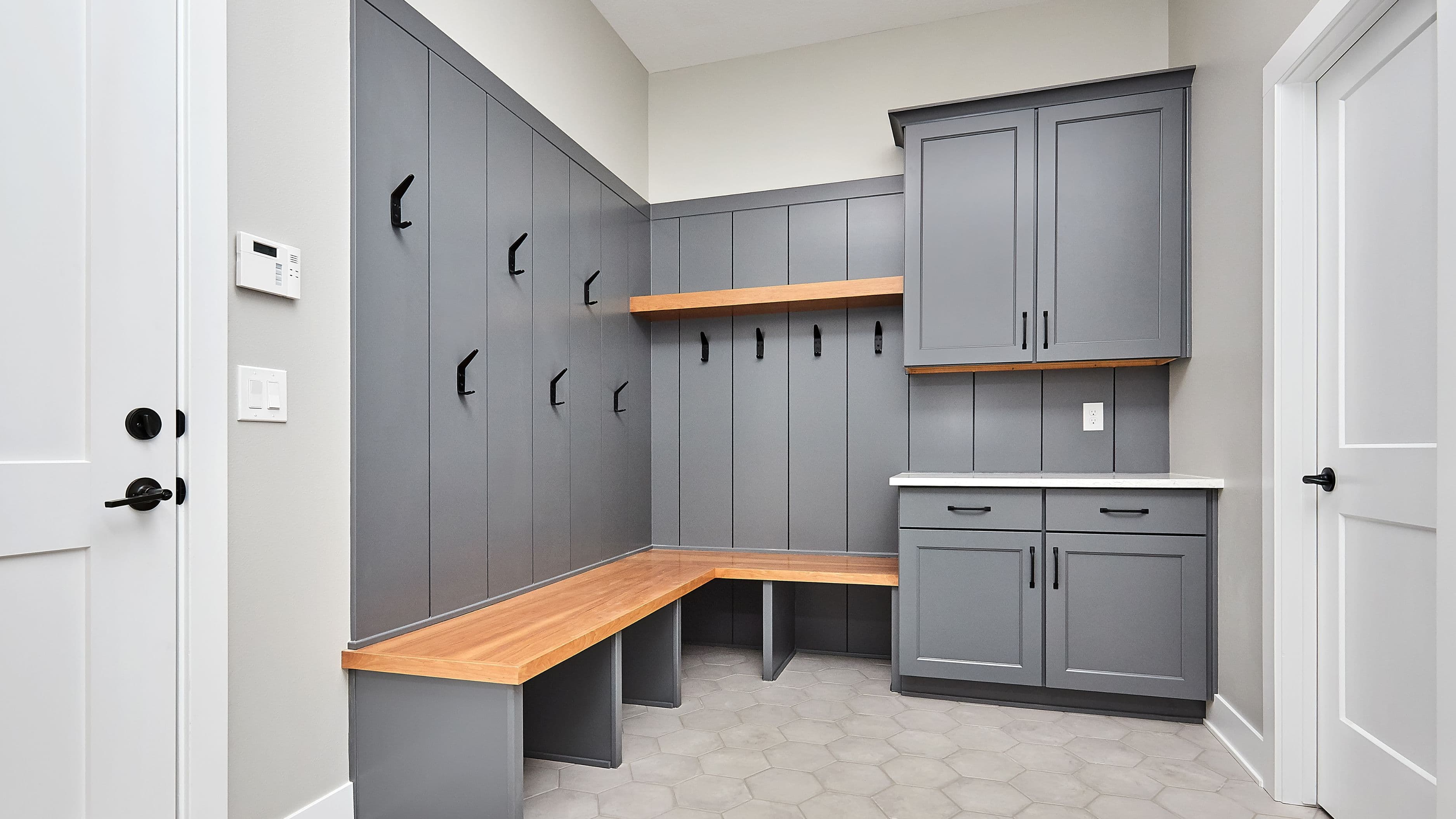
A true built-in bookcase is custom-framed or cabinet-built directly into the wall structure, with a face frame, trim, and finish that make it look like an architectural feature of the room. It may incorporate the wall's baseboard and crown molding seamlessly, and when done well, it reads as if the house was designed with it in place. It does not move.
A semi-custom built-in uses modular cabinet boxes – IKEA BILLY units, for example, or similar cabinet carcasses – installed against the wall with custom trim, crown molding, and paint applied over top to simulate the look of a true built-in at significantly lower cost. The result can be nearly indistinguishable from a true built-in to most eyes, at roughly 30–50% of the cost. This is worth knowing because it expands the built-in option considerably for budget-conscious homeowners.
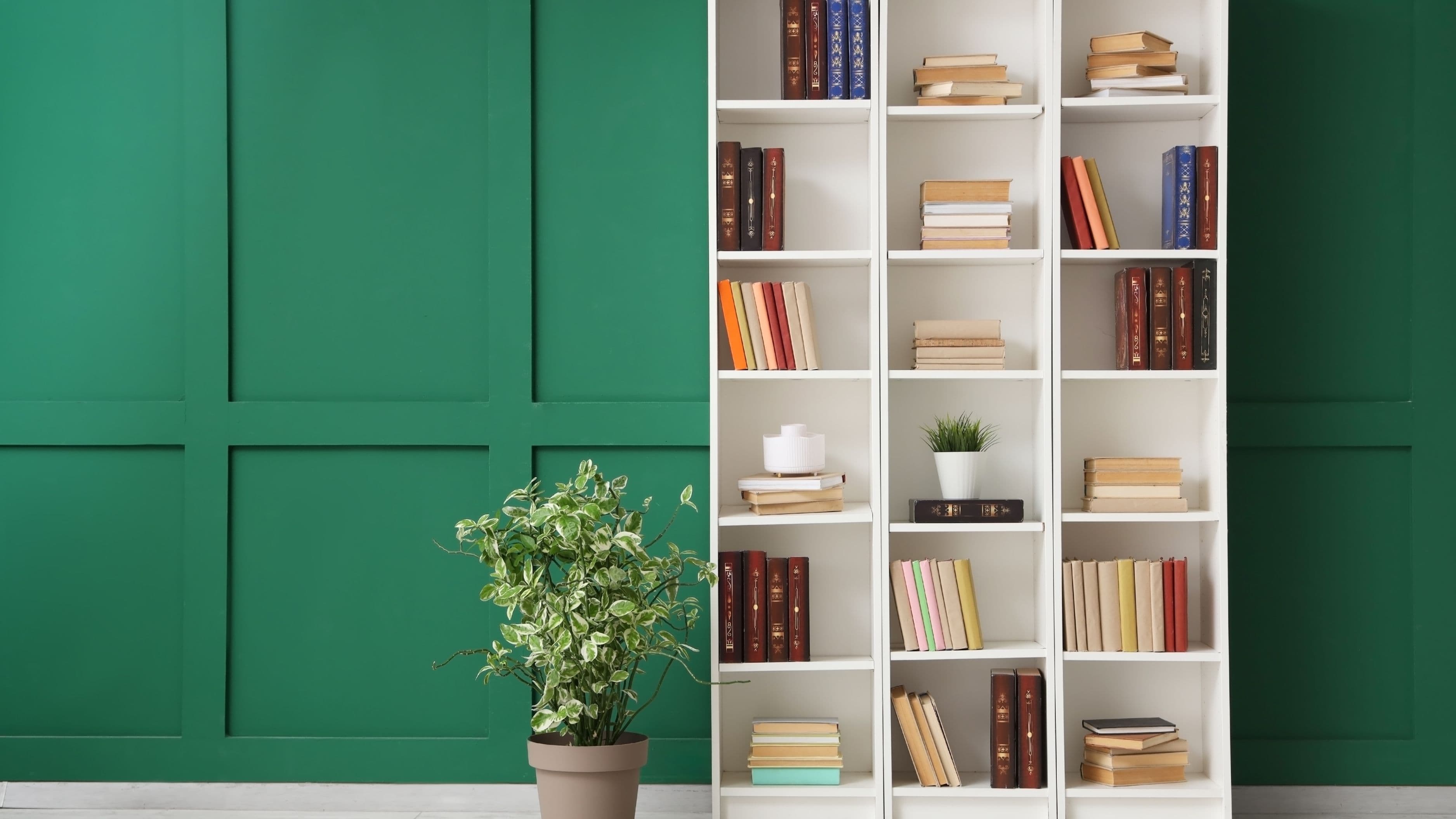
Freestanding shelving ranges from basic retail bookcases to solid hardwood furniture-grade units to heavy-duty adjustable shelving systems. The defining characteristic is that they stand on their own, connect to the wall only by a safety bracket at the top (required in most building codes and essential in earthquake zones), and can be relocated.
Built-In Bookcases: The Case For
The primary reason to choose a built-in is that it becomes part of the house. When you walk into a room with floor-to-ceiling built-ins flanking a fireplace or wrapping an entire wall, the bookcase isn't furniture in the room – it is the room. That architectural integration is something freestanding shelving cannot replicate, regardless of quality or cost.
Visual impact and perceived value are measurable advantages. Real estate professionals consistently note that well-executed built-ins – in a library, home office, living room, or flanking a fireplace – add perceived value that buyers respond to positively. They signal craftsmanship and thoughtful design. That perception has real dollar value at resale, though quantifying it precisely is difficult since it's always bundled with the overall quality of the renovation.
Customization to your exact space is another significant advantage. A built-in can be designed to use every inch of a wall, accommodate an awkward sloped ceiling, frame a window seat, or incorporate integrated lighting, drawers, and cabinets that a freestanding unit simply can't match. If your walls aren't perfectly square – and most aren't – a built-in can be scribed and fitted to the actual dimensions of the room in a way that a rectangular freestanding unit never will be.
Stability and load capacity are meaningfully better in a properly constructed built-in. A true built-in fastened to wall studs and framed correctly can hold substantially more weight than most freestanding units without any risk of tipping, racking, or deflection on loaded shelves.
Estimated cost – true built-in: $250–$500 per linear foot for custom carpentry, depending on complexity, materials, and region. A 10-foot wall of floor-to-ceiling built-ins with trim and paint can run $2,500–$8,000 or more. Semi-custom built-ins using modular cabinet boxes run $80–$200 per linear foot for materials, with DIY installation saving labor costs significantly.
Built-In Bookcases: The Case Against
The commitment is the central trade-off, and it cuts in multiple directions.
Permanence works against you if plans change. If you move, you leave the built-in behind – or you take it with you and leave patched, damaged walls. Built-ins add value if they suit the next buyer's taste; if they don't, they can be a liability. A dark mahogany floor-to-ceiling bookcase that's perfect for your library aesthetic might feel oppressive to a buyer who wants a bright, open living room. The more custom and taste-specific the built-in, the more it may divide future buyers.
Lead time and installation disruption are real. A custom built-in from a carpenter can take 4–12 weeks from design to completion and involves multiple site visits, finishing work, and likely painting. The semi-custom approach is faster but still requires planning, material sourcing, and installation time that a freestanding unit simply doesn't.
Cost flexibility is limited. If budget is a constraint, freestanding almost always wins on upfront cost per shelf. You can spend $800 on a solid freestanding bookcase today, or $3,000–$6,000 on a comparable built-in. If the built-in is in a room that doesn't stay dry (basement moisture risk), gets repurposed, or doesn't get used the way you intended, the investment stings.
Freestanding Shelving: The Case For
Freestanding shelving is underrated by renovation enthusiasts who get caught up in the visual appeal of built-ins. For many homeowners and many situations, a well-chosen freestanding unit is the smarter decision.
Flexibility and mobility are its defining strengths. You can rearrange your room, take the shelving when you move, reconfigure it in a different space, and change your mind without any construction consequence. For renters, freestanding is often the only real option. For homeowners who move regularly or whose storage needs shift over time, freestanding units offer an adaptability that built-ins fundamentally can't.
Immediate availability at a wide range of price points and quality levels means you can solve a storage problem today rather than waiting weeks or months. A solid hardwood freestanding bookcase from a quality furniture maker – or even a well-built IKEA unit – can look genuinely good in the right space without requiring a contractor or a construction timeline.
Low risk is a real advantage when you're uncertain. If you're not sure how you want to use a room long-term, a freestanding unit lets you live with the storage solution before committing to a permanent installation. Many homeowners who go built-in prematurely end up wishing they'd waited until their room usage clarified.
Cost range: entry-level particleboard units run $50–$300; mid-range laminate or solid wood retail units run $300–$800; high-quality hardwood or furniture-grade freestanding bookcases run $800–$2,500+. Heavy-duty adjustable shelving systems (like the kind used in closets or garages) run $100–$600 depending on span and configuration.
Freestanding Shelving: The Case Against
The visual limitation is the most obvious: no freestanding unit looks like it belongs to the room the way a built-in does. There will always be a gap at the top, a visible side panel, a baseboard conflict, and a general sense that the shelf is sitting in the space rather than part of it. You can minimize this with careful placement and styling, but you can't eliminate it.
Stability and weight limits are genuine concerns with lower-quality units. Particleboard shelving under heavy book loads deflects over time and the shelf pins can fail. Cheaper units under significant load can tip, which is a safety hazard, particularly in homes with children or in earthquake-prone areas. Any freestanding unit over four feet tall should be wall-anchored at the top – and most building codes require this. That anchor point is not structural in the way a built-in is, but it addresses the tip risk.
Visual clutter accumulates differently around freestanding units because the exposed sides, visible brackets, and gap between the unit and the wall tend to collect dust and make the back and sides of the shelf visible from certain angles. Built-ins avoid this by design.
How to Decide: The Right Questions to Ask
The choice rarely comes down to which option is objectively better – it comes down to which is better for your specific situation. A few questions help clarify that quickly.
Are you staying? If you own the home and plan to be in it for five or more years, built-ins are easier to justify. If you rent, plan to move within three years, or are uncertain, freestanding is almost always the right call.
Is this a primary or secondary space? Built-ins make the most sense in rooms where they'll be seen and used daily – living rooms, home offices, libraries, entryways. In a utility space, basement storage room, or guest bedroom, the investment premium rarely makes sense.
What's the room's architectural character? A room with good bones – detailed molding, quality finishes, a fireplace or other architectural features – benefits from built-ins in a way that a basic builder-grade room doesn't. Built-ins in a room without architectural character can feel like an expensive feature that doesn't quite fit the house.
What's your realistic budget, including installation? If the built-in budget would require cutting corners on materials or craftsmanship, a well-made freestanding unit is a better outcome than a poorly executed built-in. A great freestanding unit beats a mediocre built-in every time.
Would a semi-custom built-in give you the look you want at a price that makes sense? This option deserves serious consideration before defaulting to either a full custom built-in or a freestanding unit. IKEA BILLY bookcases with custom trim, face frames, and paint have become a widely adopted solution that bridges the gap meaningfully.
Common Mistakes to Avoid
Choosing built-in for a space you might use differently in a few years is a frequent regret. A beautiful home office built-in becomes a problem if that room needs to be converted to a nursery, a guest room, or a rental space.
Underestimating the semi-custom option leads some homeowners to either overspend on true custom carpentry or default to freestanding when neither was necessary. If you want the built-in look, research the IKEA hack approach and similar semi-custom methods before getting contractor quotes.
Installing a heavy built-in without understanding the wall structure is a mistake that shows up at construction time. Built-ins need to be anchored to studs; walls without studs in the right locations, or walls with unexpected plumbing and electrical, add cost and complexity. A stud finder and a basic pre-installation wall inspection prevent surprises.
Choosing freestanding shelving that's too small for the wall it occupies reads as afterthought. An undersized bookcase against a large wall looks more out of place than a slightly larger unit would. Scale matters in both directions.
FAQ
Can I convert freestanding shelves into a built-in look later? Yes – this is exactly the semi-custom approach. Standard-depth modular cabinet boxes or retail bookcases can be trimmed out with face frames, scribed fillers, crown molding, and paint to look substantially built-in. The result isn't identical to true custom carpentry, but for most rooms and most budgets, it's close enough to justify the approach.
Does a built-in always add value at resale? Not always. A well-executed built-in in a high-use room with broad aesthetic appeal adds perceived value. A highly custom or taste-specific built-in – reclaimed wood in a contemporary home, for example, or dark stained millwork in a bright transitional space – can feel like a problem to resolve rather than a feature to appreciate. Design choices that limit buyer appeal can neutralize or reverse the value benefit.
How do I anchor a freestanding bookcase safely? Most building codes and furniture safety guidelines require wall-anchoring for freestanding units over four feet tall. The standard method is a furniture anti-tip strap or L-bracket secured from the top rear of the unit into a wall stud. This doesn't require professional installation – it's a straightforward DIY step that takes 15 minutes and significantly reduces tip risk.
What depth should shelves be for books vs. other items? Standard book depth is 10–12 inches, which accommodates most hardcovers and paperbacks. Shelves intended for display objects, art, or decorative items can be shallower – 8–10 inches. Shelves for binders, oversized art books, or media components need 12–14 inches. Mixing shelf depths in a built-in by adjustable shelf placement allows flexibility across uses.
Is a semi-custom IKEA built-in as durable as true custom carpentry? For most residential use, yes. IKEA BILLY and PAX carcasses are engineered wood products that hold up well under normal book and display loads. The weak points are the same as any particleboard unit: they don't tolerate moisture well, and excessive load on poorly supported shelves can cause deflection. The trim and face frame added in a semi-custom installation don't affect structural performance – they're cosmetic.
📚 Sources
This Old House – How to Build a Built-In Bookcase: https://www.thisoldhouse.com/woodworking/21016121/how-to-build-a-built-in-bookcase
Family Handyman – Built-In Bookcase Tips and Planning Guide: https://www.familyhandyman.com/project/built-in-bookcase/
National Association of Home Builders – Remodeling Cost vs. Value Guide: https://www.nahb.org/
Consumer Product Safety Commission – Furniture Tip-Over Safety: https://www.cpsc.gov/Safety-Education/Safety-Education-Centers/Tipover-Information-Center
Houzz – Built-In Shelving Ideas and Cost Guide: https://www.houzz.com/magazine/built-in-bookcase-ideas-stsetivw-vs~23362
🔍 Explore Related Topics