
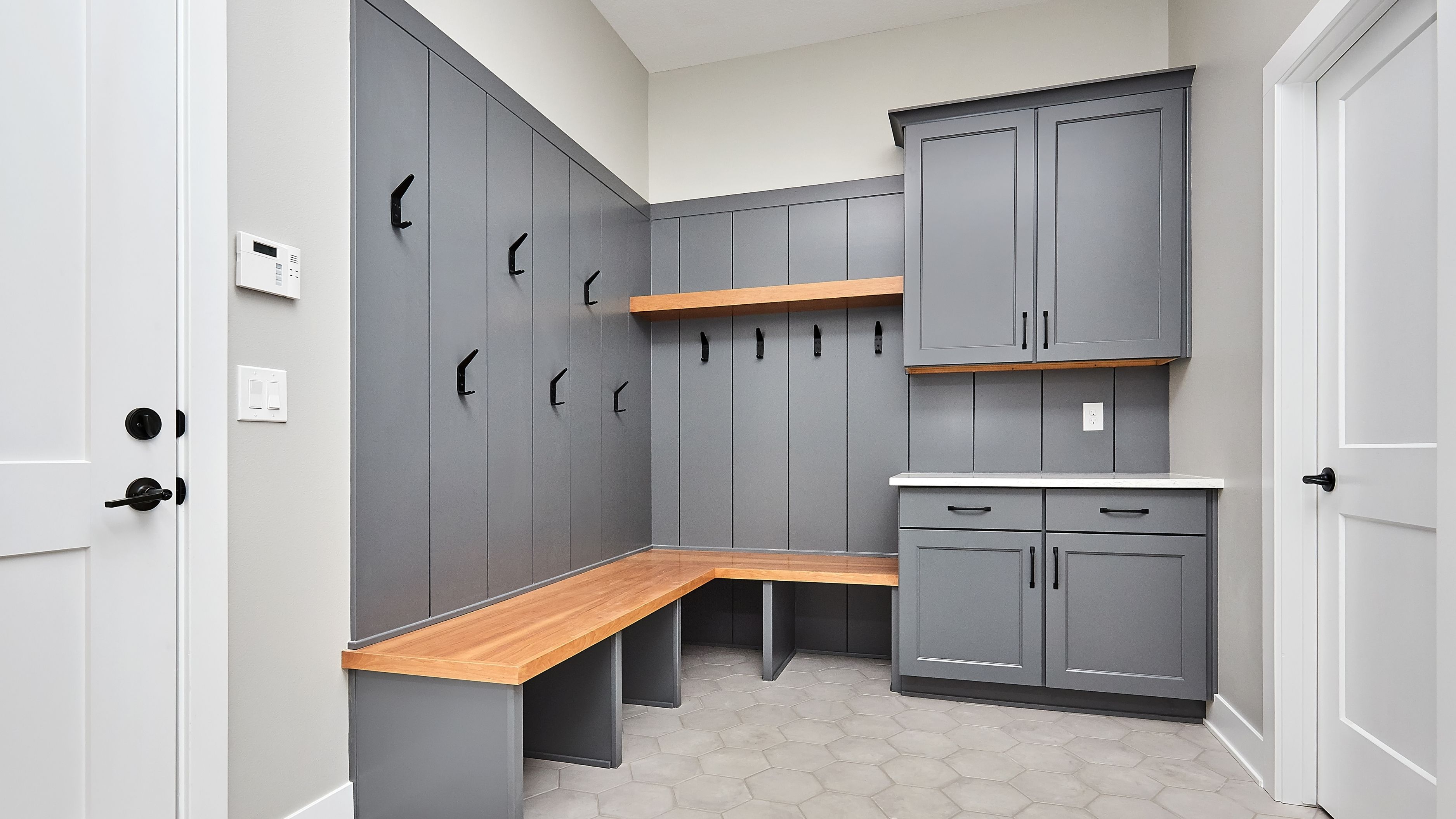
The good news is that building one from scratch doesn't require a contractor or a designer. With a clear plan, a weekend or two of work, and a realistic budget, most intermediate DIYers can build a mudroom that looks custom and functions exactly the way their household needs it to.
Step 1 – Plan Your Space and Define Your Needs
Before buying a single piece of wood, spend time understanding what your mudroom actually needs to do. A family of four with two kids in sports has very different needs than a couple with two large dogs. The layout you build should be designed around your household's real daily patterns, not a showroom photo.
Start by measuring the space you're working with. Mudrooms are most commonly built in entryways, hallways, laundry rooms, or garage entries. Measure the full width and height of the wall or alcove you're working with, and note any obstacles: light switches, outlets, HVAC vents, or doors that swing into the space. These affect where you can place built-ins and how deep your storage can go.
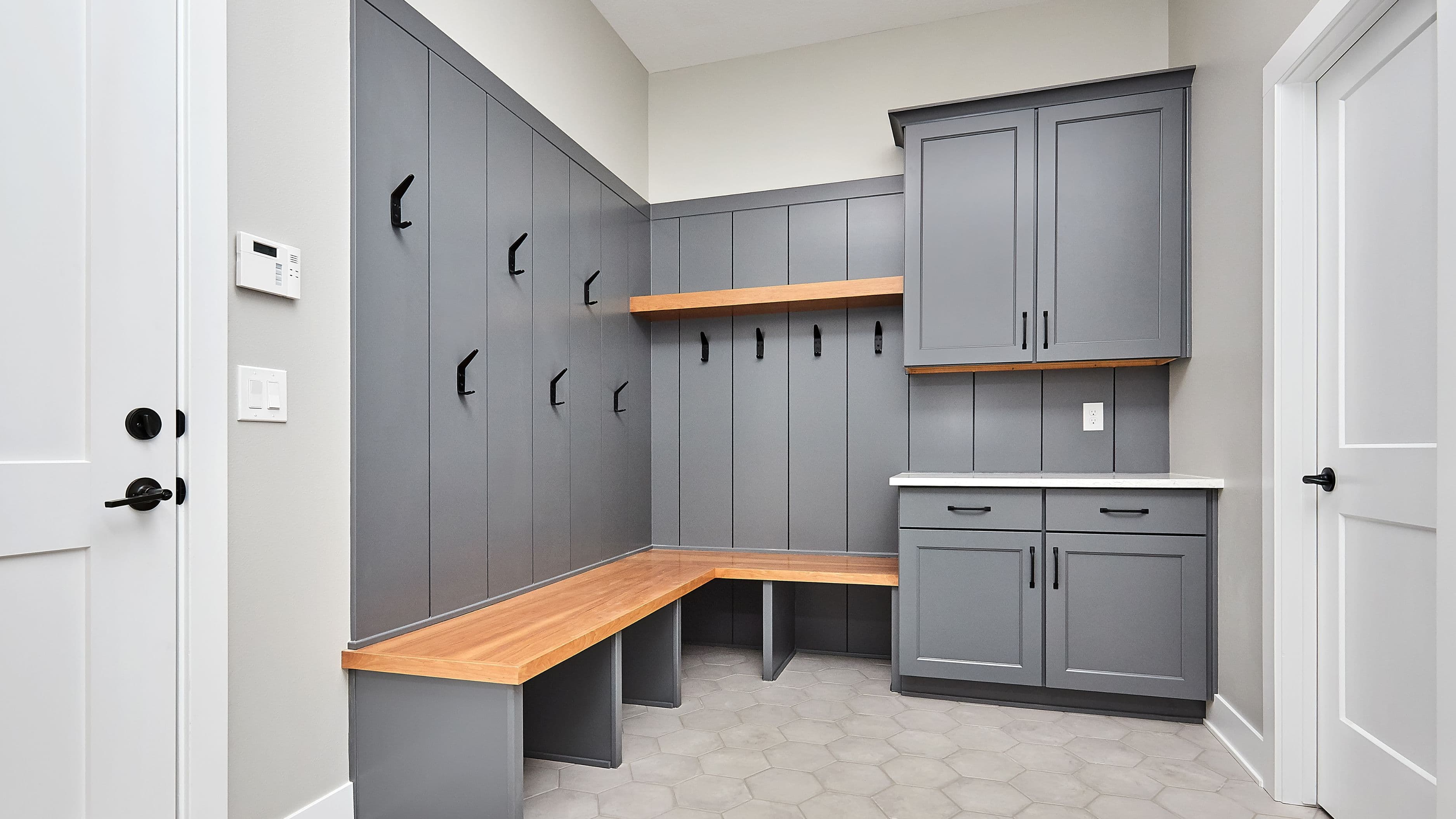
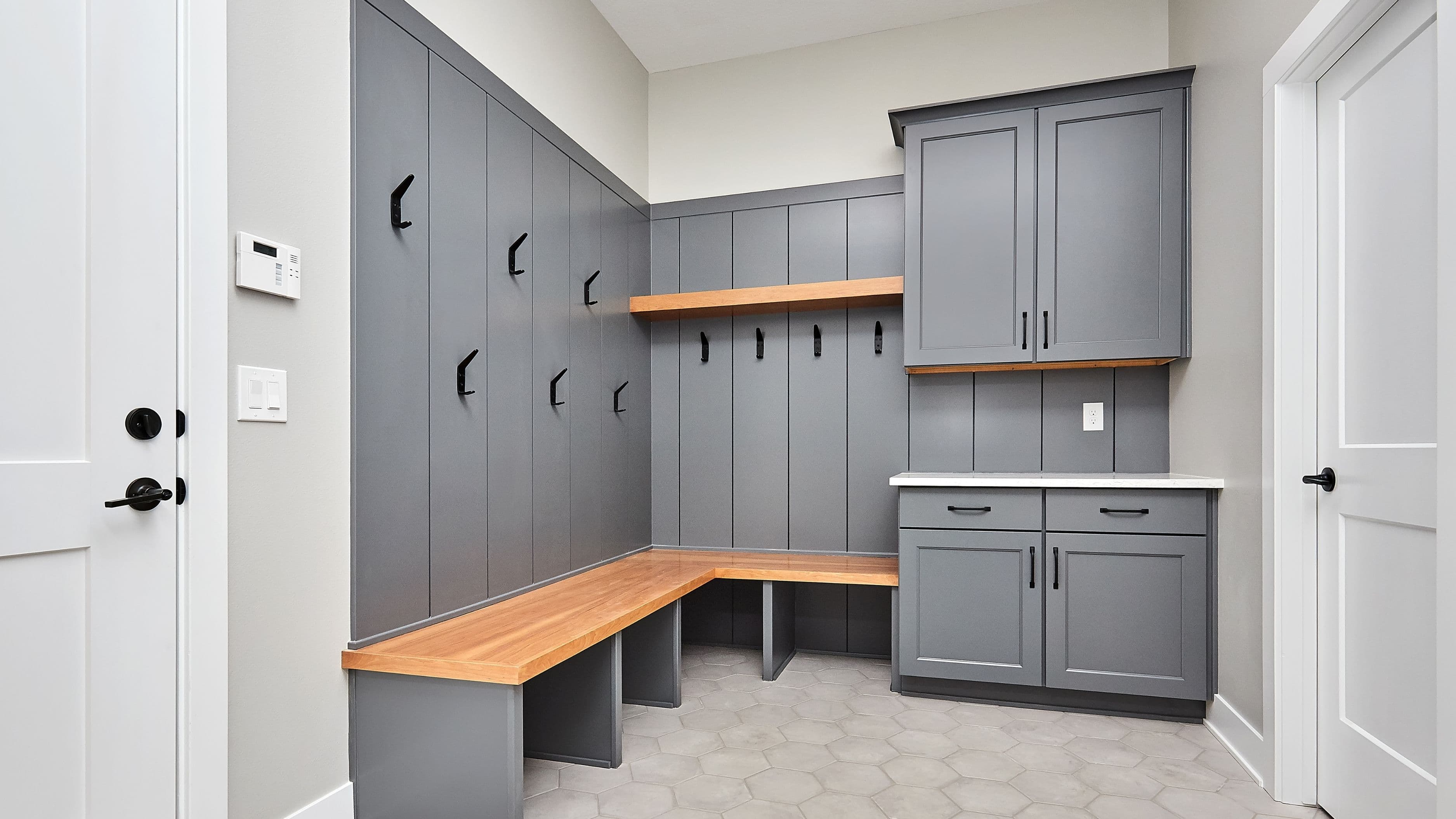
Then make a list of what the space needs to handle. The typical mudroom needs some combination of coat hooks, a bench for sitting while putting on shoes, shoe storage, cubbies or lockers for individual family members, and a spot for bags and backpacks. If you have pets, a pet station with food storage or a wash-down area might be a priority. If the room connects to a laundry space, a folding surface or utility shelf might make sense. The more specifically you define what goes in before you design, the less you'll need to improvise later.
Time to plan: Half a day.
Cost: No material cost for planning; worth doing slowly and getting right.
Step 2 – Design Your Layout on Paper
Once you know your dimensions and your storage list, sketch the layout. You don't need design software – graph paper works perfectly. Draw the wall to scale and map out the major components: the height of the bench, the depth of the cubbies, the spacing between hooks, and the height of upper cabinets if you're including them.
A few standard dimensions to work from: bench seats are typically 18 inches deep and 17–19 inches off the ground for comfortable seating. Cubbies or lockers are usually 15–18 inches wide per person. Hooks work best placed 60–72 inches from the floor for adults and 48–54 inches for children. Upper shelving or cabinet height depends on ceiling clearance, but 7 feet is a common stopping point that allows for a finished top without encroaching on the ceiling.
Think through the visual rhythm of the design too. A mudroom built from standard plywood with painted trim looks clean and intentional when the proportions are right and the spacing is even. It looks cobbled together when dimensions are inconsistent or components don't align. Spending an extra 30 minutes to confirm that your cubbies are symmetrically spaced and your bench height is consistent across the full run saves significant frustration during the build.
Step 3 – Choose Your Materials
For a built-in mudroom, 3/4-inch plywood is the standard structural material for cabinet boxes, shelving, and bench bases. Birch plywood gives the cleanest finish, paints well, and holds screws reliably. MDF (medium-density fiberboard) is an option for painted doors and face frames where a perfectly smooth finish is the priority, but it's heavier, less moisture-resistant, and more fragile at edges than plywood – avoid it for structural components in a mudroom where moisture from wet boots and coats is a factor.
For the bench top, solid wood gives the most durable and attractive result. A piece of poplar, oak, or pine board edged and sanded makes an excellent bench surface that holds up to years of daily use. Butcher block is another popular option – it's durable, available at most home improvement stores in standard widths, and takes stain or paint well.
Hardware matters more in a mudroom than in most rooms because it gets used hard every day. Heavy-duty coat hooks rated for 25–50 lbs each are worth the extra cost over decorative lightweight options. Piano hinges or heavy-duty concealed hinges on any doors will outlast standard cabinet hinges significantly in a high-use space. For the bench lid if you're building storage beneath it, a lid support hinge prevents the lid from slamming and makes the space much easier to use.
Estimated material cost for a 6–8 foot built-in mudroom: $400–$900 depending on materials, hardware quality, and whether you include upper cabinets.
Step 4 – Build the Bench Base
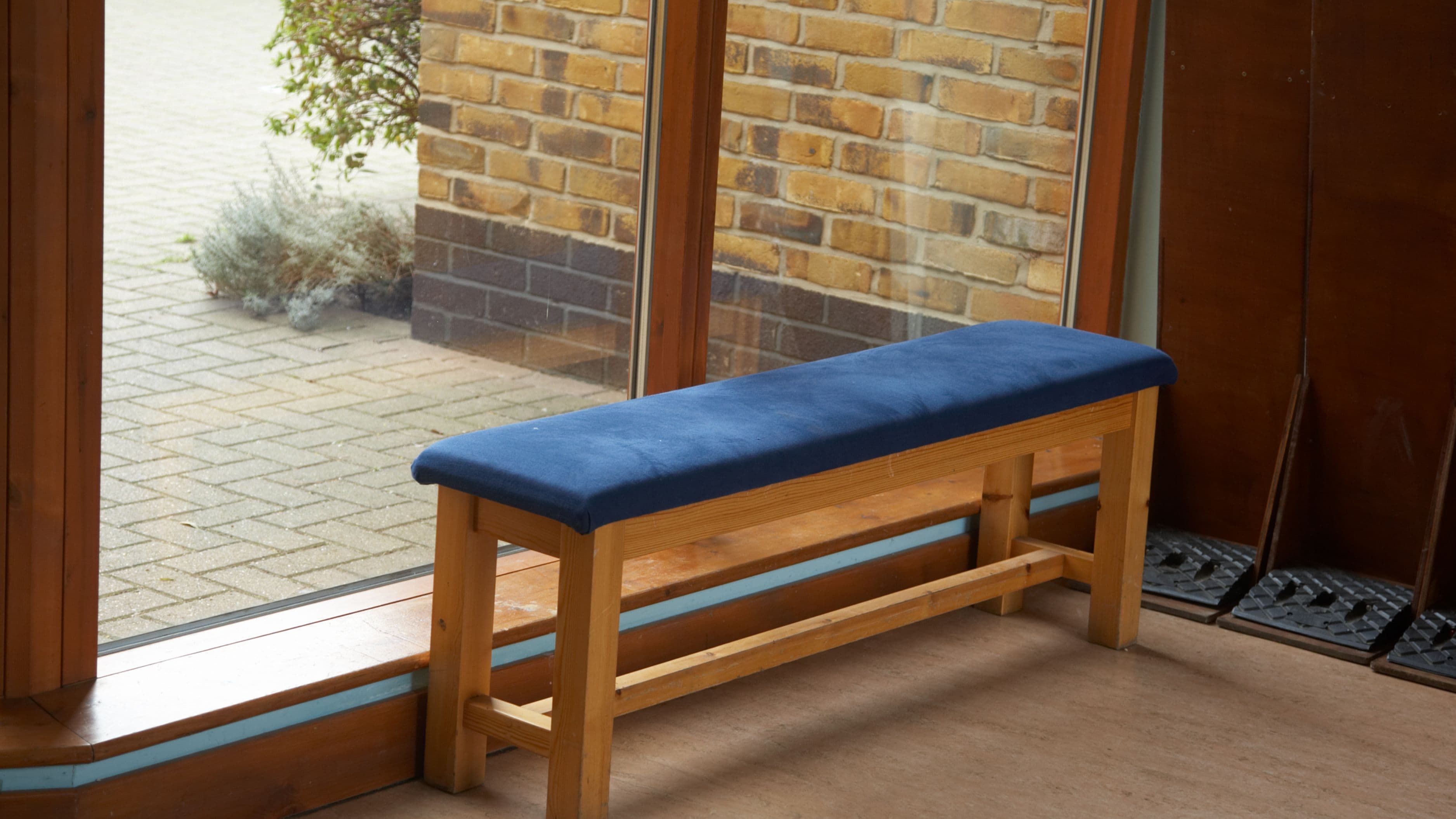
The bench is the functional anchor of a mudroom and typically the first component to build. Start by cutting your plywood pieces: two side panels, a back panel, and a bottom shelf. If your bench will sit against the wall, the back panel can be omitted – but including it makes the structure significantly more rigid.
Assemble the box using wood glue and pocket screws, which create strong joints that are quick to drive and don't require clamping. Pre-drill all holes to prevent splitting. A basic Kreg pocket hole jig costs around $30 and makes this process fast and precise. Square the box before the glue dries by measuring diagonally from corner to corner – if both diagonal measurements are equal, the box is square.
Attach the bench to the wall by screwing through the back panel or through a 1x2 ledger board fastened to the wall studs. Find studs with a stud finder before fastening anything. A mudroom bench that tips forward under the weight of a person sitting or setting down heavy bags is a safety issue, not just a structural one. The connection to the wall should be robust – minimum two screws into wall studs at 3 inches in length.
If your bench includes storage beneath it, install a piano hinge along the full length of the bench lid opening rather than relying on two small hinges at the corners. This distributes load evenly and prevents the lid from warping over time.
Step 5 – Build and Install the Cubbies
Cubbies are the organizational backbone of a mudroom. They give each household member a dedicated zone, which makes the space dramatically easier to keep organized than a single shared open area.
Cut the cubby dividers from 3/4-inch plywood and assemble them into a grid structure using pocket screws and wood glue. Each cubby should be tall enough to hang a coat inside – a minimum of 48–52 inches of clear interior height is ideal. If you're building a shorter cubby row with a shelf on top, keep the open cubby height at a minimum of 36 inches so backpacks and bags can fit without being jammed in.
The cubby unit can be built as a single box that spans the full width of your space, or as separate modules that are fastened together and to the wall. The modular approach is easier to transport, build in a garage or workshop, and adjust if something doesn't fit as planned. Fasten modules together with screws and to the wall through the back panel into studs, just as with the bench.
A single hook mounted inside each cubby, positioned near the top, provides a place for coats or bags and keeps each person's items contained within their zone. One additional hook on the outside front edge of each cubby divider is useful for frequently grabbed items like dog leashes or keys.
Step 6 – Add the Face Frame and Trim
A face frame – a framework of 1x2 or 1x3 solid wood boards applied to the front edges of your plywood boxes – is what transforms plywood boxes into a piece of built-in furniture. It covers the raw plywood edges, provides a solid mounting surface for doors if you're adding them, and gives the whole unit a finished, intentional look.
Cut the face frame pieces to length and dry-fit them before gluing and nailing. Attach the frame with wood glue and a finish nailer, using 1-1/4 inch finish nails. Clamps help significantly while the glue dries. Once the face frame is attached, fill all nail holes with wood filler and sand smooth when dry.
Shoe molding or quarter round along the bottom of the bench where it meets the floor, and cove molding at the top where the unit meets the wall, finishes the built-in look cleanly and covers any gaps from walls that aren't perfectly flat. This is one of those steps that separates a project that looks DIY from one that looks like it was always there.
Step 7 – Prime, Paint, and Install Hardware
Mudrooms get wet, dirty, and heavily used – the finish you apply matters more here than in most rooms of the house. Prime all surfaces with a shellac-based or oil-based primer before painting. These primers seal the wood more effectively than latex primer and are worth the extra effort in a high-moisture, high-traffic environment.
For paint, choose a semi-gloss or satin finish in a washable formulation. Flat paint in a mudroom is a poor choice – it shows marks, absorbs moisture, and can't be wiped clean effectively. Benjamin Moore Advance and Sherwin-Williams Emerald Urethane are both premium trim paints that hold up well in demanding conditions and are worth the cost over standard wall paint for this application.
Apply two coats of paint, sanding lightly with 220-grit sandpaper between coats. Install your coat hooks, bench hardware, and any additional accessories after painting. A brief wait of 24–48 hours after the final coat before installing hardware prevents the fresh paint from being scratched or dented during the installation process.
Estimated time for the full build: 2–3 weekends for a first-time builder, 1–2 weekends for someone with prior carpentry experience.
What to Avoid
Don't underestimate the bench depth. A bench less than 15 inches deep is uncomfortable to sit on and too shallow to store meaningful items underneath. Eighteen inches is the comfortable minimum.
Don't skip the wall attachment. A mudroom unit that's just resting against the wall will shift, rock, and potentially tip. Screw it in. Every component should be fastened to at least two studs.
Don't use lightweight hooks. The hook rated for 10 lbs that's marketed as decorative will fail the first time someone hangs a wet winter coat and a backpack on it. Size up.
Don't paint before filling and sanding completely. Nail holes, gaps in the face frame joints, and router marks all read clearly through paint. Take the time to get the surfaces smooth before you open the paint can.
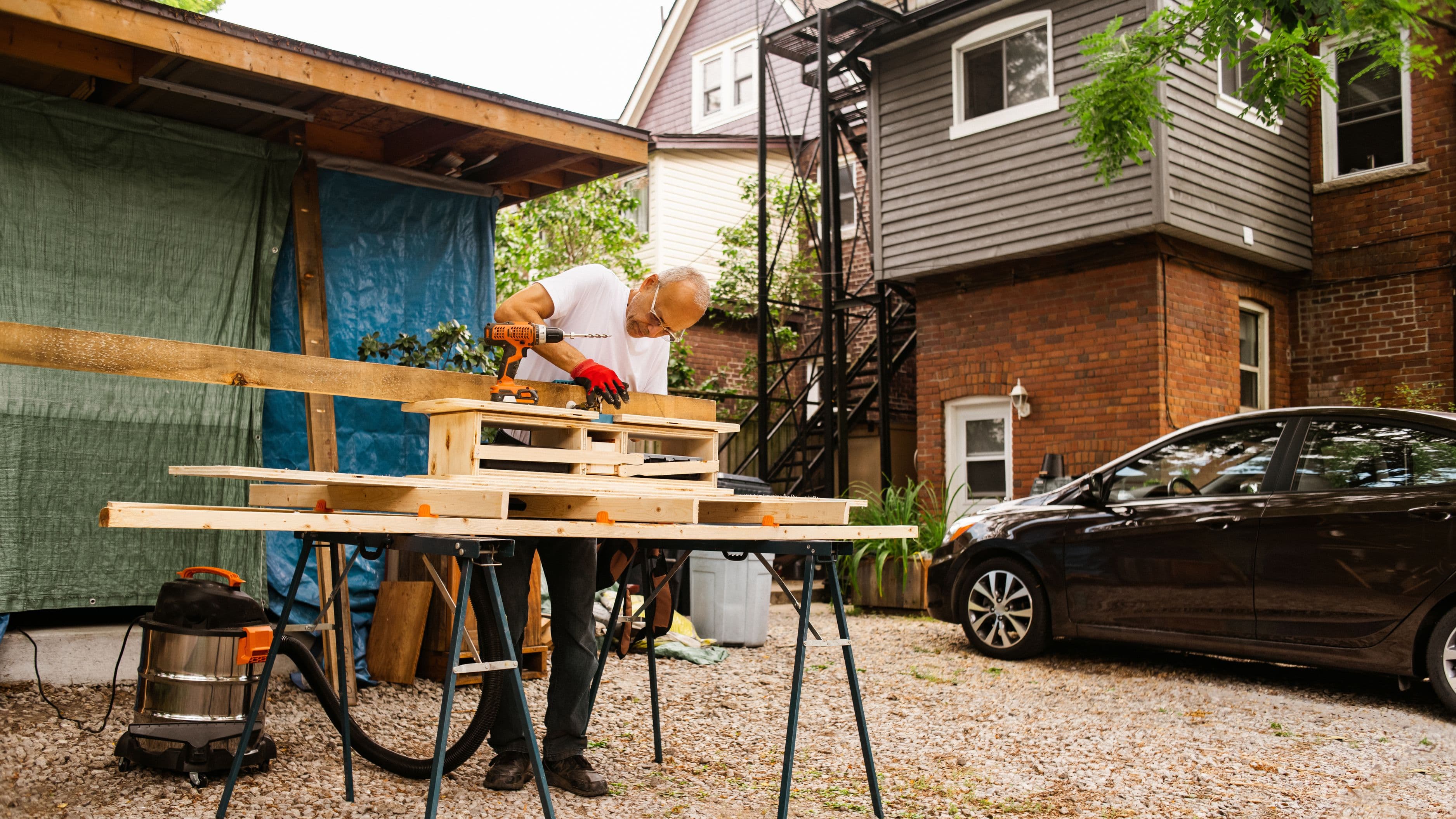
Don't build the entire unit in place if you can avoid it. Building modular pieces in a garage or workshop, then bringing them in and fastening them together, is significantly easier than trying to cut and assemble in a tight entry space.
FAQ
Do I need a permit to build a mudroom? In most cases, no. Built-in furniture and non-structural interior additions don't require permits in most jurisdictions. If your mudroom involves relocating electrical outlets, adding new circuits, or plumbing for a pet wash station, those elements typically do require permits and licensed contractors. Check with your local building department if you're uncertain.
Can I build this with basic tools only? Yes, with some adjustments. A circular saw and a drill are the minimum tools needed. A pocket hole jig, a finish nailer, and a miter saw make the work significantly faster and cleaner, but they're not strictly required. If you don't own a miter saw, most home improvement stores offer lumber cutting services that can handle straight cuts before you take the material home.
What flooring holds up best in a mudroom? Porcelain tile, luxury vinyl plank (LVP), and sealed concrete are the most practical choices for mudroom flooring. They're waterproof, easy to clean, and durable under heavy foot traffic and wet conditions. Hardwood and laminate can work but are less forgiving of repeated moisture exposure. If you're building on top of existing flooring, check that it's level before installing your bench – even a small slope will be noticeable in the finished build.
How do I handle a mudroom in a rental without permanent installation? Freestanding mudroom units from IKEA, The Container Store, and similar retailers can be assembled without wall attachment in many cases. They won't have the same custom fit or finished look, but they provide similar functionality without permanent modification. If you want a built-in look, securing units with wall anchors that use removable adhesive rather than screws is a less damaging option in some lighter-weight applications.
What's a realistic budget for the whole project? A basic mudroom with a bench, cubbies for two to three people, and coat hooks runs $300–$600 in materials using standard plywood and off-the-shelf hardware. A more finished version with solid wood bench tops, premium hooks, painted doors, and quality trim hardware runs $700–$1,200. Hiring a carpenter to build and install a comparable unit typically costs $2,500–$6,000, which gives a sense of the DIY savings involved.
📚 Sources
This Old House – "How to Build a Built-In Mudroom": https://www.thisoldhouse.com/mudrooms/21015445/how-to-build-a-built-in-mudroom
Family Handyman – "How to Build a Mudroom Bench": https://www.familyhandyman.com/project/how-to-build-a-mudroom-bench/
U.S. Department of Housing and Urban Development – "Healthy Homes": https://www.hud.gov/program_offices/healthy_homes
Fine Homebuilding – "Painting and Priming Interior Trim": https://www.finehomebuilding.com/2007/03/01/priming-trim
National Association of Home Builders – "Remodeling Market Index": https://www.nahb.org/research/indices/remodeling-market-index