
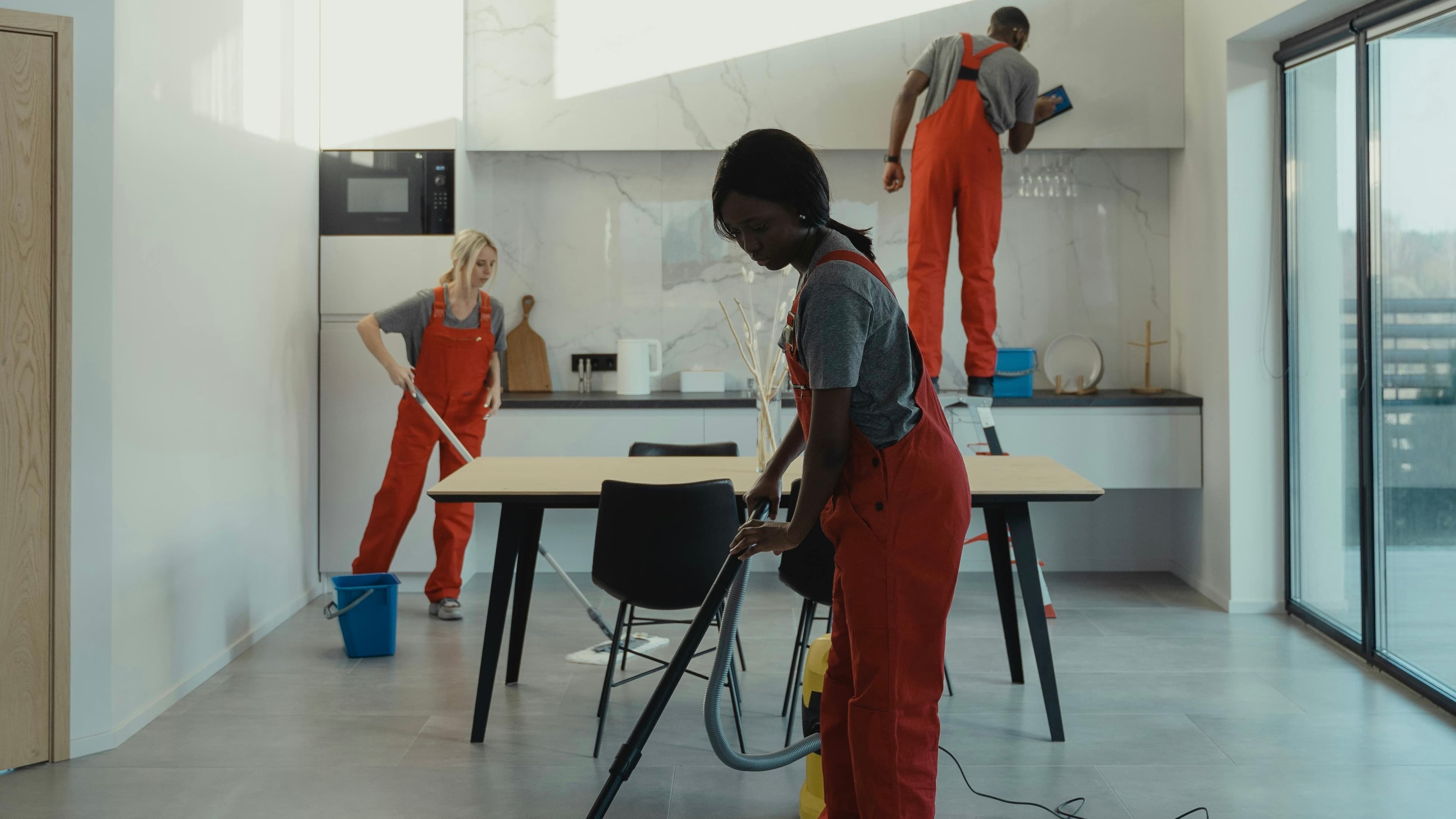
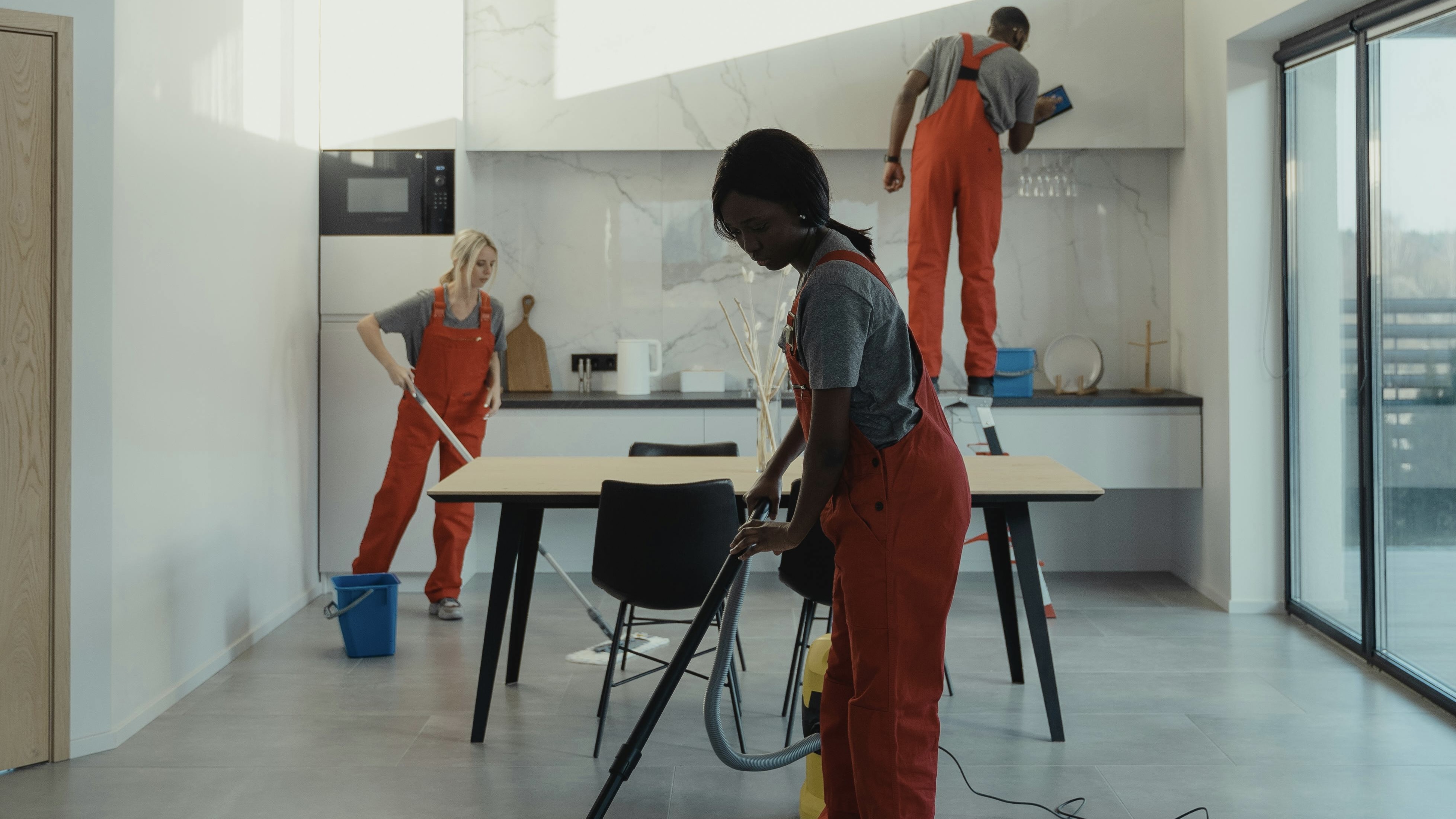
Professional cleaners know exactly where dirt hides, how to banish it, and how to maintain that clean for longer. The good news? With a few industry tricks and a solid plan, you can get your home looking and feeling professionally cleaned - without the steep price tag.
This listicle breaks down 8 insider secrets to deep clean like a pro, helping you create a healthier, more inviting home from top to bottom.
1. Always Clean Top to Bottom, Left to Right
This is the golden rule for any deep clean: work from the ceiling down, and from one side of the room to the other.
Why it matters: Dust falls. If you vacuum the floor before dusting the ceiling fan, you'll just have to do it again.
Tip: Start with ceiling fans, crown molding, vents, and light fixtures. Use an extendable duster with a microfiber head to capture rather than spread dust. Then move down to walls, furniture, and finally the floors.
2. Tackle Forgotten Touchpoints
When’s the last time you disinfected your light switches, remote controls, or cabinet handles? These high-touch areas are bacteria hotspots but are often skipped in daily routines.
Why it matters: Viruses, grime, and oils build up on touchpoints and spread quickly through contact.
Tip: Use a disinfecting wipe or microfiber cloth with isopropyl alcohol to clean touchpoints weekly. Don’t forget electronics—use a cotton swab for tight spaces like keyboard crevices and remote buttons.
3. Use the “Dwell Time” Trick
Spraying and wiping immediately? That’s one of the biggest mistakes people make. Cleaning products—especially disinfectants—need time to work.
Why it matters: Giving a product time to sit (called dwell time) allows it to actually kill bacteria, dissolve grease, or lift stains.
Tip: After spraying your product (check the label for dwell time), let it sit for 5–10 minutes. Use that window to clean a different area. This is especially effective on bathroom tiles, kitchen counters, and stovetops.
4. Refresh Soft Surfaces with Steam or Baking Soda
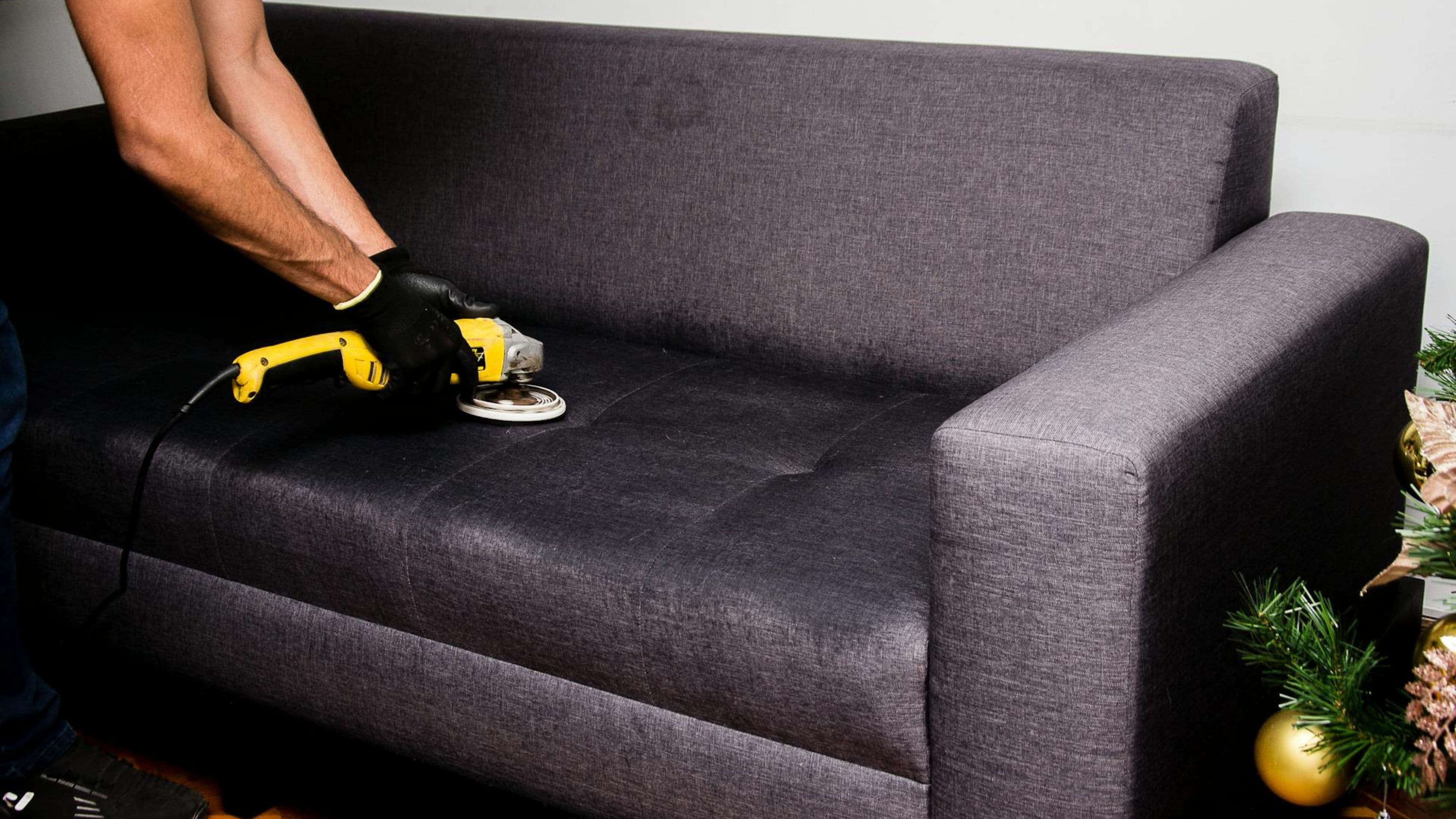
Fabrics like mattresses, curtains, rugs, and upholstered furniture hold on to dust mites, odors, and bacteria—even if they don’t look dirty.
Why it matters: Deep-cleaning soft surfaces helps prevent allergies, reduces indoor air pollutants, and makes your home smell fresher.
Tip: Sprinkle baking soda generously on mattresses and rugs, let it sit for 30 minutes, then vacuum it up. Or invest in a handheld steam cleaner to naturally sanitize fabric without harsh chemicals.
5. Get Behind and Under Everything
If you’re skipping behind the fridge or under the bed, you’re leaving behind serious dust bunnies and potential allergens.
Why it matters: These hidden zones are prime spots for dust accumulation, which impacts air quality and can attract pests.
Tip: Schedule quarterly “move and clean” sessions for big furniture and appliances. Use a vacuum with a long crevice tool and a microfiber mop to reach tight corners. Place felt sliders or wheels under heavy items to make moving easier next time.
6. Clean Your Cleaning Tools
This sounds backward, but your mop, vacuum, and sponge can’t do their job if they’re harboring grime.
Why it matters: Dirty tools spread bacteria and leave behind residue, undoing your hard work.
Tip:
Vacuum: Empty and clean the canister weekly; wash or replace filters monthly.
Sponges: Microwave damp sponges for 1–2 minutes or toss them weekly.
Mop heads: Machine-wash after every use or switch to washable microfiber pads.
7. Purify the Air While You Clean
Deep cleaning kicks up a lot of dust and particles. Don’t let that defeat your purpose.
Why it matters: Airborne irritants stirred up during cleaning can worsen allergies and circulate mold spores and VOCs (volatile organic compounds).
Tip: Open windows to increase airflow while cleaning. Use an air purifier with a HEPA filter to trap particles. For a natural boost, boil a pot of water with lemon slices or eucalyptus oil to purify and freshen the air.
8. Focus on Fridge & Pantry Detox
Your fridge may look fine from the outside—but inside, spills, expired condiments, and funky odors can be lurking. And the pantry? It can harbor bugs and forgotten grains way past their prime.
Why it matters: Food safety, smell control, and pest prevention all start in these zones.
Tip:
Empty shelves one at a time.
Wipe down with a solution of vinegar and water.
Toss expired items and wipe sticky jars.
Line shelves with washable mats to make future cleanups easier.
Do this monthly for the fridge, and quarterly for the pantry.
Extra Tip: Schedule It Like a Pro
Most cleaning pros don’t deep clean everything at once. Instead, they rotate tasks so no area goes too long without attention.
Why it matters: Deep cleaning becomes manageable (and less exhausting) when spread out over time.
Tip: Create a “room-by-room” cleaning calendar, assigning one space per week. You’ll always stay ahead of grime without dedicating entire weekends to scrubbing.
Conclusion: Clean Home, Clear Mind!
Deep cleaning doesn’t have to be overwhelming or reserved for spring. With a little strategy, the right tools, and these professional tricks, you can maintain a spotless, healthier home year-round. Plus, it’s incredibly satisfying to see—and feel—the transformation.
So, which room are you tackling first? Start with just one tip and build from there. Your space—and your lungs—will thank you.
📚 Sources
American Lung Association. (2023). Healthy Air at Home.
CDC. (2024). Cleaning and Disinfecting Your Home.
Environmental Protection Agency. (2023). Indoor Air Quality and Cleaning Products.
National Sanitation Foundation (NSF). (2024). Germ Hot Spots in the Home.