The catch is that most of these materials cost more upfront. Whether that premium is worth it depends on the material, where it's being installed, and how long you plan to stay in the home. This breakdown covers six options that genuinely earn their price – not just for sustainability credentials, but for real performance and long-term value.
1. Sheep's Wool Insulation
Sheep's wool is one of the most naturally suited insulation materials available. It regulates moisture exceptionally well – wool fibres can absorb up to 35% of their own weight in water vapour and release it again without losing thermal performance or encouraging mould growth. That moisture-buffering quality makes it particularly well-suited to older homes, timber-framed buildings, and any application where conventional insulation might create condensation problems.
Thermally, sheep's wool performs solidly. It typically achieves a lambda value (thermal conductivity) of around 0.035–0.040 W/mK, which is comparable to standard mineral wool. It's available in rolls and batts that fit between standard joist and rafter spacings, making it a straightforward DIY installation for loft and floor projects. It's also naturally fire-resistant to a useful degree, as wool chars rather than melts and has a relatively high ignition temperature.
Cost level: Medium-high. Expect to pay roughly £12–£20 per m² for rolls, compared to £4–£8 for equivalent mineral wool. The premium is real but not prohibitive for most retrofit projects.
Best for: Loft insulation, floor insulation between joists, internal wall insulation in older or damp-prone properties.
Key limitation: Not suitable for applications where it will be in direct contact with water or soil. Also not vegan, which matters to some homeowners.
2. Wood Fibre Insulation
Wood fibre boards and batts are made from waste timber – typically offcuts and sawmill residue – compressed and bonded together with natural resins. They're one of the most versatile eco-friendly insulation materials available, performing well across roof, wall, and floor applications in both rigid board and semi-rigid batt form. A particularly useful property is that wood fibre has a significantly higher thermal mass than most conventional insulation materials, which means it slows the passage of both heat and cold through the building fabric rather than simply resisting it.
That thermal mass quality translates directly to summer comfort. In well-insulated homes, overheating is increasingly common as summers warm. Wood fibre's phase-shift effect – the time it takes for heat to travel through the material – can be 10–12 hours for a thick board, meaning daytime heat doesn't penetrate into the living space until evening when temperatures have dropped. This is a genuine performance advantage over PIR foam and mineral wool, which offer little thermal mass despite good thermal conductivity values.
Wood fibre also performs well in wall insulation applications, particularly as sarking board under roof slates and tiles and as continuous external insulation for timber-frame construction. It's breathable (vapour-permeable), which matters for natural materials and older buildings.
Cost level: Medium-high. Rigid wood fibre boards typically cost £15–£35 per m² depending on thickness.
Best for: Roof sarking, external wall insulation over timber frames, internal wall lining in breathable construction systems.
Key limitation: Heavier than foam boards of equivalent thickness, which can affect handling and structural requirements. Not suitable for applications requiring very low lambda values in tight spaces.
3. Recycled Denim (Cotton) Insulation
Recycled denim insulation is made primarily from post-industrial cotton fibres – offcuts from denim manufacturing – processed into batts that look and install similarly to conventional mineral wool rolls. It's one of the most genuinely low-embodied-carbon options available: the raw material is waste that would otherwise go to landfill, and the manufacturing process requires significantly less energy than producing glass or rock wool from raw materials.
From a practical standpoint, recycled denim is comfortable to handle without protective equipment – no itching, no respiratory irritation, no need for gloves and a mask that conventional insulation typically demands. That makes it a notably better DIY experience. It's non-toxic and safe to have exposed in living spaces, which is relevant for unfinished basement ceilings or visible roof spaces. Thermally, its lambda value sits around 0.036–0.040 W/mK, squarely in the range of standard mineral wool.
The main limitation is availability. Recycled denim insulation is significantly more common in the US market (where brands like UltraTouch are widely available) than in the UK or European market, where sourcing can be more difficult and prices higher. It's also primarily available in batt form sized for standard stud and joist spacings, which limits its application to those specific uses.
Cost level: Medium-high in the US (roughly $1.00–$1.50 per sq ft installed); higher in the UK where availability is limited.
Best for: Interior wall cavities, floor insulation between joists, ceiling insulation in finished basements. Best suited to the US market where it's most accessible.
Key limitation: Limited product range and availability outside North America.
4. Cellulose Insulation
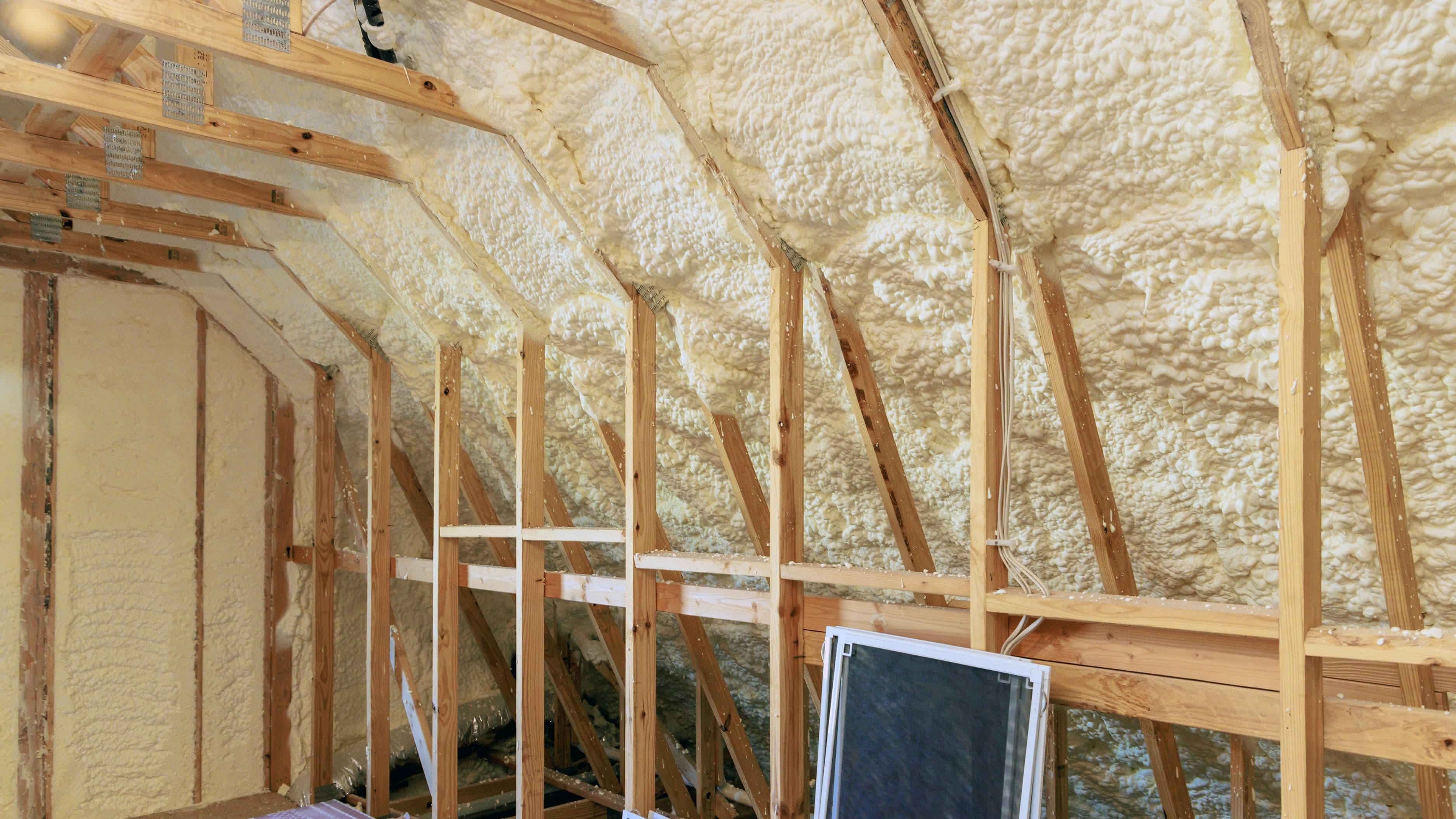
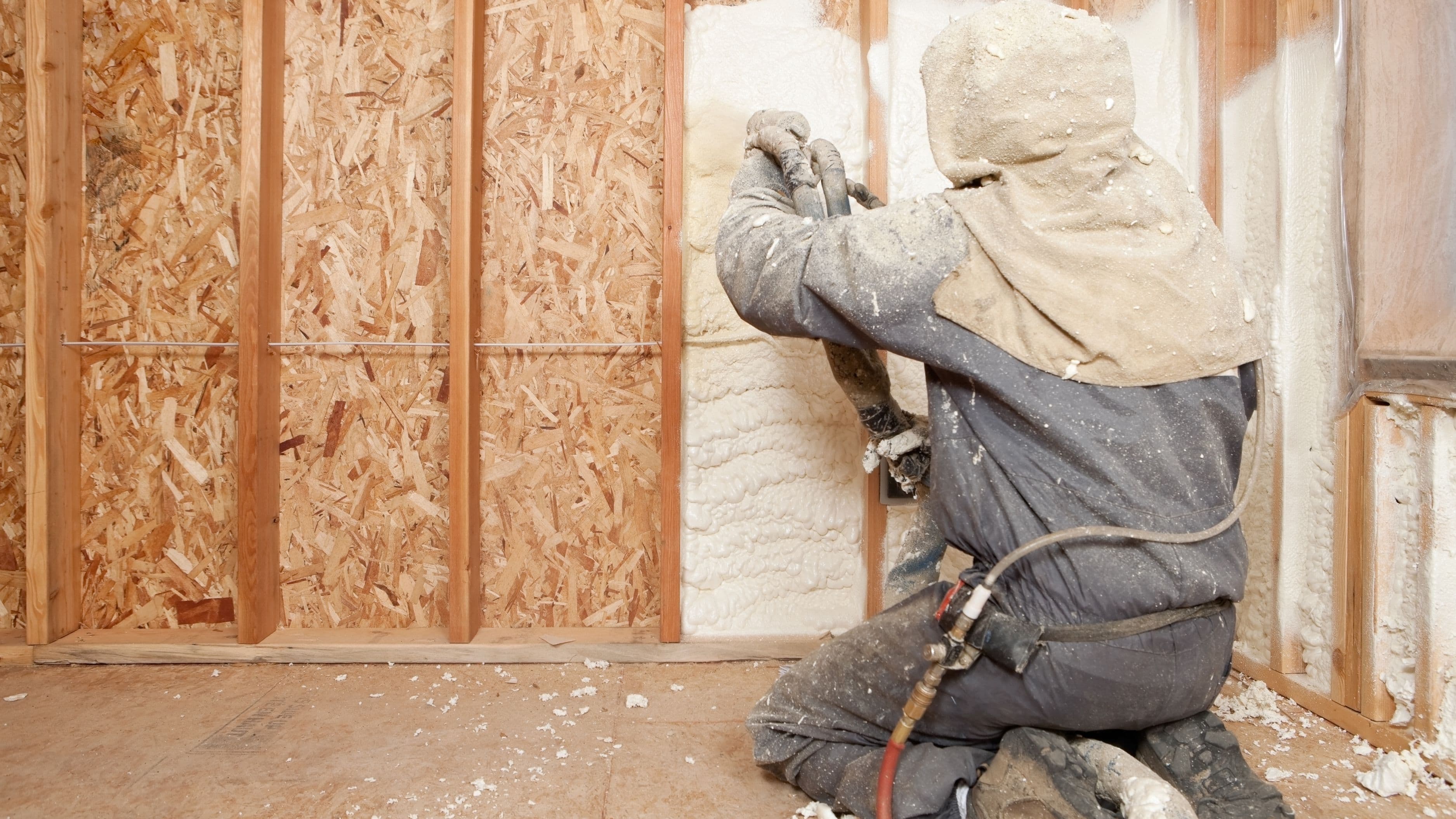
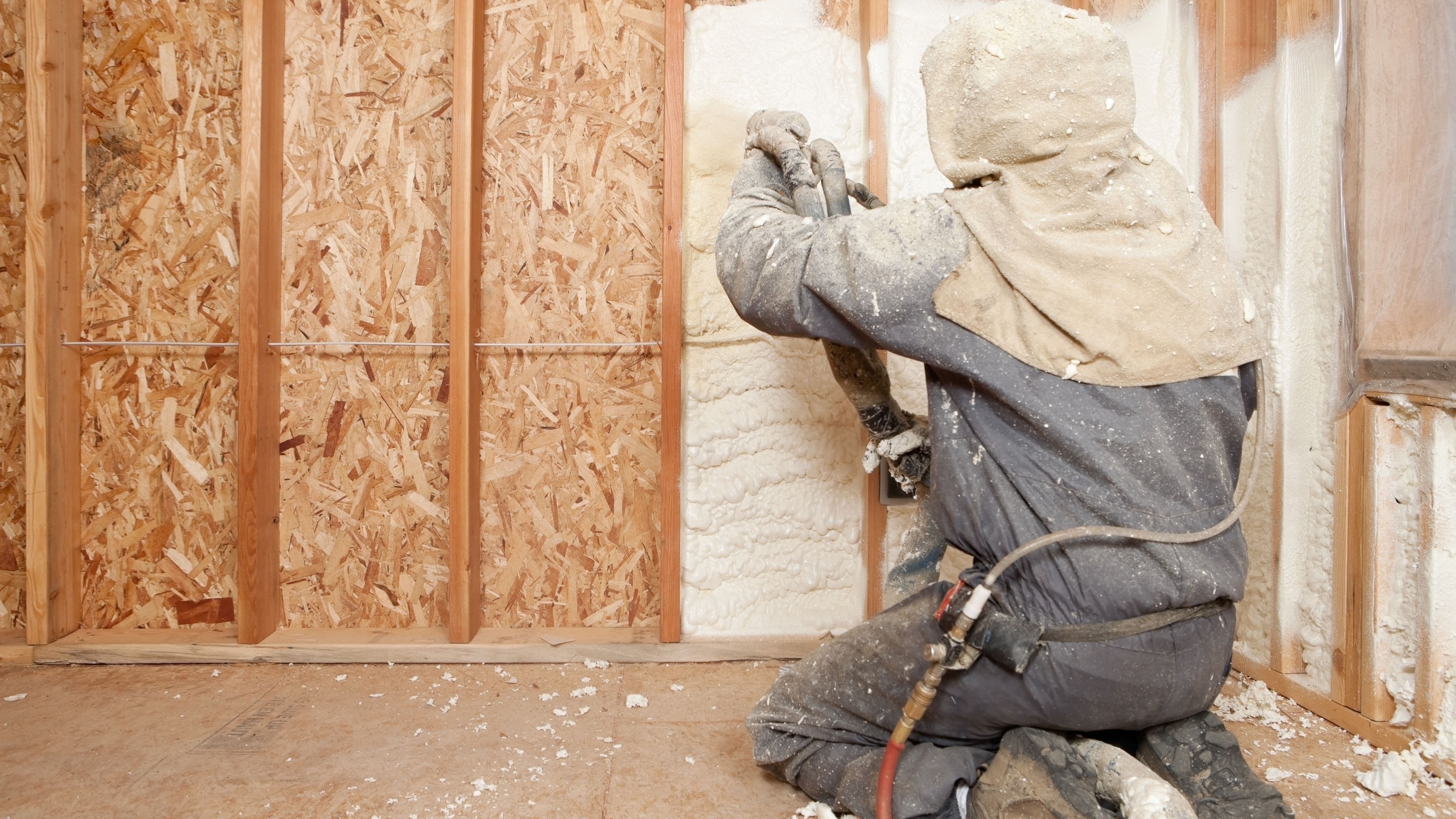
Cellulose is made from 80–85% recycled paper and cardboard – typically post-consumer newsprint – treated with boron-based fire retardants and pest deterrents. It's one of the most cost-competitive eco-friendly insulation options, and it has one significant installation advantage over most alternatives: it can be blown or sprayed into existing cavities without opening up walls or ceilings. That makes it particularly useful for retrofitting hard-to-reach spaces – wall cavities in older homes, irregular roof voids, and floor spaces where access is limited.
Thermally, cellulose performs well with a lambda value around 0.035–0.040 W/mK. Like wood fibre, it has useful thermal mass characteristics that slow heat transfer, and it's breathable, which suits older building stock. Blown cellulose also fills irregular spaces and gaps that batt insulation can't reach, which reduces air leakage in addition to adding thermal resistance. For retrofitting solid-wall construction where cavity injection isn't possible, spray cellulose applied to the back of wall boards is a practical option.
The installation of cellulose typically requires professional equipment for blowing, though loose-fill cellulose can be hand-applied in accessible loft spaces. The boron treatment makes it naturally resistant to mould, insects, and fire, reducing concerns about organic content degrading over time.
Cost level: Low to medium – one of the most affordable eco-friendly options, particularly in the US. Typically $0.50–$1.00 per sq ft for blown installation in the US; £15–£25 per m² in the UK including professional installation.
Best for: Retrofitting existing wall cavities, top-up loft insulation, irregular or difficult-to-access voids.
Key limitation: Loose fill can settle over time, slightly reducing performance. Not suitable for external wall insulation applications or where rigid board is required.
5. Hemp Fibre Insulation
Hemp is one of the fastest-growing crops available, requiring no pesticides and sequestering carbon during growth. Hemp fibre insulation is made from the woody core of the hemp stalk, processed into batts and rolls with a similar form factor to mineral wool. It combines good thermal performance (lambda around 0.038–0.040 W/mK) with excellent moisture management, making it a strong all-round performer for residential insulation applications.
Hemp's vapour permeability is one of its standout properties. Like sheep's wool and wood fibre, hemp allows moisture to move through it and dissipate rather than trapping it within the wall or roof structure. This is important in any building that uses natural or breathable construction systems, and in older homes where managing interstitial condensation correctly is critical to avoiding long-term structural damage. Hemp also has good acoustic insulation properties, slightly better than equivalent mineral wool, which is relevant for party walls, floor insulation between storeys, and rooms where sound transmission matters.
Hemp batts handle and install similarly to mineral wool – they cut cleanly, fit between standard stud spacings, and are straightforward for DIY installation. Unlike mineral wool, they don't cause skin irritation during handling, which is a practical advantage for a full-day installation project.
Cost level: Medium-high. Hemp insulation batts typically cost £10–£18 per m², placing it in a similar range to sheep's wool.
Best for: Wall insulation, loft insulation, floor insulation between joists, party wall acoustic applications. Excellent in breathable or natural construction systems.
Key limitation: As with other natural fibre materials, not suitable for applications with direct moisture exposure. Less widely available than mineral wool, though increasingly stocked by specialist and eco-building merchants.
6. Aerogel Insulation
Aerogel is in a different category from the other five materials on this list – it's not natural or recycled-content, but it is genuinely the most thermally efficient insulation material commercially available, and it has applications where no other option comes close. Aerogel is a silica-based material with an extraordinary amount of internal air space (up to 99.8% air by volume), giving it a lambda value of around 0.014–0.018 W/mK – roughly twice as effective as PIR foam and three times as effective as mineral wool by thickness.
That performance-per-millimetre advantage makes aerogel the right choice when insulation depth is severely constrained. Thin-profile window reveals, listed building interiors where you can't lose wall depth, and retrofitting around structural elements that can't be moved are all cases where aerogel justifies its significant premium. A 10mm aerogel blanket or board can achieve the thermal performance of 30–40mm of standard insulation, which in some retrofits is the difference between a practical upgrade and an impossible one.
Aerogel products for construction typically come as flexible blankets, rigid boards, or plaster-incorporated sheets. The flexible blanket format is particularly useful for wrapping pipes, wrapping around structural steelwork to address thermal bridges, and insulating awkward shapes. The ecological case for aerogel rests on the dramatic energy savings it enables in constrained applications – where no viable alternative would achieve the same result, the high embodied energy of the material is offset by the operational savings over the building's life.
Cost level: Very high. Aerogel insulation typically costs £50–£150+ per m² depending on product and thickness. This is a targeted solution for specific applications, not a whole-house insulation material.
Best for: Constrained retrofits, window reveals, internal wall insulation where every millimetre matters, thermal bridge treatment around structural elements.
Key limitation: Cost makes it impractical for large surface areas. Not a substitute for conventional or natural insulation in standard applications.
What to Avoid
Choosing an eco-friendly material primarily for its sustainability credentials without checking whether it suits the application. Sheep's wool performs brilliantly in a loft but is a poor choice in contact with soil or standing moisture. Wood fibre boards work well on a breathable timber-frame wall but add unwanted weight on a constrained structural system. Match the material to the application first, sustainability second.
Assuming a higher price automatically means better performance. Aerogel is dramatically more expensive than mineral wool, but in a standard open loft with plenty of depth, you'd get better value from 400mm of sheep's wool than from 50mm of aerogel. Cost should be proportional to the specific problem the material is solving.
Skipping professional installation for blown or sprayed materials. Cellulose and spray-applied insulation require proper equipment and technique to achieve the specified density and coverage. Under-filled cavities or uneven application will underperform the stated thermal values significantly.
Overlooking vapour control requirements. Natural fibre materials are often breathable by design, which suits older buildings but requires correct detailing in modern construction where a vapour control layer is specified. Get the vapour management right for your building type and the material you're using.
Frequently Asked Questions
Are eco-friendly insulation materials as fire-safe as conventional options? It varies by material. Sheep's wool and cellulose (when boron-treated) have good fire resistance. Hemp and wood fibre are combustible but typically treated to meet building regulation requirements and achieve acceptable reaction-to-fire classifications. Aerogel is non-combustible. Always check the specific product's fire classification for the application you're planning.
Which eco-friendly insulation is best for a loft? For most loft applications, sheep's wool, hemp, or cellulose are the strongest choices. All three are breathable, easy to install, and perform comparably to mineral wool at a reasonable premium. Cellulose is the most cost-competitive of the three and can be blown into irregular spaces.
Can I mix eco-friendly and conventional insulation in the same project? Yes – and sometimes it makes practical and financial sense to do so. Using sheep's wool or hemp in accessible, visible areas like a loft, and reserving budget for aerogel in constrained spots like window reveals or thermal bridge details, is a common and sensible approach.
Will eco-friendly insulation add value to my home? Good insulation upgrades improve EPC ratings, which are increasingly reflected in property valuations and sale prices. The specific material matters less to a valuer than the thermal performance achieved. Eco credentials may matter to environmentally conscious buyers, but the primary value driver is the energy performance improvement rather than the material choice itself.
The Right Material for the Right Job
Eco-friendly insulation has genuine merit beyond the sustainability credentials – several of these materials outperform conventional alternatives in specific applications, particularly where moisture management, thermal mass, or extreme space constraints are factors. The premium is real, but for a home you intend to stay in long-term, the combination of lower energy bills, improved comfort, and reduced environmental impact makes most of these materials genuinely worth the upgrade cost.
Start with the application, match the material to it, and budget accordingly. None of these options require specialist installation beyond what a capable DIYer or a general insulation contractor can handle.
📚 Sources
Energy Saving Trust – Types of insulation: https://energysavingtrust.org.uk/home-insulation
U.S. Department of Energy – Insulation materials overview: https://www.energy.gov/energysaver/insulation
Green Building Store – Eco insulation materials guide: https://www.greenbuildingstore.co.uk/information-hub/eco-insulation
WRAP – Recycled content in construction materials: https://www.wrap.ngo/resources/guide/recycled-content-construction
Aerogel Technologies – Aerogel insulation applications: https://www.aerogeltechnologies.com/insulation
Passivhaus Trust – Insulation materials and performance: https://www.passivhaustrust.org.uk/guidance_and_resources.php
🔍 Explore Related Topics