
Here are five upgrades worth considering, ranked by the kind of everyday value they add, along with realistic cost expectations and what to actually watch out for with each one.
1. Epoxy or Polyaspartic Floor Coating
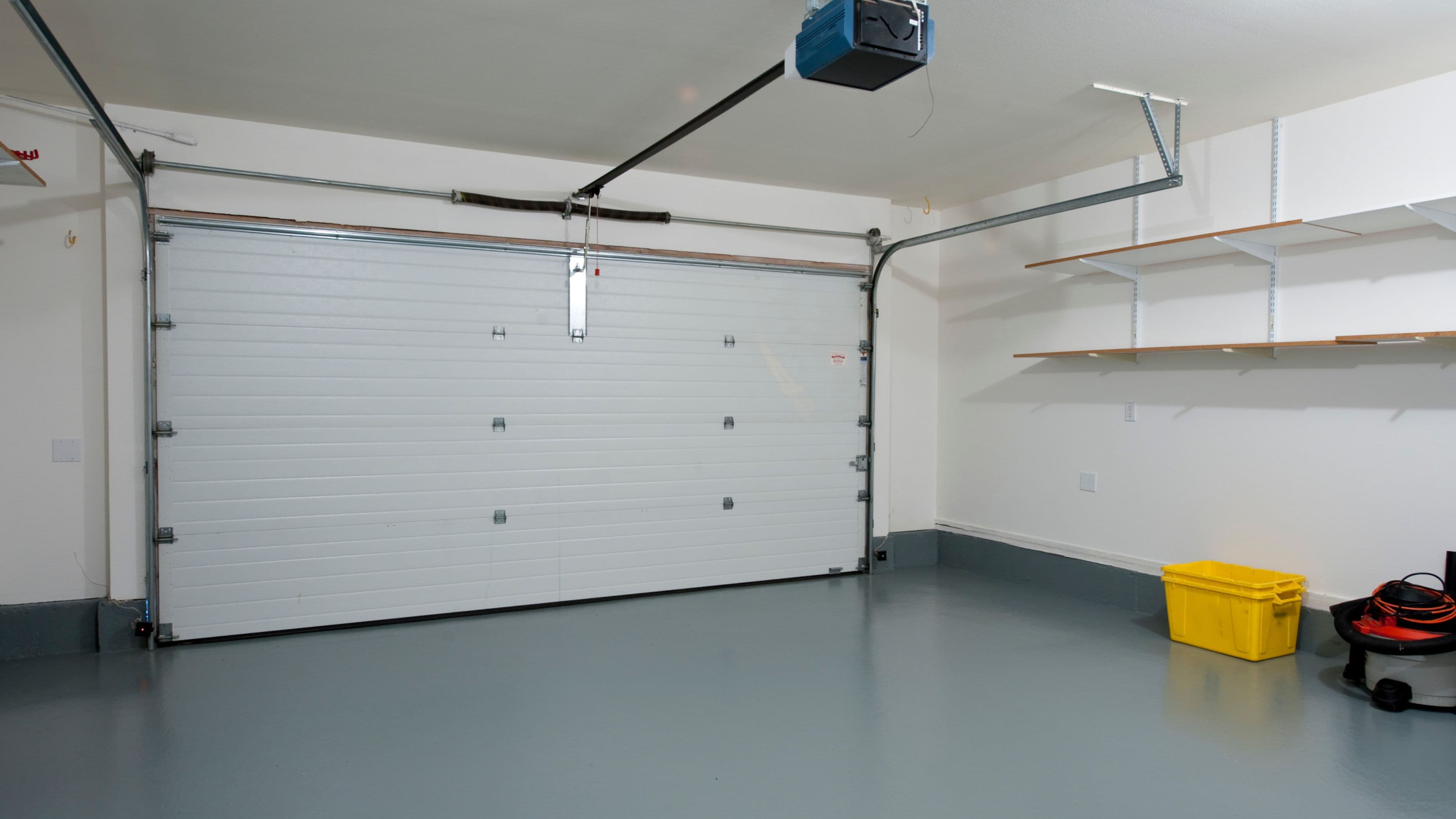
A finished garage floor coating transforms a space that often looks unfinished and utilitarian into something that feels genuinely intentional and cared for, while also protecting your concrete slab from oil stains, cracking, and general wear over time. Beyond aesthetics, a properly applied coating makes the space easier to keep clean and can meaningfully extend the life of your concrete floor.
Cost level: Low to medium, depending on square footage and whether you hire a professional or apply it yourself.
What to watch for: Proper surface preparation matters more than the product itself. A coating applied over a concrete floor with existing moisture issues or inadequate cleaning will likely peel or bubble within a year or two, so don't skip the prep work to save time.
2. Insulated Garage Door and Door Seals
An insulated garage door, paired with proper weatherstripping and door seals, can meaningfully improve the temperature stability of your garage and, if your garage is attached to your home, can noticeably reduce heat loss or gain affecting adjacent rooms. This is a particularly high-value upgrade if you use your garage as a workspace or if it's attached and sharing a wall with living space.
Cost level: Medium, generally more affordable than most other garage upgrades on this list relative to the impact.
What to watch for: Confirm your garage door opener is rated to handle the added weight of an insulated door before purchasing, since older openers sometimes need to be upgraded alongside a heavier insulated door.
3. Built-In Storage and Overhead Racking Systems
Well-designed built-in storage, including wall-mounted systems and overhead racking for seasonal items, dramatically increases the functional usability of a garage by getting clutter up off the floor and organized, rather than piled in boxes that make parking and general use increasingly difficult over time. This is one of the more affordable upgrades on this list relative to how much it improves daily usability.
Cost level: Low to medium, with a wide range depending on whether you choose modular pre-made systems or custom-built storage.
What to watch for: Confirm weight capacity ratings before loading overhead racks with heavy items, since improperly rated or improperly installed overhead storage can be a genuine safety hazard if it fails under load.
4. Upgraded Electrical and Dedicated Circuits
Many garages, especially in older homes, were built with minimal electrical capacity, which becomes a real limitation if you want to run power tools, an EV charger, a mini-fridge, or a workshop setup. Adding dedicated circuits and additional outlets is a foundational upgrade that makes almost every other future garage improvement more practical, whether that's a workshop, an EV charging station, or simply better lighting.
Cost level: Medium, and this genuinely benefits from hiring a licensed electrician rather than attempting it as a DIY project, given the safety considerations involved with panel and circuit work.
What to watch for: If you're considering an EV charger down the line, it's worth planning your electrical upgrade with that in mind now, since retrofitting again later for higher amperage requirements typically costs more than building it in during an initial upgrade.
5. Mini-Split Heating and Cooling System
For garages used as workshops, home gyms, or hobby spaces, a ductless mini-split system can make the space usable year-round without the cost and complexity of extending your home's central HVAC system into a detached or poorly connected garage. These systems are relatively efficient to run and don't require the ductwork that a traditional HVAC extension would need.
Cost level: Medium to high, depending on the size of the space and number of zones needed.
What to watch for: Proper insulation should generally come before a mini-split installation, since heating or cooling a poorly insulated garage space will run less efficiently and cost more to operate long-term than addressing insulation first.
How to Prioritize These Upgrades for Your Situation
If your garage is primarily used for basic storage and parking, start with floor coating and built-in storage, since these two upgrades meaningfully improve daily usability at a relatively accessible cost. If you're planning to use your garage as an actual workspace, workshop, or gym, prioritize electrical upgrades and insulation before investing in heating and cooling, since those foundational elements make everything else you add to the space more functional and efficient.
Think about your realistic use case for the space over the next several years, not just your current situation, since some of these upgrades (particularly electrical work) are much easier to plan generously upfront than to expand piecemeal later.
What to Avoid
Don't invest in an expensive heating and cooling system for a garage with poor insulation and an uninsulated door, since you'll be paying to condition air that's escaping through gaps and poorly insulated surfaces. Address the building envelope (insulation, door seals, weatherstripping) before investing in climate control equipment.
Also avoid overloading garage storage systems, whether wall-mounted or overhead, beyond their rated weight capacity. This is one of the more common ways these upgrades go wrong, and it's a genuine safety issue rather than just a minor inconvenience if a poorly loaded system fails.
Frequently Asked Questions
Which garage upgrade offers the best return on investment? This depends on your local market and how you use the space, but floor coatings and built-in storage tend to offer strong value relative to their cost, since they meaningfully improve daily usability without a large investment.
Do I need a permit for garage electrical upgrades? Often yes, particularly for panel upgrades or new dedicated circuits. Check with your local building department and use a licensed electrician, both for safety and to ensure the work is properly permitted and inspected.
Is a mini-split system enough to make a garage fully livable? It can make the space comfortable for workshop, gym, or hobby use, but converting a garage into fully livable square footage (with proper insulation, flooring, and code compliance) is a more substantial project beyond just adding climate control.
📚 Sources
U.S. Department of Energy – Home Energy Efficiency and Insulation, https://www.energy.gov/energysaver/weatherize/insulation
National Association of Home Builders – Remodeling Market Data, https://www.nahb.org/news-and-economics/housing-economics
Electrical Safety Foundation International – Home Electrical Safety Resources, https://www.esfi.org/
-jhajrFUGfI3zCQGjpAWcxuNPi1zUTB.jpg&w=3840&q=75)