
This guide cuts through the noise and gives you the real comparison — performance, cost, installation requirements, and trade-offs — so you can make a decision that actually fits your kitchen.
What Makes Induction Different
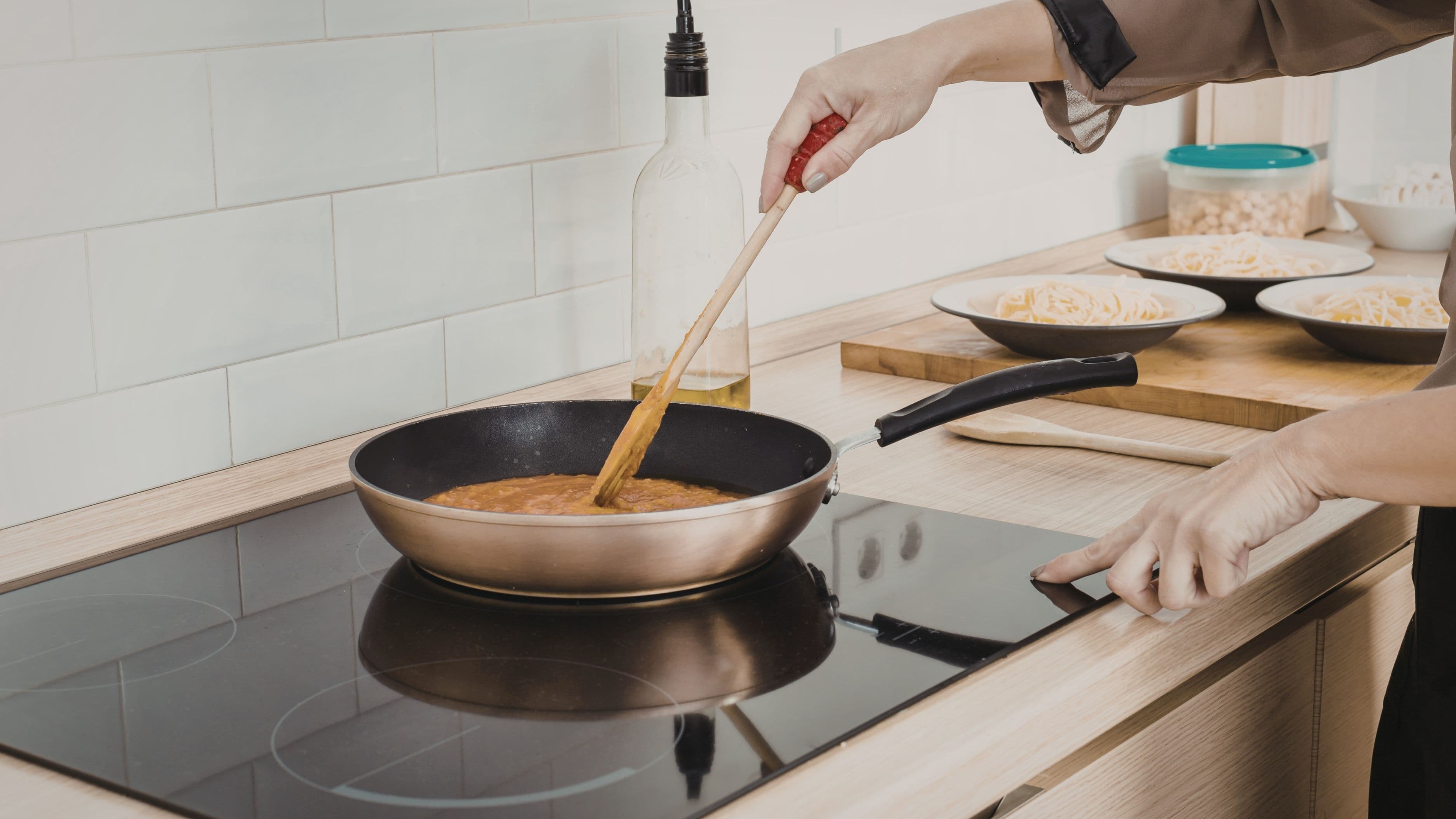
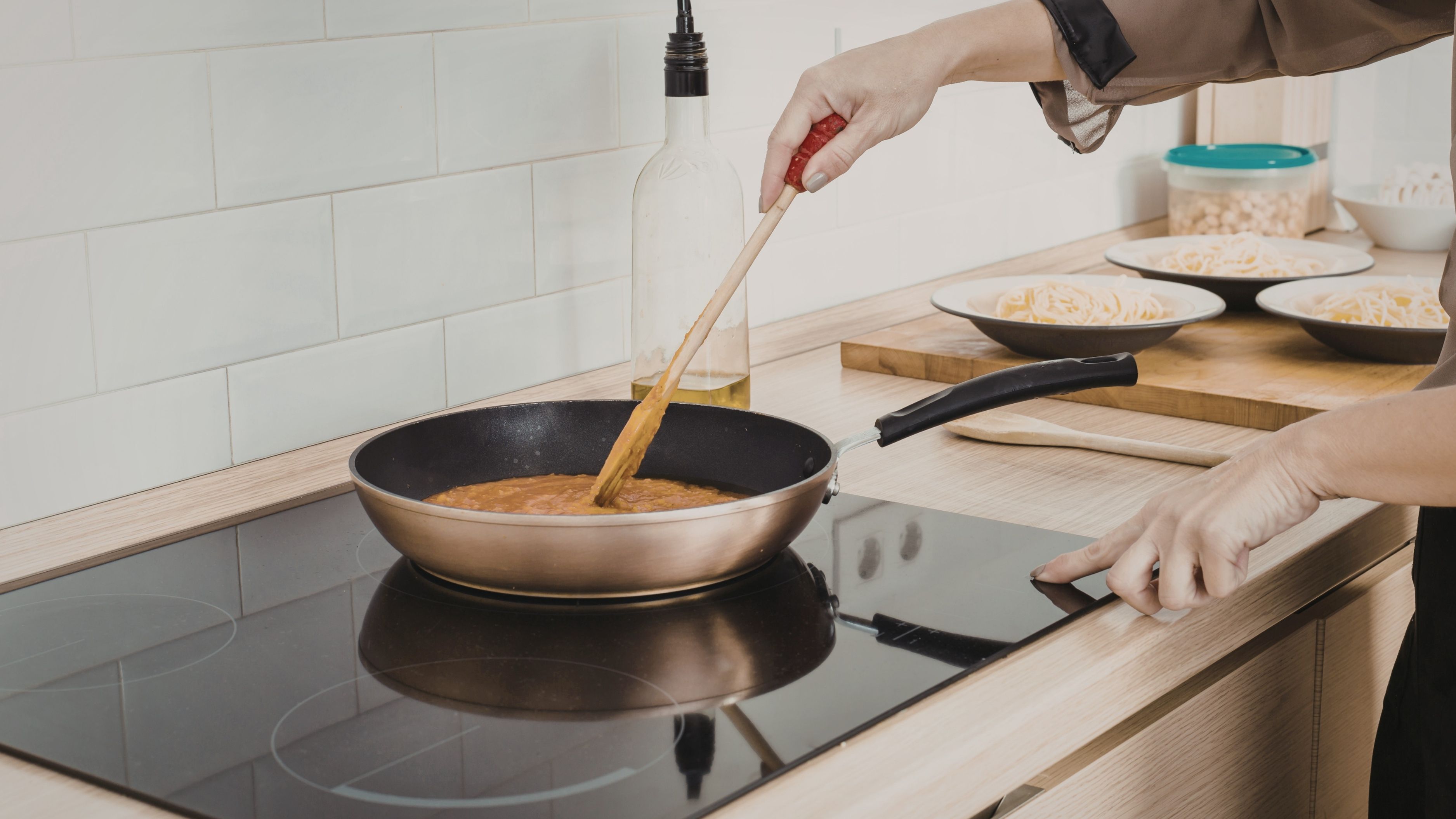
Before getting into whether induction is right for you, it helps to understand what's actually happening when it works. Induction cooktops don't generate heat themselves — they generate a magnetic field that causes heat to develop directly inside the pan. The cooktop surface stays relatively cool; only the cookware heats up, and only where the pan makes contact with the element.
The practical implications of this are significant. Induction heats faster than gas or electric resistance because it's transferring energy directly into the pan rather than heating a burner or coil that then heats the pan. It responds to temperature adjustments almost instantly — noticeably faster than gas and dramatically faster than traditional electric. And because the surface itself doesn't get hot, spills don't bake on, making cleanup easier than either alternative.
The catch — and it's a real one — is that induction only works with magnetic cookware. If a magnet sticks to the bottom of your pan, it works on induction. Cast iron, most stainless steel, and magnetic carbon steel all work. Aluminum, copper, and glass do not, unless they have a magnetic base layer bonded to the bottom. If you're switching from gas and your cookware is mostly copper or vintage aluminum, budget for new pots and pans.
Induction vs. Gas vs. Electric: The Actual Comparison
Induction vs. Gas
Gas has long been the preference of serious home cooks because of its immediate visual feedback (you can see the flame), its high heat output, and its familiar feel. These are genuine advantages, but the performance gap has narrowed more than most people realize.
Modern induction cooktops reach high temperatures faster than gas burners and offer more precise low-heat control, which is actually better for delicate sauces, melting chocolate, or keeping something at a gentle simmer without constant adjustment. What induction can't replicate is open-flame cooking — charring, wok cooking with high-heat tossing, or toasting over a flame. For a small subset of techniques, gas has a specific functional advantage. For everyday cooking tasks, induction matches or exceeds gas performance.
Gas also has an installation advantage in kitchens that already have a gas line — no electrical upgrade required. The running cost comparison between gas and induction varies significantly by region depending on utility rates. In many US markets, electricity has become competitive with gas on a per-BTU basis, and induction's energy efficiency (about 85–90% of energy transferred to the pan, versus 40–55% for gas) reduces the operating cost gap further.
Induction vs. Traditional Electric (Coil or Radiant Glass-Top)
This comparison is more straightforward: induction is better than traditional electric in almost every meaningful way. It heats faster, responds quicker, is safer because the surface doesn't get as hot, and is easier to clean because spills don't bake onto a hot element or coil. The only real advantages of a basic electric cooktop are lower upfront cost and universal cookware compatibility.
If you currently have a coil electric cooktop and you're considering any upgrade, induction should be on the list. A good mid-range induction cooktop outperforms even a high-end radiant glass-top electric in both speed and control.
The Installation Reality
This is where a lot of induction purchases hit unexpected friction, so it's worth being detailed.
Electrical requirements are the main consideration. Most full-size induction ranges (with oven) require a 240-volt, 50-amp circuit. Induction cooktops (without oven) typically require a 240-volt, 40-amp circuit. If your kitchen already has an electric range or cooktop, there's a good chance the wiring and outlet are already there — confirm the amperage matches what the new unit requires, which it usually does.
If you're switching from gas, this is where costs rise. You'll need a new 240-volt circuit run from your electrical panel, which typically costs $200 to $600 depending on the distance from the panel and local labor rates. In some older homes where the panel has limited capacity, an upgrade may also be needed. Get an electrician to assess this before you purchase — it's a 30-minute visit that prevents surprises.
Portable induction units are worth mentioning for anyone who wants to test induction before committing. A single-burner portable induction cooktop runs $30 to $80 and plugs into a standard 120-volt outlet. It's a genuine way to experience induction cooking — the speed, the control, the cookware limitation — before committing to a full cooktop. If you try one for a month and find yourself frustrated by the cookware restriction or missing gas, that's valuable information.
Cost: What to Expect at Each Level
Induction cooktops span a wide price range, and the performance gap between tiers is real enough to plan around.
Entry-level ($400–$800): Basic 4- or 5-element induction cooktops with adequate performance for everyday cooking. Brands like GE, Frigidaire, and Empava occupy this range. Expect solid heating speed and basic controls, but fewer power boost zones and less precise power level increments. Suitable for most households upgrading from electric.
Mid-range ($800–$1,500): Where most homeowners land for a first serious induction cooktop. Bosch, Samsung, and Electrolux offer well-reviewed models in this range with better temperature precision, more configuration flexibility (bridge zones, expandable elements), and more polished build quality. Bosch in particular has a strong reputation for induction reliability in this price tier.
Premium ($1,500–$3,000+): Thermador, Miele, Wolf, and Gaggenau occupy the high end, offering all-element boost capability, ultra-precise power control, flush-mount installation, and build quality that justifies the premium for serious cooks or high-end kitchen renovations. These are not necessary for good cooking results but represent the best that residential induction currently offers.
For a kitchen renovation context, most homeowners see the best value in the $900–$1,400 range, where performance genuinely matches anything short of a professional-grade cooktop at a price that doesn't require sacrificing budget from other parts of the project.
The Cookware Question
This is the practical hurdle that stops some people, and it's worth assessing honestly before purchasing.
The quickest test: hold a refrigerator magnet against the bottom of each piece of cookware you own. If it sticks firmly, it works on induction. If it doesn't stick or sticks very weakly, it won't work or won't perform reliably.
Cast iron — including enameled cast iron like Le Creuset or Lodge — works perfectly. Magnetic stainless steel (most stainless cookware, including All-Clad's stainless line) works. Carbon steel works. Dedicated induction cookware sets are also widely available at every price point.
What doesn't work: pure aluminum (common in older non-stick pans and cheaper cookware), copper (most traditional copper pans), and regular glass or ceramic. Some pans with an aluminum body have a magnetic stainless steel base bonded to the bottom — these work on induction but may be slower to heat or less efficient than fully magnetic cookware.
If you'd need to replace most of your cookware, build that cost into the project budget. A functional set of induction-compatible cookware — including a sauté pan, a saucepan, a Dutch oven, and a skillet — can be assembled for $150 to $400 at mid-range quality, or higher if you're investing in cast iron or premium stainless.
Who Should Choose Induction
Induction is the right choice if most of these apply to you:
You currently have an electric cooktop (coil or radiant) and are ready to upgrade. The performance and usability improvement over standard electric is substantial and the installation is typically straightforward.
You want the fastest, most responsive cooktop available for everyday cooking. Induction outperforms gas in most practical tasks and significantly outperforms standard electric.
You have young children in the home or safety is a concern. The induction surface doesn't get as hot as gas or electric alternatives, which meaningfully reduces burn risk from accidental contact.
You prioritize easy cleaning. The flat glass surface and minimal surface heat means spills wipe off instead of baking on.
You're building a new kitchen or doing a significant renovation where running a dedicated electrical circuit is already part of the project scope.
Who Should Hesitate — or Choose Gas Instead
Gas may still be the better fit if:
You do significant wok cooking or high-heat charring that benefits specifically from open flame. This is a real functional difference, not a matter of preference.
You're switching from gas and the electrical upgrade cost is substantial enough to affect your overall renovation budget significantly. Get the electrician's quote before deciding.
Your cookware collection is primarily copper, aluminum, or glass and you're not prepared to replace it. The compatibility limitation is manageable for most people but is a genuine friction point.
You live in an area with high electricity rates and low natural gas rates, making the operating cost comparison less favorable to induction.
What to Avoid
Buying without checking your electrical panel capacity first. An older home with a 100-amp panel serving multiple high-draw appliances may need an upgrade to accommodate a 40-amp induction circuit without tripping breakers. This is a $1,000–$3,000 cost that's better discovered before purchase.
Choosing the cheapest induction cooktop expecting premium performance. The entry-level market includes some notably poor options — particularly lesser-known brands — with inconsistent element performance, weak simmer capability, and short lifespans. Read verified reviews and stick to brands with a track record in induction specifically.
Assuming all induction cooktops perform equally. They don't — element size, maximum power output, power level increments, and boost zone availability vary significantly between models and price points. If precise low-heat control matters to you (sauces, candy making, tempering), choose a model with 15+ power levels rather than a basic 9 or 10 level unit.
Overlooking ventilation requirements. Induction doesn't heat the air the way gas does, but it still produces steam, smoke, and cooking vapors that need to be vented. Your existing range hood or ventilation setup should be adequate if it was sized for a gas range — if not, this is a separate upgrade to plan for.
FAQ
How much does it cost to switch from gas to induction? The cooktop itself runs $400 to $3,000+ depending on the model. Electrical work to install a 240-volt circuit typically adds $200 to $600. If your electrical panel needs an upgrade, add $1,000 to $3,000. Total installed cost for a mid-range setup (cooktop plus electrical work, no panel upgrade needed) typically runs $1,200 to $2,500.
Does induction work with all cookware? No. Cookware must be magnetic to work on induction. Cast iron, magnetic stainless steel, and carbon steel work. Aluminum, copper, and glass typically do not unless they have a magnetic base. Test existing cookware with a refrigerator magnet — firm stick means it works.
Is induction safe to use? Induction is generally considered safer than gas or traditional electric because the surface itself doesn't reach extreme temperatures during normal cooking. There is no open flame and no gas combustion. The surface can still get warm from residual pan heat, so it's not completely cool, but accidental burn risk is meaningfully lower than alternatives.
How long do induction cooktops last? Quality induction cooktops from established brands typically last 10 to 15 years with normal use. The main failure point over time is the induction electronics rather than the glass surface. Brands with strong warranty and parts availability (Bosch, Miele, Thermador) are worth the premium for longevity.
Can I use induction if I have a pacemaker? People with pacemakers or other implanted cardiac devices should consult their cardiologist before using induction cooktops, as the electromagnetic field generated can theoretically interfere with some devices. This is worth checking with a medical professional for anyone in this situation.
📚 Sources
U.S. Department of Energy – Induction Cooking Technology Overview: https://www.energy.gov/energysaver/induction-cooking
Consumer Reports – Induction Cooktops Buying Guide: https://www.consumerreports.org/appliances/ranges/induction-cooktops-buying-guide/
This Old House – Gas vs. Induction Cooktop Comparison: https://www.thisoldhouse.com/kitchens/22502093/induction-vs-gas-cooktop
ENERGY STAR – Induction Range Efficiency Data: https://www.energystar.gov/products/residential_cooking_products
National Electrical Code (NEC) – Circuit Requirements for Kitchen Appliances: https://www.nfpa.org/codes-and-standards/all-codes-and-standards/list-of-codes-and-standards/detail?code=70
-jhajrFUGfI3zCQGjpAWcxuNPi1zUTB.jpg&w=3840&q=75)