This comparison breaks down both options honestly – how they differ structurally, what they actually cost, what you gain and give up with each, and which one is the better fit depending on your specific situation.
The Core Difference
The distinction is simpler than it sounds. A loft bed has one sleeping surface elevated high enough to create usable space underneath – usually enough for a desk, a sofa, a wardrobe, or some combination. There's no lower bunk because the space below is the point. A bunk bed has two sleeping surfaces stacked vertically, with the lower one at or near standard bed height and the upper one above it.
For adults living alone in a studio, that distinction usually settles the question before any other factor comes into play. If you don't need a second sleeping surface, a loft bed is almost always the more useful choice – it trades a sleeping position you won't use for functional living space you will. Bunk beds become relevant for studio apartments shared by two people, for adults who frequently host overnight guests, or for renters who want the flexibility of a second sleeping option without committing to a sofa bed.
Loft Beds: What You Get and What You Give Up
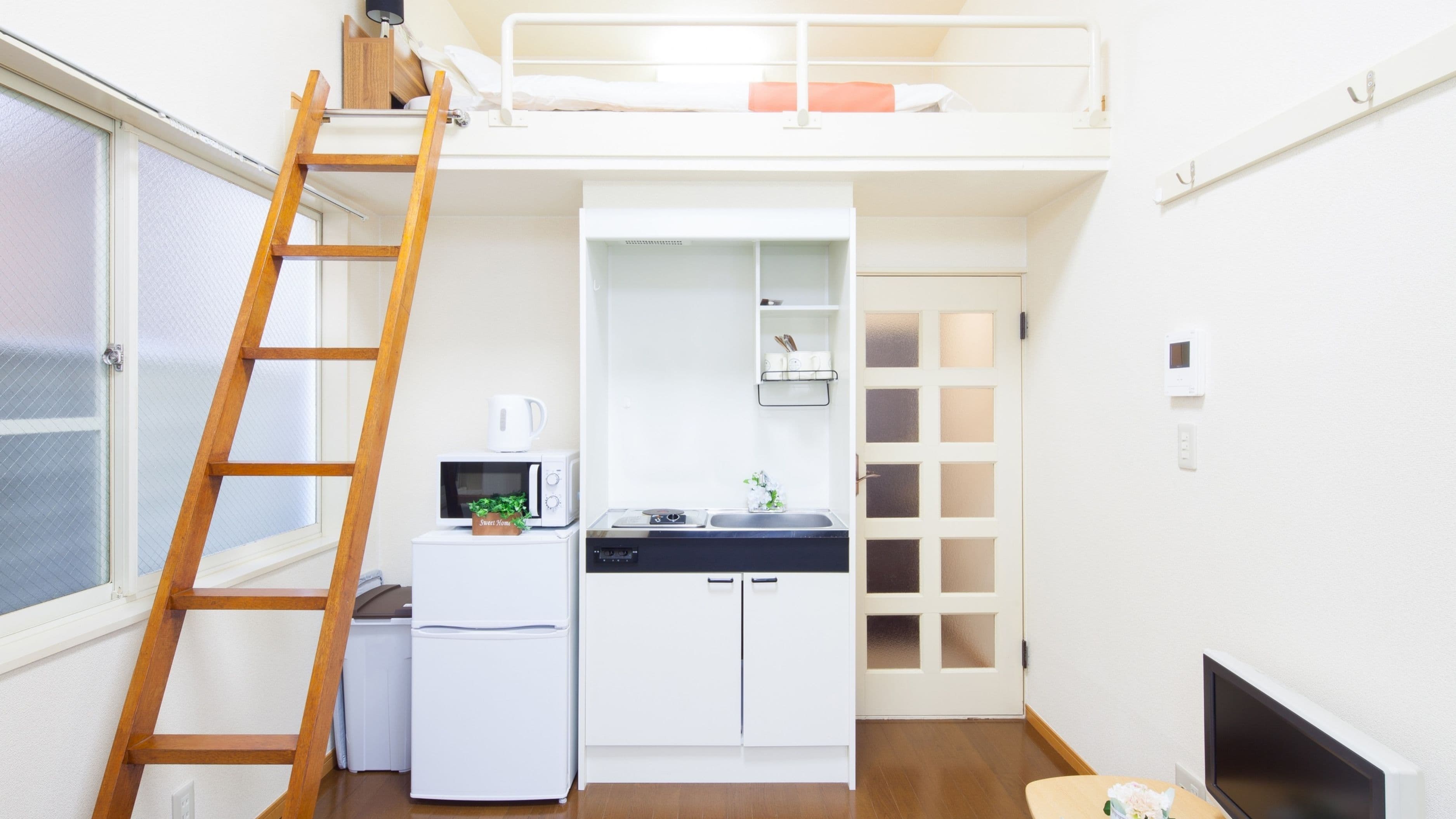
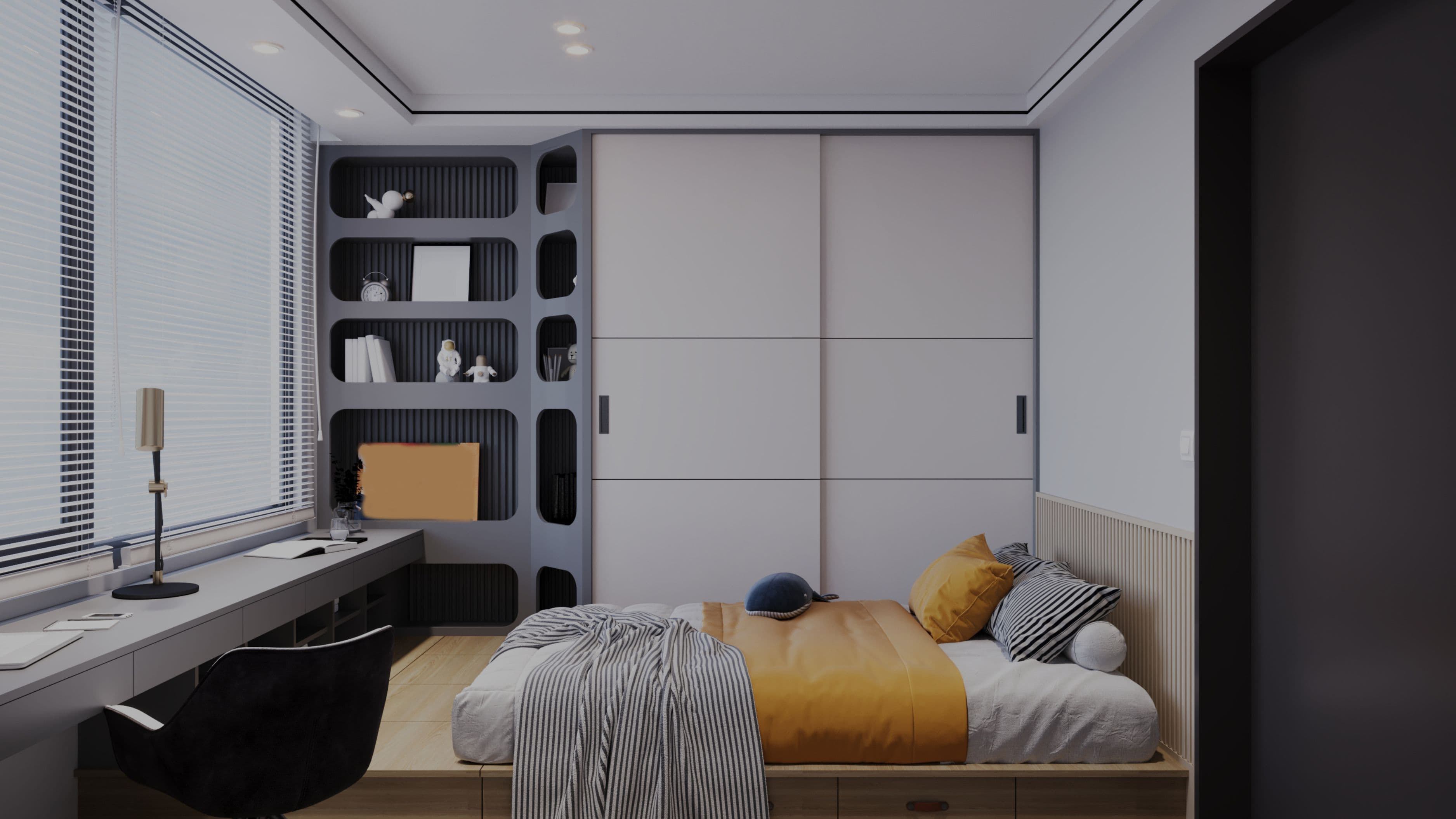
A loft bed raises your mattress to somewhere between 5 and 6.5 feet off the floor, depending on the model, which typically creates a clear zone of 4 to 5.5 feet of usable space beneath it. That's enough for a full desk setup, a small sofa, a dresser, a wardrobe, or in well-designed setups, a combination of several of these.
The functional upside is significant. In a studio of 400–600 square feet, recovering 30–50 square feet of functional floor space from under the loft is a material improvement in how the apartment lives. A dedicated desk zone that didn't exist before. A seating area that feels like a separate space. Storage infrastructure that's organized rather than shoved into corners. The psychological effect of having defined zones in a studio – even without walls – is also genuinely useful; sleeping above your workspace or living area creates a mild sense of separation that most studio dwellers find helps the space feel less like one compressed room.
The trade-offs are real. Loft beds have access limitations that become daily friction if you don't account for them upfront. Most use a fixed ladder, which means getting in and out of bed involves climbing – fine when you're alert and coordinated, less fine at 2am or when you're unwell. Models with integrated stairs rather than ladders are more comfortable and often include built-in storage in the stair treads, but they take more floor space and cost more. Ceiling height is the hard constraint: most adults need at least 9 to 10 feet of ceiling to use a loft bed comfortably without feeling like they're sleeping in a crawl space, since you need enough clearance above the mattress to sit up in bed without hitting the ceiling. If your studio has 8-foot ceilings, a loft bed may technically fit but will feel cramped at the sleeping level.
Making the bed is also more effortful than at standard height, which is a minor but real daily annoyance that some people underestimate when evaluating the option. The practical solution is fitted sheets that stay put and a duvet rather than a top sheet, which reduces the effort to an acceptable level.
Cost range: Freestanding adult loft beds run $300–$1,500 for furniture-grade options. Custom or built-in loft systems – which are typically more attractive, more structurally integrated, and better suited to maximizing the space beneath – run $1,500–$5,000 or more depending on complexity and materials.
Bunk Beds: What You Get and What You Give Up
A bunk bed for adults is a specific product category that's distinct from the children's bunk beds most people picture. Adult bunk beds are built to support higher weight capacities (typically 400–600 lbs per bunk), use full, queen, or even king mattresses rather than just twin sizes, and are engineered with more robust framing. The footprint is similar to a standard bed, but the vertical stacking means two people can sleep in the same floor space one person would otherwise occupy.
The genuine use cases for adults are narrower. A studio shared by two adults – roommates splitting rent in an expensive city – is the scenario where a bunk bed makes the most sense. The alternative is two beds side by side, which in a small studio leaves almost no room for anything else. Stacking them reclaims floor space while preserving two proper sleeping positions. For adults who regularly host guests but don't want a sofa bed (which requires clearing furniture and unfolding every time), a lower bunk serves as a guest bed that's always ready without any setup effort. Some couples use bunk beds to solve the sleep compatibility problem – different schedules, different temperature preferences, one partner who's a restless sleeper – in a small space where two separate beds would otherwise be impractical.
The trade-offs are similar to loft beds but more pronounced. The upper bunk of a bunk bed for adults involves the same ladder-climbing issue as a loft bed, with the same ceiling clearance requirements. The lower bunk tends to feel cave-like because the upper bunk is directly above it, typically at around 4 to 5 feet of clearance. In practice, many adults find the lower bunk fine for sleeping but uncomfortable for sitting up reading or spending time in bed before sleep. The mattress choice matters here: most adult bunk beds specify a maximum mattress thickness (often 8–10 inches) to preserve enough headroom on both levels, which rules out the thicker, more comfortable mattresses many adults prefer.
The spatial trade-off is also worth being clear about. Unlike a loft bed, which specifically creates functional living space beneath the sleeping area, a bunk bed just stacks two sleeping surfaces. The floor space it "saves" is the footprint of the second bed, not a full zone of usable space. If only one person is sleeping in the studio, that floor space savings comes at the cost of a sleeping position nobody needs – which is why a loft bed is almost always more useful for solo occupants.
Cost range: Adult-rated bunk beds run $400–$2,000 for quality freestanding options. The higher end of that range typically offers queen or king lower bunks, more robust construction, and better aesthetic integration with adult-oriented spaces.
Side-by-Side Comparison
Ceiling height requirement: Both options need roughly 9–10 feet for comfortable use. In a space with 8-foot ceilings, neither is ideal, though a lower loft (with less clearance beneath) is more adaptable than a bunk bed in that constraint.
Floor space recovered: Loft beds recover meaningful functional space – a full desk or seating zone – beneath the sleeping surface. Bunk beds recover only the footprint of the second bed and only when two sleeping positions are actually needed.
Comfort for adults: Purpose-built adult loft beds and bunk beds are both comfortable with the right mattress choice. The access issue (ladder climbing) is the same for both. The lower bunk of a bunk bed has less overhead clearance than sleeping at standard height, which some adults find uncomfortable over time.
Aesthetic integration: Both options can look intentional and adult in a well-designed studio, but loft beds have a wider range of design options – from industrial steel to warm wood – and integrate more naturally into a space that's meant to look like a home rather than a dorm. Built-in loft systems in particular can look architecturally deliberate rather than furniture-like.
Flexibility: Loft beds with open understorey can be reconfigured as your needs change – a desk zone today, a seating area tomorrow. Bunk beds are more fixed in their purpose.
Best for one person: Loft bed, definitively.
Best for two people in a studio: Bunk bed, or a loft bed with a sofa bed or pull-out beneath for the second person.
Best for frequent guests: Bunk bed, or a loft bed with a day bed or futon below.
What to Avoid
Buying a children's bunk bed for adult use. Children's bunk beds are not engineered for adult weight loads and can fail structurally. Always verify weight capacity per bunk before purchasing for adult use.
Underestimating ceiling height. Measure from floor to ceiling and subtract the mattress height plus a comfortable sitting clearance (at least 24–30 inches above the mattress to sit up). If the math doesn't work for your ceiling, it won't work in practice.
Choosing a ladder over stairs without thinking it through. Fixed ladders are functional but less convenient for daily use than stairs. If budget and floor space allow, a loft bed with integrated stairs significantly improves daily usability.
Assuming the under-loft space is "free." The space beneath a loft bed needs to be planned and furnished with the same intention as any other zone in the apartment. An unplanned under-loft zone tends to become a storage pile rather than a functional space.
Buying without checking mattress compatibility. Both loft beds and bunk beds have maximum recommended mattress thicknesses. Verify before you buy a mattress, not after.
The Recommendation
For most single adults in a studio apartment, a loft bed is the better investment. The floor space it creates beneath the sleeping surface is functionally significant, not theoretical – it's real room for a desk, a seating area, or organized storage that materially changes how the apartment lives. The trade-offs (ladder access, ceiling height requirements, making the bed) are real but manageable with good product selection.
A bunk bed is the better answer when two people are sharing the studio, when a permanent second sleeping surface is a genuine practical need, or when ceiling height makes a proper loft configuration uncomfortable. In those situations, a purpose-built adult bunk bed solves the space problem while keeping both sleeping positions functional.
Either way, the decision to raise the sleeping surface is almost always the right one in a studio. The floor space underneath a standard bed is wasted space; in a small apartment, there's no such thing as acceptable wasted space.
FAQ
Can adults safely sleep in a loft bed long-term? Yes, with a properly constructed adult-rated loft bed anchored to walls where possible, and a mattress within the manufacturer's recommended weight and size specifications. The main daily challenge is ladder access, which becomes second nature quickly for most people but should be evaluated honestly if you have mobility limitations or frequently get up in the night.
What ceiling height do I actually need? For a loft bed: at minimum, mattress top height plus 24 inches for minimal clearance, though 30–36 inches above the mattress is significantly more comfortable. For a 10-inch mattress at 64 inches off the floor, you'd need 88–100 inches of ceiling height – roughly 7.5 to 8.5 feet as an absolute minimum, with 9–10 feet preferred. Measure before you shop.
Are built-in loft beds worth the cost over freestanding? For a long-term rental or owned space, usually yes. Built-in systems are more structurally secure, better integrated visually, can be customized to maximize the specific dimensions of your space, and typically include more thoughtful storage integration. For a short-term rental or if you move frequently, a high-quality freestanding loft bed that disassembles cleanly is more practical.
Can I build a loft bed myself? Yes – DIY loft beds are a well-documented project with extensive plans available online. The structural requirements are significant since the bed needs to safely support the weight of one or two adults plus a mattress, so use proper dimensional lumber, appropriate hardware, and wall anchoring. This is a project for someone comfortable with basic carpentry, not a true beginner project.
How do I make a loft bed look intentional in an adult space? Material choice matters most. A loft bed in solid wood or powder-coated steel reads as adult and design-forward; a particle-board or visible-hardware version reads as temporary. Integrating the under-loft zone with matching furniture and good lighting – rather than treating it as leftover space – is the other key move. Under-loft lighting (LED strip lighting along the beam, a pendant, or a wall sconce) makes the zone feel defined and deliberate.
📚 Sources
Architectural Digest – Small Space Sleeping Solutions for Adults: https://www.architecturaldigest.com/story/small-space-bedroom-ideas
This Old House – How to Build a Loft Bed: https://www.thisoldhouse.com/bedrooms/21017201/how-to-build-a-loft-bed
Bob Vila – Bunk Bed Buying Guide: https://www.bobvila.com/articles/best-bunk-beds/
Family Handyman – Studio Apartment Space-Saving Ideas: https://www.familyhandyman.com/list/studio-apartment-ideas/
CPSC – Bunk Bed Safety Guidelines: https://www.cpsc.gov/Safety-Education/Safety-Education-Centers/Bunk-Bed-Safety
Houzz – Loft Bed Design Ideas for Adults: https://www.houzz.com/photos/loft-bed-ideas-phbr1-bp~t_709
🔍 Explore Related Topics