
Both options free up floor space. Both can handle occasional overnight guests. But they serve different rooms, different lifestyles, and different budgets. This comparison breaks down exactly how they differ across the factors that matter: space recovery, cost, installation, usability, and long-term value.
What Each One Actually Is
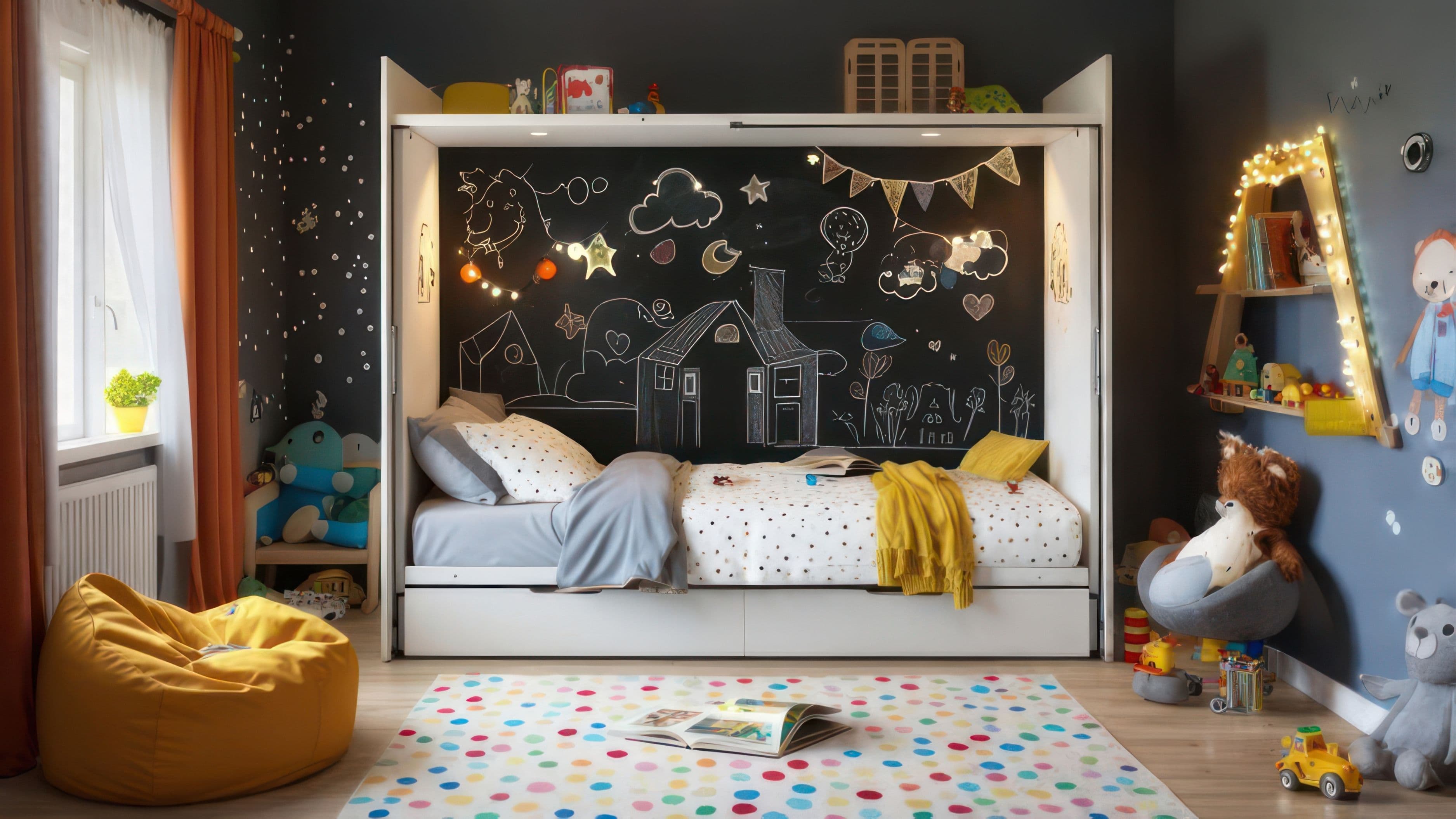
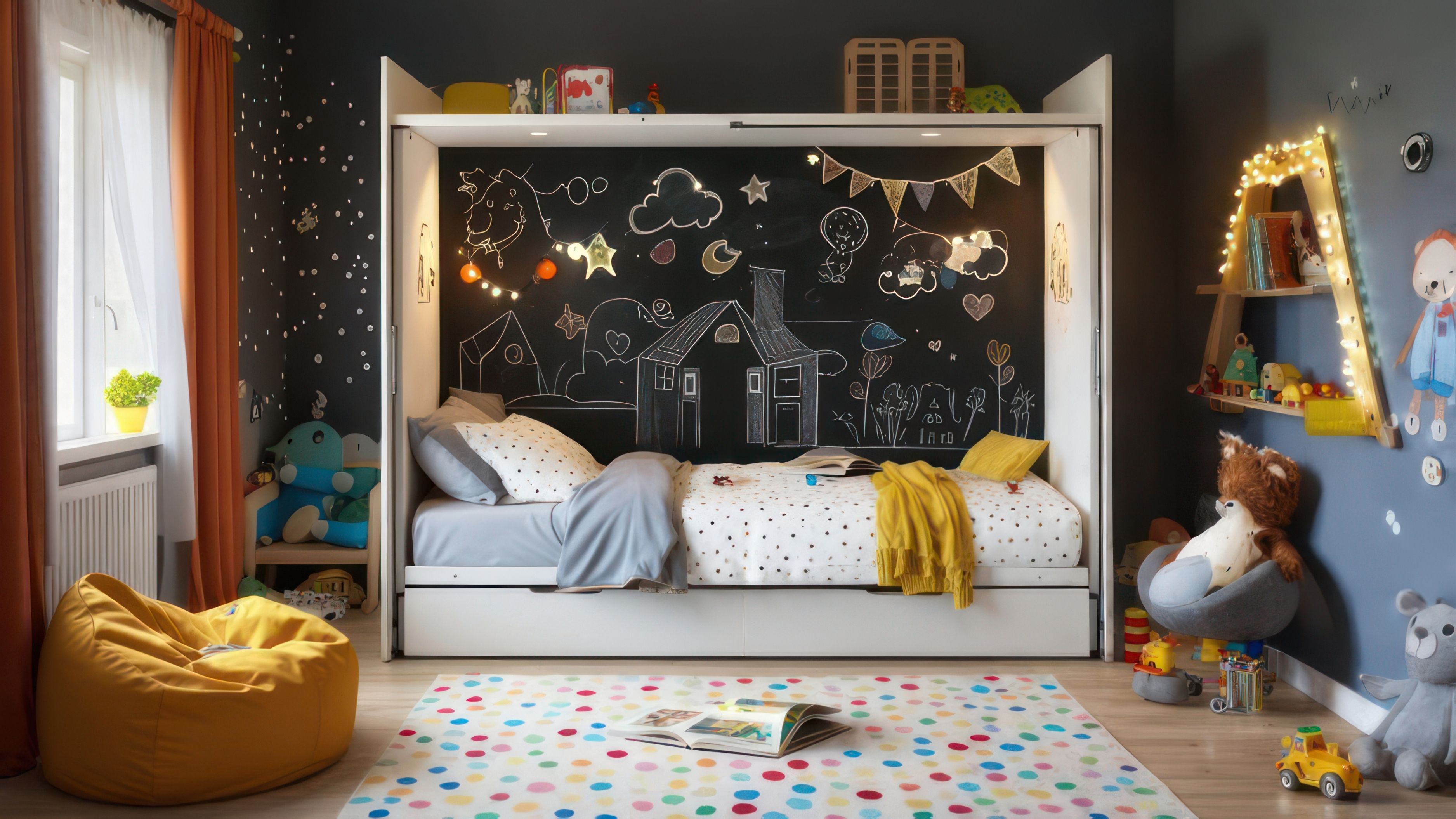
A Murphy bed – also called a wall bed – folds vertically into a wall cabinet when not in use. During the day it's a flat cabinet face, a shelf unit, or a fold-down desk. At night, you pull it down and it deploys a full-size mattress. Done well, a Murphy bed can make a room feel like it doesn't have a bed in it at all.
A daybed is a framed bed that functions as seating during the day and a sleeping surface at night. It sits on the floor permanently, typically against a wall, and uses either throw pillows to read as a sofa or a trundle below for a second sleeping surface. It never disappears from the room – it just transitions from seating to sleeping without moving anything heavy.
The core difference is how much space you actually recover. A Murphy bed takes the bed off the floor entirely. A daybed keeps it there but uses it more efficiently.
Space Recovery: Murphy Bed Wins Clearly
If your primary goal is to recover usable floor space in a room, the Murphy bed is the more powerful solution by a significant margin. A standard queen Murphy bed occupies roughly 60–70 square feet of floor space when deployed – and near zero when folded. A queen daybed takes up the same 60 square feet whether it's being used or not.
In a room that needs to be a home office from Monday to Friday and a guest bedroom on weekends, a Murphy bed with an integrated desk makes genuine double-use possible. The desk folds away when the bed comes down, and the bed folds away when the desk goes up. That transformation isn't possible with a daybed – it's always a bed, regardless of what else is happening in the room.
The trade-off is that accessing and deploying the Murphy bed takes a few seconds and requires that you keep the area in front of it clear. It's not a burden, but it does mean the open floor space in front of the unit needs to stay unobstructed – or you're lifting the bed down into furniture every night.
Cost: A Wide Range on Both Sides
Murphy Beds
Murphy bed pricing spans a very wide range depending on whether you're buying a pre-made system, a flat-pack kit, or a fully custom cabinet build.
A basic wall bed mechanism-only kit (you build the cabinet yourself) starts around $300–$600 and requires significant carpentry skill and time. Pre-made Murphy bed systems from manufacturers like Arason, IKEA (Platsa-based hacks), or Murphy Bed Direct run $800–$2,500 for a basic unit. Full Murphy bed systems with integrated shelving, a fold-down desk, and a quality finish typically land in the $2,000–$5,000 range. Custom built-in installations done by a cabinet maker or furniture company can reach $5,000–$10,000 or more depending on materials and complexity.
Installation for a pre-made system is DIY-possible for someone with intermediate skills – it's essentially assembling furniture and anchoring it securely into wall studs. Professional installation adds $200–$600 depending on your area.
Daybeds
A decent quality daybed frame with a trundle costs $300–$800. Quality versions with solid wood frames or better upholstery run $800–$1,500. The mattress is a separate cost – a twin or full mattress appropriate for both sitting and sleeping typically adds $200–$500 to the total. A trundle mattress is an additional $150–$300.
For most buyers, the total daybed investment including mattress(es) lands in the $500–$2,000 range – comfortably below the mid-range Murphy bed options.
Summary: Daybed is the budget-friendly option. Murphy bed requires more upfront investment but can serve as a room-defining furniture piece that adds long-term value to the space.
Sleeping Comfort: Honest Assessment of Both
This is where both options have real trade-offs worth understanding before you commit.
Murphy bed comfort depends almost entirely on the mattress. Unlike a standard bed where the mattress sits flat and gets body-weight compressed in one orientation, a Murphy bed mattress spends its folded hours standing vertically. Most manufacturers specify foam or memory foam mattresses (typically 8–12 inches thick) designed to handle this orientation without permanent deformation. Quality foam mattresses in this category sleep well – comparable to a standard guest bed. The mechanism itself, if properly maintained, makes deployment smooth and consistent. The main concern is long-term mattress durability over years of folding and unfolding, which is why choosing a mattress specified for wall bed use matters.
Daybed comfort depends on the firmness trade-off between seating and sleeping. A mattress that's soft enough to sleep comfortably on is typically too soft to sit on for extended periods without feeling like you're sinking. A firmer mattress works better as seating but is less comfortable for longer sleep. This isn't unsolvable – a medium-firm mattress with quality throw pillows can work reasonably well in both roles – but it's a genuine compromise you'll feel daily. Daybeds work better as occasional sleeping surfaces than as primary beds for regular nightly use.
Who Each Option Is Actually For
Murphy beds make the most sense for:
Rooms that need to function as something else entirely – home office, art studio, exercise space, playroom – when the guest isn't there. If you have a second room that's wasted as a rarely-used guest bedroom, a Murphy bed with integrated desk or shelving transforms it into a fully functional primary space that can still host overnight guests when needed.
Small apartments or studio layouts where floor space is the primary constraint. In a studio where the sleeping area and living area are the same room, a Murphy bed is the closest thing to a structural renovation you can do with furniture.
Homeowners planning to sell eventually. A well-installed Murphy bed with custom cabinetry reads as a room feature rather than a workaround, and can be a meaningful selling point for properties in dense urban markets.
Daybeds make the most sense for:
Kids' rooms and teen spaces where the bed does double duty as seating for friends without requiring daily deployment effort. A daybed in a teenager's room functions naturally as both a reading and lounging surface during the day and a bed at night.
Guest rooms that are occasionally used for guests but also used regularly as sitting or reading rooms. If your guest room gets used a few times a year and you just want the space to feel more inviting between visits, a daybed with quality bedding and throw pillows achieves that without any installation complexity.
Renters who can't make wall modifications. Murphy beds require secure anchoring into wall studs – in most rental situations, you're not permitted to do this without landlord permission, and the security of the installation depends on proper stud anchoring. Daybeds need no installation at all.
Installation Complexity
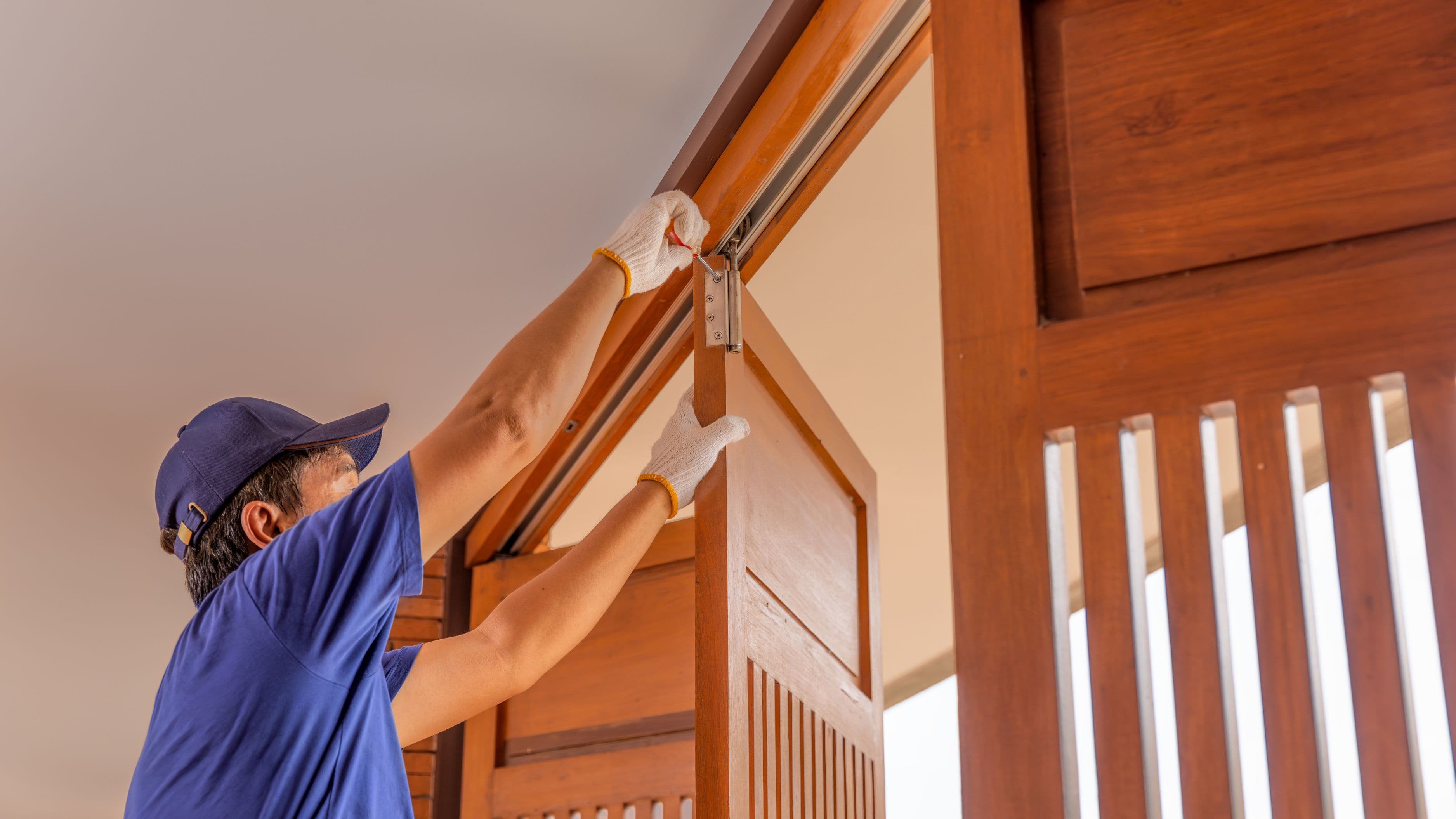
Murphy bed installation requires anchoring a heavy cabinet assembly – typically 200–300 lbs when fully assembled – securely into wall studs. This is a two-person job at minimum and requires locating studs accurately, using appropriate hardware, and ensuring the unit is plumb and level before the mechanism is tested under load. Improper installation is a safety issue, not just a quality issue – a Murphy bed that pulls away from the wall when deployed is a real hazard.
For confident DIYers who've assembled furniture and done basic wall work, this is achievable. For anyone without that experience, professional installation is the right call. Budget $200–$600 for professional installation on top of the unit cost.
Daybeds have zero installation requirements. Assembly is typically 30–60 minutes from flat-pack, involves no wall mounting, and can be moved or reconfigured freely afterward.
Long-Term Flexibility
One consideration worth weighing is what happens to the room and the furniture over the next five to ten years.
A Murphy bed becomes part of the room. The cabinet takes up wall space permanently, the floor area in front of it needs to stay accessible, and removing it later means patching walls and rethinking the room. That's not necessarily a downside if the room design is good – it's more of a commitment that should be made intentionally.
A daybed is just furniture. It can be moved, resold, repurposed in another room, or replaced without any impact on the room itself. If your space needs or family situation changes, the daybed adapts with minimal friction.
What to Avoid
Don't buy a Murphy bed based on the mechanism quality alone without considering the mattress compatibility. The best hardware with the wrong mattress produces a bed that bottoms out, shifts during sleep, or develops permanent body impressions within a year.
Don't install a Murphy bed into drywall without hitting studs. Every installation instruction specifies stud anchoring, and every installation that ignores this creates a hazard. If your stud layout doesn't align with the unit's anchor points, use blocking installed in the wall before mounting.
Don't choose a daybed as a primary nightly bed for adults expecting standard sleeping comfort. It's a functional compromise – excellent for occasional use, workable for the right mattress choice, but not a full replacement for a proper bed frame and mattress combination for regular use.
Don't underestimate the floor-clearance requirement for a Murphy bed. The area in front of the unit – equal to the bed's length when deployed – needs to stay clear. Measure that footprint in your room before purchasing and make sure the layout works before committing.
FAQ
Can a Murphy bed work in a rental apartment? In most rentals, a freestanding Murphy bed cabinet (one that stands on the floor rather than anchoring to the wall) is an option – but these are generally less stable and more limited in design than wall-mounted units. Some landlords will permit wall mounting with written permission. If you're in a rental, a daybed is the simpler no-permission-required solution.
Is a Murphy bed comfortable enough for regular nightly use? Yes, if you choose a quality mattress specified for wall bed use. Murphy beds designed for regular use with good foam mattresses are comfortable as primary sleeping surfaces. The folding mechanism doesn't affect sleep quality – only the mattress choice does.
Can a daybed fit a full-size adult comfortably? Most daybeds are built around twin or full mattress sizes. A full-size daybed (54 x 75 inches) works for one adult but is a tight fit for two. For regular adult guest use, a queen Murphy bed is typically the better investment if space allows.
How long does a Murphy bed mechanism last? Quality Murphy bed mechanisms from established manufacturers – typically piston-based or spring-based lift systems – are designed for 10,000+ cycles of use, which represents decades of daily deployment. The mechanism itself outlasts the mattress in most cases. Budget units with lower-quality mechanisms are the exception.
For a room that needs to do two jobs – sleep guests and serve a daily purpose – a Murphy bed is the more powerful solution. For a room that's already a bedroom and just needs to be more functional between guests, a daybed does the job with less investment, less installation complexity, and more flexibility. Know which problem you're actually solving, and the right choice becomes straightforward.
📚 Sources
This Old House – Murphy Bed Installation Guide: https://www.thisoldhouse.com/bedrooms/21016692/how-to-build-a-murphy-bed
Bob Vila – Murphy Bed Buying Guide: https://www.bobvila.com/articles/best-murphy-beds/
Family Handyman – Small Bedroom Space-Saving Ideas: https://www.familyhandyman.com/list/small-bedroom-storage-ideas/
Houzz – Daybed Ideas and Design Inspiration: https://www.houzz.com/photos/query/daybed
Consumer Reports – How to Choose a Mattress for a Wall Bed: https://www.consumerreports.org/mattresses/how-to-choose-the-right-mattress/
HomeAdvisor – Murphy Bed Installation Cost Guide: https://www.homeadvisor.com/cost/bedrooms-and-closets/install-a-murphy-bed/