Share:

Loading...

For about two decades, the open floor plan was the unquestioned default in American home design. Knock out the wall between the kitchen and living room, let the light flow through, and you had a home that felt modern, spacious, and designed for the way people actually live. That consensus has quietly started to shift. More homeowners are asking whether the open plan they bought into – or paid to create – is actually working for them, and a growing number are adding walls back in. Here's what's driving that conversation and how to think through whether your own floor plan is an asset or a problem.
To understand the current reassessment, it helps to understand why open floor plans became so popular in the first place. The trend accelerated through the 1990s and 2000s as renovation culture went mainstream. Homes built in earlier decades had compartmentalized layouts that reflected a different way of living – formal dining rooms that were used a few times a year, kitchens separated from living areas because cooking was considered separate from entertaining. As lifestyles became less formal and home sizes grew, those walls started to feel unnecessary.
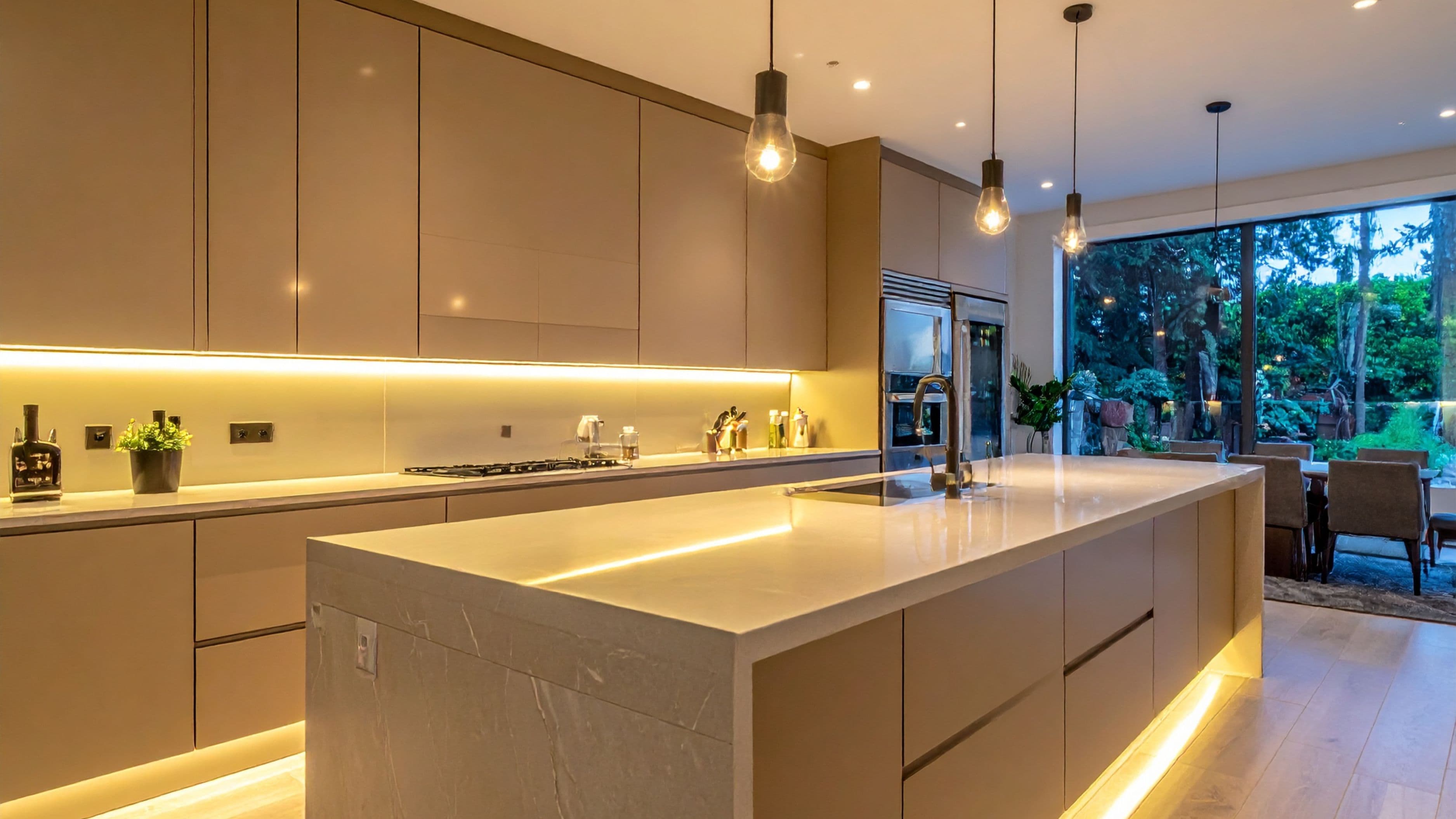
The visual case for open plans is real: removing walls between a kitchen, dining area, and living room genuinely makes smaller spaces feel larger. A 1,400 square foot home with an open main floor reads as more spacious than the same footprint with walls dividing the space. It also supports a particular style of casual entertaining that became culturally dominant – the host in the kitchen, guests in the living area, everyone in the same visual and conversational space. HGTV and home renovation culture reinforced this preference for twenty years, and new construction responded accordingly.
The pandemic was the inflection point. Millions of households suddenly had everyone home, all day, in a space designed for casual socializing rather than work, school, and daily life happening simultaneously. The open floor plan's greatest strength – everyone in the same space – became its greatest weakness. A Zoom call in the kitchen bled into the living room. A child's online school session competed acoustically with a parent's work call. Cooking smells, noise, and visual clutter moved through the entire main floor without any barrier.
That lived experience prompted a reassessment that's still ongoing. A 2023 survey by the National Association of Realtors found that buyer preferences had shifted noticeably, with more buyers expressing interest in partially defined spaces compared to fully open plans.
Architecture and design firms began reporting increased demand for what they started calling "broken plan" design – a hybrid approach that maintains some openness and visual connection between spaces while reintroducing partial walls, columns, built-in storage, and other elements that create acoustic and visual separation without fully closing spaces off.
In 2026, that conversation has matured. Homeowners who lived through the pandemic in open-plan homes have had years to decide how they actually feel about their layout. The feedback is nuanced: most people don't want to go back to fully closed, compartmentalized floorplans, but many want more flexibility and defined separation than a purely open plan provides.
The lived experience of open floor plans breaks down into a few consistent themes that come up repeatedly when homeowners describe what works and what doesn't.
Noise is the most common complaint. In an open plan, sound travels freely across the entire space. This isn't just the cooking smells and dishwasher running – it's the television volume competing with a conversation, the blender running while someone is on a call, kids doing homework at the kitchen island while an adult is trying to work at the nearby desk. Homeowners with young children or work-from-home situations consistently identify acoustic separation as the thing they wish they had more of.
Visual clutter is underestimated. When your kitchen is visible from your living room and your living room is visible from your dining area, clutter in any one zone affects the perception of the entire space. A sink full of dishes, a cluttered counter, toys on the living room floor – none of these are avoidable in real daily life, and in an open plan, they're always in view. The airy, serene open-plan aesthetic that looks effortless in design photos requires constant maintenance in actual use.
Cooking smells travel. This is so obvious that it's often overlooked in planning. Frying fish, sautéing onions, roasting garlic – these smells permeate an open-plan main floor and linger far beyond the kitchen. A good range hood helps but doesn't eliminate the issue. For households that cook frequently and with strong-smelling ingredients, the smell factor is a real quality-of-life consideration.
The social connection benefit is real for the right household. Parents who want to be in the kitchen while watching young children in the adjacent living room genuinely value that visual connection. Households that entertain frequently find the open plan is well-suited to their lifestyle. Couples who cook together and want to maintain conversation across the kitchen and living area appreciate the lack of walls. The open plan isn't wrong – it's wrong for some households and right for others.
This is where homeowners often get tangled up, because the conventional wisdom has been that open floor plans increase resale value and that adding walls back in is a renovation mistake. The reality in 2026 is more complicated than that.
In markets with strong buyer demand and limited inventory, a well-executed open plan still attracts buyers and supports strong valuations. The appeal of spaciousness and light is genuine and durable. But the preference shift is real enough that a thoughtful partial-wall addition – done well, with proper materials and finishing – is unlikely to hurt resale value the way it might have been assumed to a decade ago. What does hurt resale value is a poorly executed wall addition that looks like an afterthought, blocks natural light, or creates an awkward, cramped feeling in a space that was clearly designed to be open.
The more useful framing is: a home you can actually live well in will generally sell well, because buyers can see livability. A home that's been thoughtfully adapted to support real daily life – with a defined workspace, a quieter living area, a kitchen that contains its own noise and smells – is a different but legitimate proposition from a fully open plan, and not an inferior one.
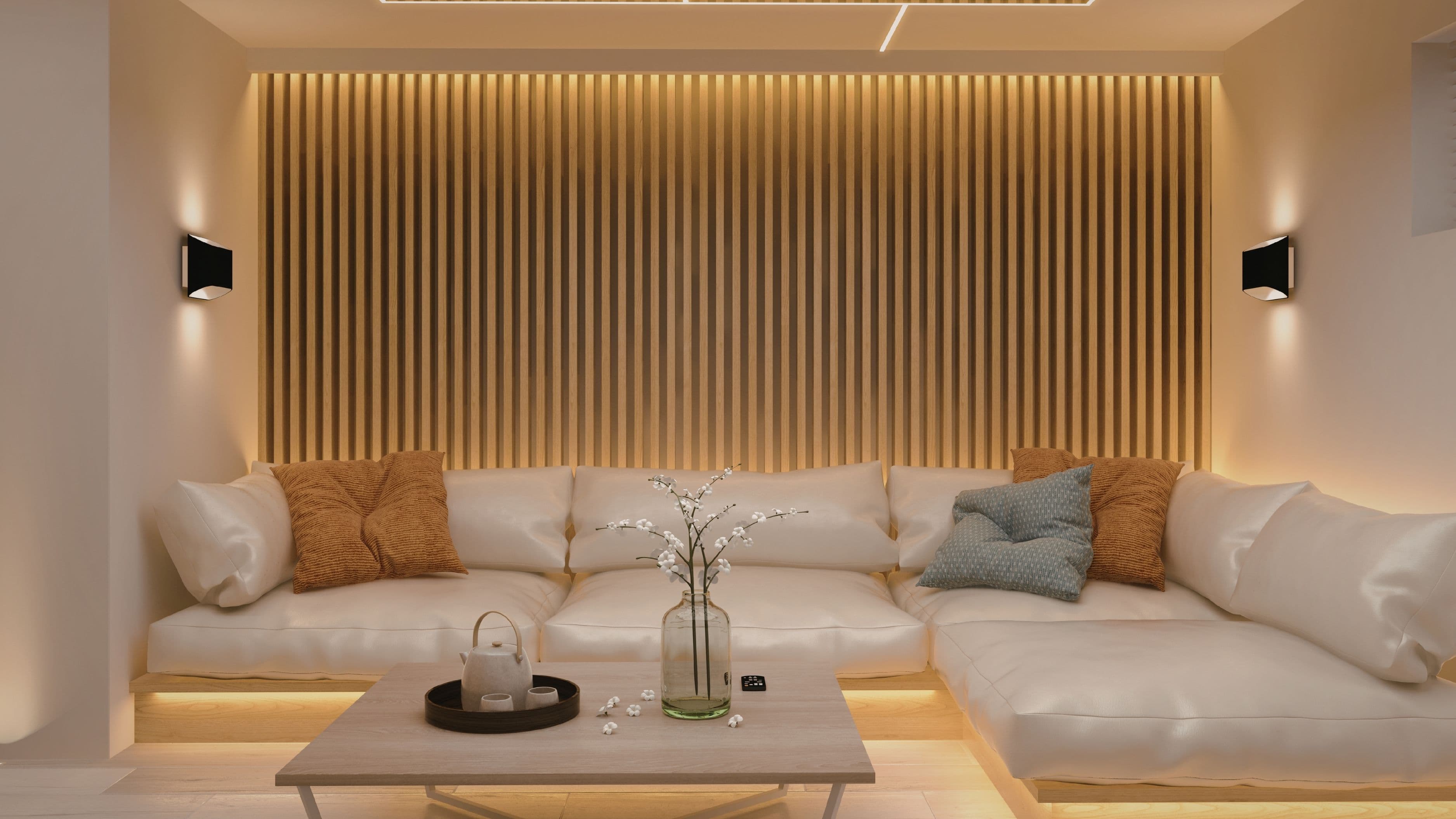
The design response that's gaining the most traction isn't "put the walls back" – it's the broken plan concept. A broken plan maintains visual and spatial flow while introducing defined zones through partial walls, changes in ceiling height, strategic built-ins, room dividers, and intentional furniture placement.
Practically, this might look like a knee wall between the kitchen and living area that provides some visual separation without blocking light. Or a built-in bookcase unit on an island end that creates a subtle boundary between cooking and living zones. Or a sliding barn door on a home office that can open fully during casual hours and close during work calls. These interventions cost significantly less than a full wall addition with drywall, electrical, and finishing work – and they often look like intentional design choices rather than retrofits.
The cost range for broken-plan modifications varies considerably by approach. A partial wall with a pass-through opening runs $1,500 to $4,000 depending on whether it requires electrical or structural work. A built-in bookcase or room divider is $800 to $3,000 depending on size and materials. A barn door installation on an existing opening runs $500 to $1,500 including hardware. These are meaningful but accessible investments compared to a full wall framing and drywall project, which can run $3,000 to $8,000 or more depending on whether it involves utilities or structural elements.
For some households, a partial solution doesn't address the actual problem, and a full wall addition is the right call. The situations where this is most clearly justified include dedicated home office needs, a bedroom that needs to be created from open space, a household with serious acoustic sensitivity, or a layout where a specific area has become genuinely non-functional as open space.
Full wall additions are more expensive and more disruptive than partial solutions, and they warrant professional planning. A non-load-bearing interior wall addition – framing, drywall, taping, finishing, painting – typically runs $2,500 to $6,000 for a standard-sized wall in a residential space. If the wall involves moving electrical outlets, light switches, or HVAC supply registers, add $500 to $2,000 depending on complexity. If there's any possibility the wall is load-bearing (which requires structural assessment before removal or addition), a structural engineer's evaluation is essential.
Before committing to a full wall, spend time living with the space under modified conditions. Rearrange furniture to create more defined zones. Use temporary room dividers or curtains to simulate the effect of a wall for a few weeks. The lived experience of a modified layout often reveals whether the full intervention is necessary or whether a less drastic approach achieves the same functional improvement.
Adding walls impulsively without thinking through light and ventilation. Closed spaces in an area that relied on open-plan airflow and borrowed light can feel dark and airless if the wall placement blocks the primary light source. Always trace where natural light enters the space before deciding where a wall or partial barrier goes.
Assuming resale impact without checking local market data. In some markets and price points, open plans are still strongly preferred and a wall addition could genuinely reduce buyer appeal. Talk to a local real estate agent about buyer preferences in your specific market before making a permanent structural change.
Doing a half-finished wall addition that leaves the space looking incomplete. If you're adding a wall, finish it properly – paint, trim, outlet covers, any required electrical work. A wall that looks like a construction project undermines the entire point of the upgrade.
Underestimating acoustic improvement from partial solutions. A solid barn door, a built-in bookcase with books, or even heavy curtains between zones can significantly improve the acoustic experience without requiring a full wall. Test these before committing to something more permanent.
Open floor plans aren't going away, and they're genuinely the right layout for many households. But the idea that they're universally superior – and that adding any separation is a design step backward – has lost its hold. The conversation in 2026 is more nuanced: what does this specific household actually need from this space, and does the current layout deliver that?
If your open floor plan is working for your life, there's no reason to change it. If it's creating real daily friction – noise, privacy, concentration, cooking smells, visual clutter that never feels resolved – that friction is worth addressing, and there are solutions at every price point that don't require going back to a fully compartmentalized layout.
Does adding a wall to an open floor plan hurt resale value? It depends significantly on how it's done and what your local market preferences are. A well-executed partial wall, room divider, or broken-plan modification that improves functionality without eliminating spaciousness is unlikely to hurt resale. A poorly executed full wall that makes the space feel cramped or blocks light is a different story. Consult a local real estate agent before making permanent structural changes.
What's the cheapest way to add acoustic separation to an open floor plan? Heavy curtains on a ceiling-mounted track between zones are the lowest-cost option – a set of floor-to-ceiling curtains on a track runs $200 to $500 and can be opened fully when not needed. A barn door on an existing opening is the next step up, at $500 to $1,500 installed. Bookshelves and built-ins with solid backs provide both storage and meaningful sound dampening for $800 to $2,500.
How do I know if a wall in my open floor plan is load-bearing? You cannot reliably determine this without professional assessment. Load-bearing walls typically (but not always) run perpendicular to floor joists, sit above the foundation, and continue through multiple floors. But exceptions exist, and assumptions are dangerous. If you're planning to add or remove a wall, consult a structural engineer or licensed contractor before proceeding. A structural engineer's evaluation typically costs $300 to $700.
Is the "broken plan" trend likely to stick around? The underlying drivers – more people working from home, multi-use daily living, acoustic privacy needs – are durable rather than trend-based. Broken plan design is a functional response to real living conditions rather than a stylistic preference, which suggests it will remain relevant even as aesthetics evolve.
How much does a partial wall with a pass-through opening cost? Typically $1,500 to $4,000 for a non-load-bearing partial wall with a finished pass-through opening, depending on size, whether it involves electrical work, and finishing materials. This is significantly less than a full wall addition and achieves a clean, intentional look that can improve both function and aesthetics.
National Association of Realtors. 2023 Profile of Home Buyers and Sellers. https://www.nar.realtor/research-and-statistics/research-reports/highlights-from-the-profile-of-home-buyers-and-sellers
Architectural Digest. The End of the Open Floor Plan? https://www.architecturaldigest.com/story/is-the-open-floor-plan-over
This Old House. Open Floor Plan vs. Closed Floor Plan: What's Right for Your Home? https://www.thisoldhouse.com/kitchens/21161302/open-floor-plan
Houzz. 2023 U.S. Houzz & Home Study: Renovation Trends. https://www.houzz.com/magazine/2023-u-s-houzz-home-study-renovation-trends-stsetivw-vs~154089421
Family Handyman. How to Add a Non-Load-Bearing Wall. https://www.familyhandyman.com/project/how-to-build-an-interior-wall/
Fine Homebuilding. The Broken Plan: A New Take on Open Living. https://www.finehomebuilding.com/project-guides/design/the-broken-plan
National Association of Home Builders. What Home Buyers Really Want. https://www.nahb.org/research/housing-economics/special-studies/what-home-buyers-really-want
Redfin. How Home Layout Preferences Have Shifted Post-Pandemic. https://www.redfin.com/news/home-buyer-layout-preferences/
Bob Vila. The Cost to Add a Wall to a Home. https://www.bobvila.com/articles/cost-to-add-a-wall/
Harvard Joint Center for Housing Studies. The Remodeling Market in Transition. https://www.jchs.harvard.edu/research-areas/remodeling