
The honest answer is: it depends on which type of system you're installing, where you're installing it, and how you're heating the rest of your home. Get those factors right and radiant floor heating can be one of the better long-term investments in a renovation. Get them wrong and it's an expensive upgrade that doesn't deliver proportional returns.
How Radiant Floor Heating Works
Unlike forced-air heating, which blows warm air through ducts and vents, radiant floor heating warms a space from the ground up. Heat radiates directly from the floor surface into the room, warming objects and people rather than just the air. Because warm air naturally rises, radiant systems heat the lower portion of a room first – where people actually are – rather than pushing warm air toward the ceiling where it's least useful.
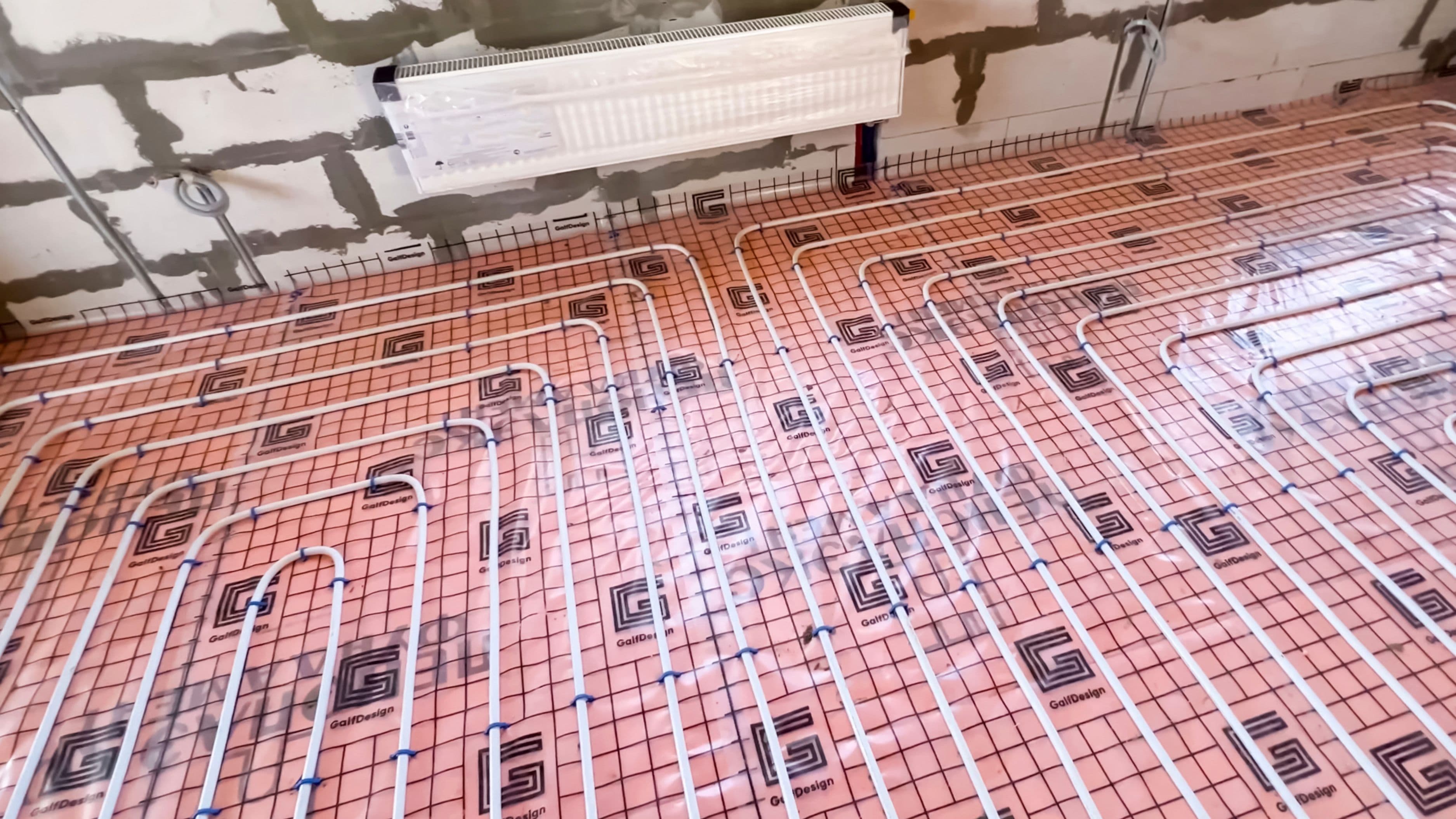
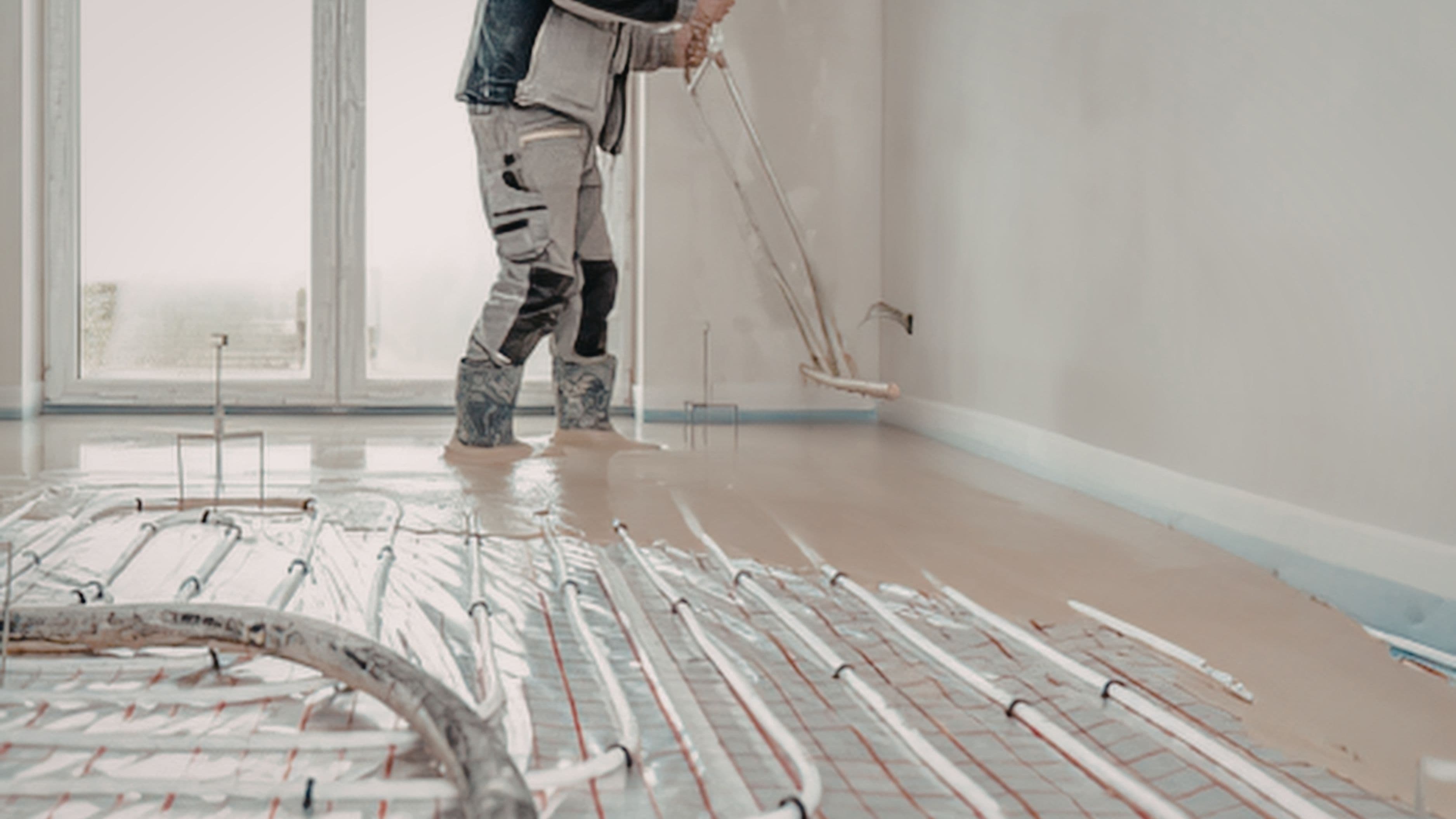
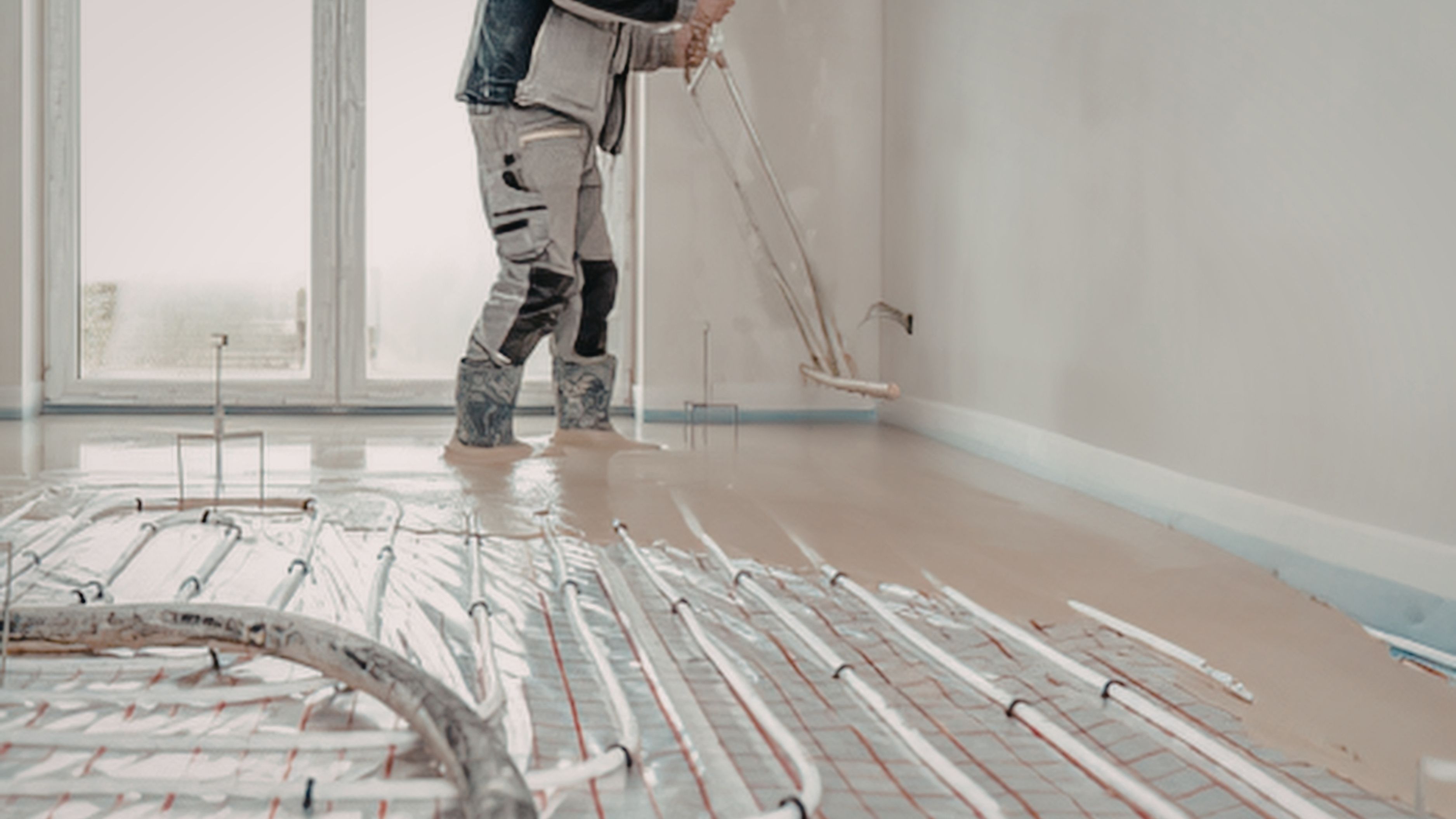
There are two main types. Electric radiant systems use heating cables or mats installed beneath the floor surface. They're powered by electricity and respond quickly to thermostat changes. Hydronic radiant systems use a network of flexible tubing circulating heated water beneath the floor, connected to a boiler or water heater. Hydronic is the more efficient option for whole-home heating; electric is the practical choice for smaller spaces or retrofits where running new plumbing isn't feasible.
The Two Systems Side by Side
Electric radiant heating is significantly easier and cheaper to install, particularly in retrofit situations. A typical bathroom or kitchen installation costs $8–$15 per square foot installed, putting a 100-square-foot bathroom between $800 and $1,500 for materials and labor. Electric mats can be installed directly under tile, luxury vinyl, or laminate flooring with minimal height addition to the floor. The downside is operating cost – electricity is more expensive per BTU than gas or other fuel sources in most US regions, and running an electric system as primary heat in a larger space gets expensive quickly.
Hydronic radiant heating costs considerably more upfront – typically $6–$20 per square foot for the in-floor components, plus the cost of a boiler or compatible water heater if one isn't already in place, and the labor to install a system that can span an entire floor. A full whole-home hydronic installation in a new build or major renovation commonly runs $10,000–$20,000+ depending on the home's size. However, hydronic systems paired with modern condensing boilers or heat pumps operate at significantly lower costs than either electric radiant or forced-air systems over time. The efficiency gains are most pronounced in climates with long heating seasons.
Where Each System Makes the Most Sense
Electric radiant heat shines in: Bathrooms, master baths, mudrooms, and kitchens where you want localized warmth under tile. These are the spaces where the upgrade is most noticeable and most appreciated. A heated bathroom floor has a measurable impact on daily comfort without requiring a whole-home system. Electric radiant is also a practical choice in additions, finished basements, or sunrooms where extending the main heating system would be expensive or disruptive.
Hydronic radiant heat makes the strongest financial case when: You're building new or doing a major gut renovation that opens up subfloor access, you're in a cold climate with significant heating degree days, you're installing over a concrete slab (new construction or basement conversion), or you're already planning to upgrade or replace a boiler. In these scenarios, the additional cost to run the in-floor tubing while the floor is already open is relatively modest compared to the long-term efficiency benefits.
Retrofitting a hydronic system into an existing finished home with multiple floors is where the economics get much harder to justify. Accessing the subfloor without tearing up finished flooring adds substantially to the cost, and the disruption is significant.
What It Actually Costs to Run
Operating costs are where the long-term value calculation lives. The numbers vary by region, fuel type, and home characteristics, but some useful benchmarks apply.
Electric radiant systems typically cost $0.50–$1.50 per day to heat a bathroom-sized space (50–100 sq ft), depending on your electricity rate and how often the system runs. For a bathroom that's heated for 4–6 hours a day in winter, annual operating costs run roughly $75–$200 – reasonable for the comfort it delivers in a space that size. Scaling that cost to a full floor or whole home changes the calculus significantly.
Hydronic systems are harder to generalize because performance depends on the heat source. A hydronic radiant system paired with a high-efficiency condensing boiler can achieve efficiency ratings of 90–98%, compared to 70–80% for an older forced-air gas furnace. In homes in cold climates with high heating loads, well-designed hydronic systems can deliver meaningful savings over time – enough to recover part of the installation cost over 10–15 years. A hydronic system connected to a ground-source heat pump (geothermal) runs at even lower costs and produces the lowest carbon footprint of any residential heating approach, though the combined installation cost is substantial.
Compatible Flooring – What You Need to Know Before Committing
Not every flooring material works equally well with radiant heating, and choosing the wrong one affects both performance and durability.
Tile and natural stone are the ideal pairing. Both conduct heat efficiently, warm up quickly (relative to other materials), and are completely unaffected by the temperature changes involved. If you're putting radiant heat in a bathroom or kitchen, tile is the straightforward choice.
Engineered hardwood is compatible with most radiant systems when specified correctly – the key is using products rated for radiant heat use, keeping the floor surface temperature below 85°F (most systems are designed to stay well within this), and ensuring the wood's moisture content is properly managed during installation. Solid hardwood is problematic because it expands and contracts with temperature changes in ways that can cause gapping, warping, and nail pops over time.
Luxury vinyl plank (LVP) is compatible with electric radiant systems but requires checking the manufacturer's temperature rating – most LVP is rated for radiant heat up to 85°F. Some premium LVP products are explicitly rated for radiant use; others aren't and can warp or delaminate if the system runs too warm.
Carpet over radiant heating is possible but significantly reduces efficiency. The insulating properties of carpet that make it feel warm underfoot also prevent heat from radiating effectively into the room. If carpet is important in a space, radiant floor heating is not the right primary heating approach for that room.
Installation: What Requires a Professional
Both systems require professional installation for anything beyond a straightforward electric mat under tile. Hydronic systems involve plumbing, manifold installation, pressure testing, and integration with a heat source – all of which require licensed plumbers and HVAC contractors. Permits are typically required for hydronic installations, and in many jurisdictions for any electrical work associated with radiant systems.
Electric mats under tile are a project that intermediate DIYers can approach if they're comfortable with basic electrical work and tile installation, though the thermostat connection and any new circuit work should be handled by an electrician. The risk in DIY electric mat installation isn't the mat itself – it's cutting through the heating element during tile installation, which ruins the system and isn't always immediately detectable. Using a floor heating monitor during tile installation to check for continuity as you go significantly reduces that risk.
The ROI Picture: Honest Assessment
Radiant floor heating is rarely framed as a pure ROI investment the way a kitchen remodel or bathroom addition might be. Its value is partly measured in comfort, partly in energy performance, and only partially in resale value.
On the resale side, radiant floor heating in a bathroom or kitchen is a desirable feature that buyers notice and appreciate, particularly in colder markets. It's unlikely to add its full installation cost to your home's value dollar-for-dollar, but it's also not a zero – it contributes to the overall quality impression of the home and may differentiate it in a competitive market.
On the energy side, the long-term savings case is strongest for whole-home hydronic systems in cold climates – particularly when paired with efficient heat sources and displacing older forced-air systems. For single-room electric systems, the operating cost is reasonable but the efficiency savings are minimal; you're paying for comfort, not energy reduction.
The strongest case for radiant heat is as part of a broader renovation where subfloor access is already available and the system can be designed properly from the start. Retrofitting radiant into a finished home primarily for energy savings rarely pencils out. Doing it as part of a bathroom renovation, a basement finish, or a new addition where you're already doing significant work is where the cost-benefit picture looks most favorable.
Common Mistakes to Avoid
Undersizing the thermostat controls is a frequent oversight. A basic on/off thermostat for a radiant system misses the efficiency gains that programmable or smart thermostats provide. Radiant systems heat slowly and hold heat well – scheduling them to reduce output when spaces aren't occupied can meaningfully lower operating costs. Most radiant-specific thermostats include floor temperature sensors alongside air temperature sensors for precise control.
Not accounting for floor buildup is another common issue in retrofit projects. Electric mats add 3/16 to 3/8 of an inch to the floor height, which can create transition issues at doorways and adjacent rooms. This needs to be planned before installation, not discovered afterward.
Choosing incompatible flooring or skipping the manufacturer's guidance on temperature limits creates problems that typically show up months after installation when wood floors start gapping or LVP develops bubbles. Verify compatibility for every flooring product before purchase, not after.
Expecting electric radiant to significantly reduce heating bills is a misaligned expectation. Electric radiant in a single room adds a heating source in that space; it doesn't improve whole-home efficiency. If lower utility bills are the goal, the investment is better directed toward insulation, air sealing, or upgrading the primary heating system.
FAQ
Can radiant floor heating be the only heat source in a room? For a well-insulated room in a moderate climate, yes – particularly hydronic systems. In very cold climates or poorly insulated spaces, radiant may need supplemental heating to maintain comfortable temperatures on the coldest days. A heat loss calculation for the specific room will tell you whether radiant alone is sufficient.
How long does a radiant heating system last? Hydronic tubing embedded in a concrete slab is typically rated for 50+ years with proper installation. Electric heating cables have shorter lifespans – manufacturers typically rate them for 25–35 years. Thermostats and control components will likely need replacement before the heating elements themselves.
Does radiant floor heating work under hardwood floors? Engineered hardwood can work well with radiant heat when specified and installed correctly. Solid hardwood is generally not recommended because of dimensional instability with temperature changes. Always confirm radiant compatibility with the specific product's manufacturer before installation.
How long does it take for radiant floors to heat up? Electric systems under tile typically take 30–60 minutes to warm the floor surface from cold. Hydronic systems warm more slowly – particularly systems embedded in thick concrete slabs – but hold heat for longer once warm. Smart thermostats with early-start programs compensate for this by beginning the warm-up cycle before the space needs to be comfortable.
Is radiant floor heating worth it for a bathroom renovation? For most homeowners doing a bathroom renovation in a cold climate, yes – electric radiant under the tile is one of the most consistently satisfying upgrades relative to its cost. The installed cost for a bathroom-sized space is modest, the comfort improvement is immediate and noticeable, and the operating cost is reasonable for the hours it runs.
Radiant floor heating isn't the right upgrade for every home or every budget, but it's one of the few improvements that changes how a space physically feels to inhabit rather than just how it looks. Whether the upfront cost is worth it comes down to which system, which space, and how it fits into the broader renovation plan. For a bathroom tile installation, it's an easy yes. For a whole-home hydronic retrofit in a finished house, the math needs to work before the decision does.
📚 Sources
US Department of Energy – Radiant heating systems overview: https://www.energy.gov/energysaver/radiant-heating
Building Science Corporation – Floor heating and comfort physics: https://www.buildingscience.com/documents/insights/bsi-061-energy-and-comfort
ASHRAE – Handbook of HVAC Systems and Equipment, radiant systems chapter: https://www.ashrae.org/technical-resources/ashrae-handbook
This Old House – Radiant floor heating installation guide: https://www.thisoldhouse.com/heating-cooling/21014947/all-about-radiant-floor-heating
ENERGY STAR – Heat pump efficiency and radiant system compatibility: https://www.energystar.gov/products/heat_pumps
National Association of Home Builders – Cost vs value for heating upgrades: https://www.nahb.org/blog/2023/08/home-improvement-cost-value