
The honest answer depends heavily on which type of recycled flooring you're comparing and what room it's going into. Some recycled options genuinely outperform their conventional equivalents, while others come with real trade-offs worth understanding before you commit a renovation budget to them.
What Counts as Recycled Content Flooring
This category covers a wider range of products than most homeowners initially realize. Recycled rubber flooring, often made from reclaimed tires, is common in home gyms and basements. Recycled glass terrazzo incorporates crushed glass into a cement or epoxy base for a distinctive, durable surface. Recycled content carpet tile uses reclaimed nylon or PET plastic fibers, often from recycled water bottles. Cork flooring, while technically a rapidly renewable material rather than recycled, frequently gets grouped into this sustainable flooring conversation. Luxury vinyl plank (LVP) with recycled content backing has also become increasingly common as manufacturers incorporate reclaimed materials into the product's core layers.
Each of these materials has a genuinely different durability profile, which is why a blanket answer to "is recycled flooring durable" doesn't hold up well across the category as a whole.
Recycled Rubber Flooring: Built for Heavy Use
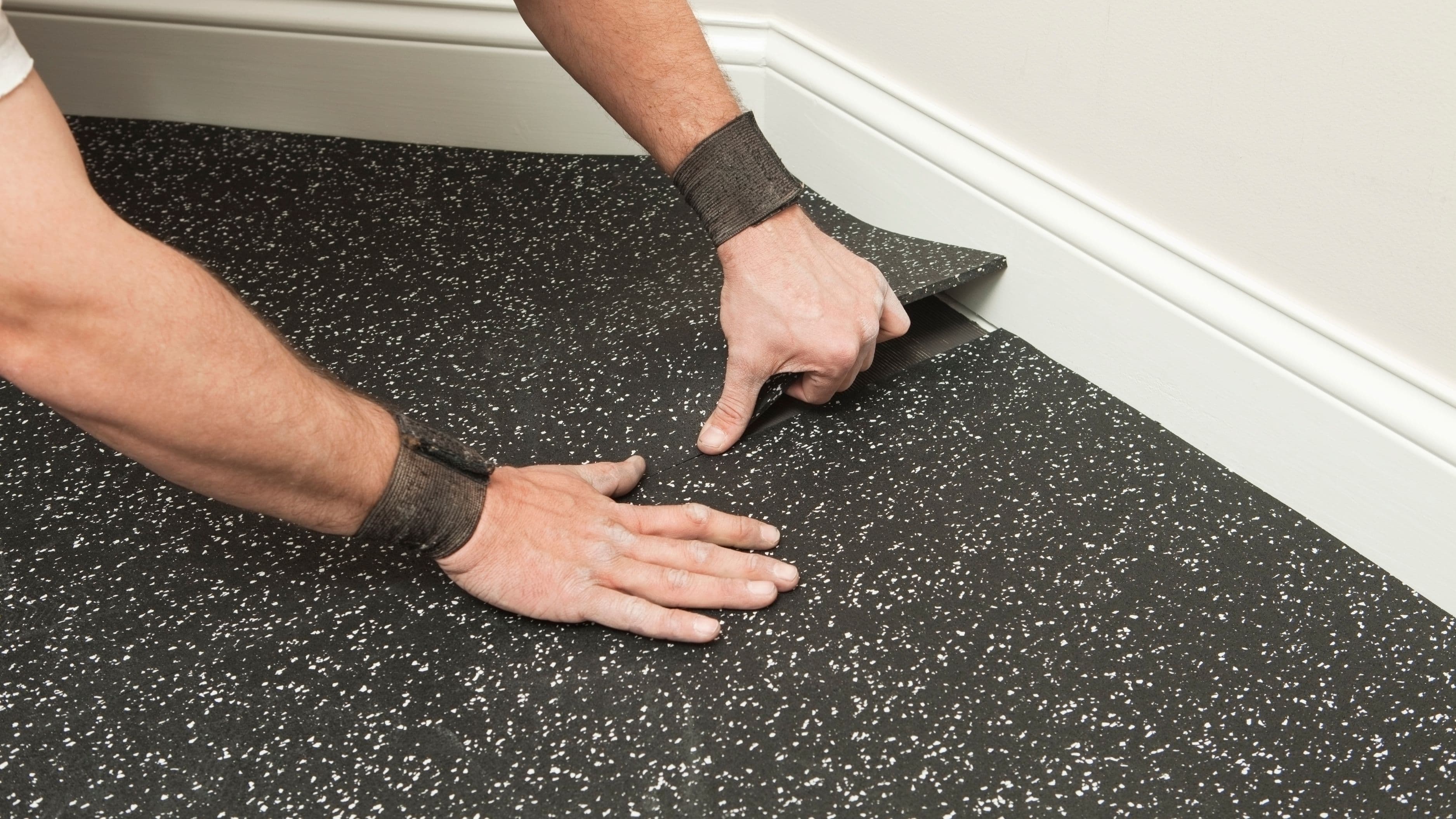
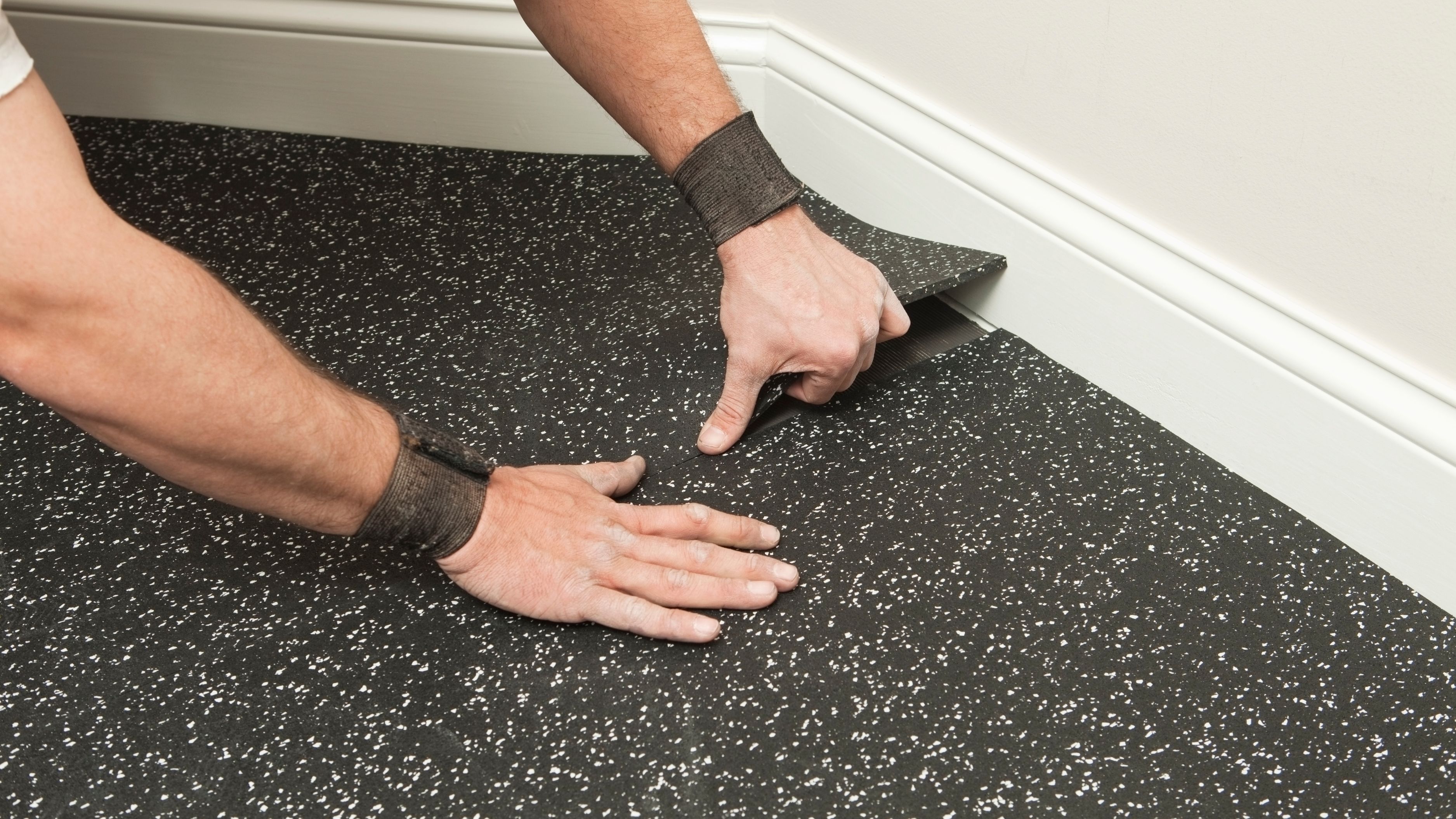
Recycled rubber flooring, most commonly seen in home gyms, garages, and basements, is one of the strongest durability performers in this category, often outlasting conventional flooring materials in high-impact spaces. Its dense, shock-absorbing composition, originally engineered for commercial gym and industrial settings, holds up exceptionally well under repeated heavy impact, dropped weights, or constant foot traffic.
The trade-off here is aesthetic and application-specific rather than durability-related. Rubber flooring's appearance and texture work well for functional spaces but generally aren't the choice most homeowners want in a living room or bedroom, which limits its practical use to specific rooms rather than whole-home application.
Recycled Glass Terrazzo: Durable but Demanding
Terrazzo made with recycled glass aggregate is among the most durable flooring materials available, recycled content or otherwise, with a lifespan that can genuinely exceed 40 to 50 years when properly installed and maintained. Its hard, dense surface resists scratching, staining, and heavy foot traffic exceptionally well, making it a strong long-term choice for entryways, kitchens, and high-traffic commercial-style spaces in a home.
The durability trade-off shows up in installation and repair rather than daily performance. Terrazzo requires skilled installation and is genuinely difficult and costly to repair if it cracks, since patching a terrazzo surface seamlessly requires specialized expertise that's less commonly available than a typical flooring contractor. It's also a hard, unforgiving surface underfoot, which some homeowners find less comfortable for extended standing compared to softer flooring options.
Recycled Content Carpet Tile: Solid but Variable
Carpet tile made with recycled nylon or PET fibers has become common in both commercial and residential settings, and its durability generally holds up comparably to conventional carpet tile of similar quality tiers, meaning the recycled content itself isn't typically the deciding factor in how long it lasts. What matters more is the specific fiber density and construction quality, which varies significantly between budget and premium product lines regardless of recycled content.
The practical advantage of carpet tile, recycled or not, is that individual damaged tiles can be replaced without redoing an entire floor, which meaningfully extends the practical lifespan of the overall installation even if individual tiles wear unevenly over time in high-traffic zones.
Cork Flooring: Comfortable but More Delicate
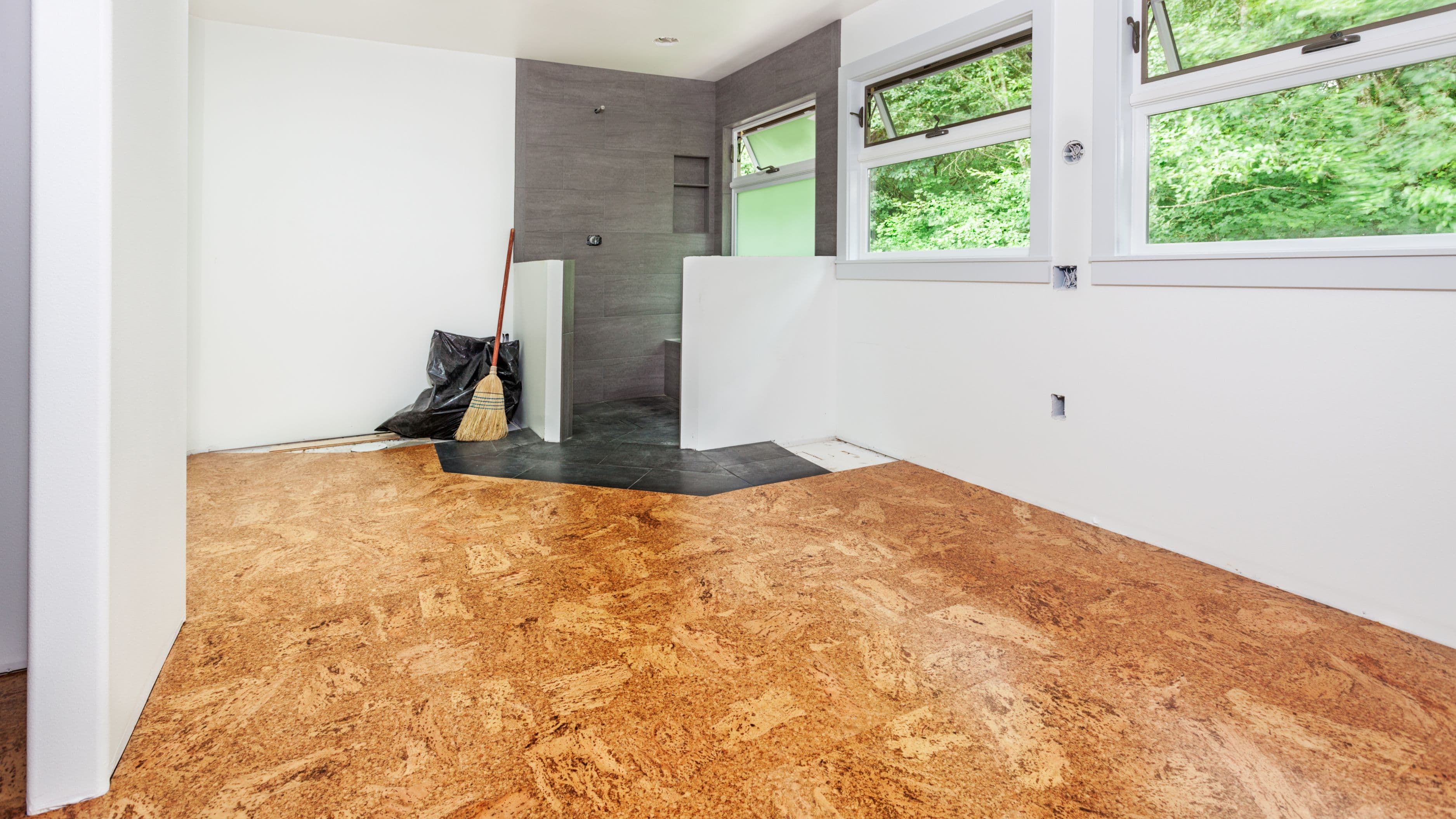
Cork flooring offers a genuinely different durability profile than the other materials on this list, trading some scratch and dent resistance for comfort, sound absorption, and natural give underfoot. It performs reasonably well under normal foot traffic but is more susceptible to denting from heavy furniture or sharp impacts compared to harder materials like terrazzo or rubber.
Cork also requires periodic resealing, generally every few years depending on traffic and wear, to maintain its water resistance and surface durability. Used in appropriate settings, like a home office or bedroom rather than a high-traffic entryway, cork holds up well over time, but it's a material that rewards being matched to the right room rather than used indiscriminately throughout a whole home.
Recycled Content LVP: Comparable to Conventional Options
Luxury vinyl plank incorporating recycled content in its core layers generally performs comparably to conventional LVP in terms of durability, since the wear layer, the actual surface that experiences daily foot traffic and determines scratch resistance, is typically the same regardless of what's recycled in the layers beneath it. This makes LVP one of the more straightforward recycled flooring choices in terms of matching conventional durability expectations, since the sustainability angle doesn't require a meaningful durability trade-off in most cases.
The wear layer thickness, rather than the recycled content itself, remains the primary factor determining how long any specific LVP product will last, so comparing wear layer specifications across products matters more than whether the core contains recycled material.
Cost vs. Long-Term Savings
Recycled content flooring options span a wide cost range, and it's worth noting that "recycled" doesn't automatically mean cheaper. Recycled glass terrazzo often costs more upfront than many conventional flooring options due to installation complexity, though its multi-decade lifespan can offset that cost over time compared to materials requiring replacement every 10 to 15 years. Recycled rubber flooring tends to be moderately priced and cost-competitive with conventional options for similar-use spaces like home gyms. Recycled content carpet tile and LVP generally fall within a similar price range to their conventional counterparts, meaning the sustainability choice doesn't typically require a significant cost trade-off in either direction for these categories.
What to Avoid
Assuming all recycled flooring performs identically is the most common mistake in this category, since the underlying material and its inherent properties matter far more than the recycled content itself when it comes to durability. It's also worth avoiding budget-tier recycled products purely based on the sustainability marketing, without checking the same quality indicators, wear layer thickness for LVP, fiber density for carpet, that you'd check on any conventional flooring purchase.
Skipping proper subfloor preparation to save money is another mistake that affects any flooring type, recycled or not, but it's worth mentioning specifically here since some recycled materials, like terrazzo, are especially unforgiving of an improperly prepared base.
The Bottom Line
Recycled content flooring isn't a single category with one durability answer, it's a range of materials that each need to be evaluated on their own merits the same way you'd evaluate any conventional flooring option. Recycled rubber and glass terrazzo genuinely rival or exceed conventional durability in the right applications, recycled LVP performs comparably to conventional LVP since durability comes primarily from the wear layer, and cork and carpet tile occupy a middle ground where matching the material to the right room matters more than the recycled content itself.
FAQ
Does recycled flooring cost more than conventional flooring? It varies by material rather than following a consistent pattern. Some recycled options, like glass terrazzo, can cost more upfront due to installation complexity, while others, like recycled content LVP and carpet tile, are generally priced comparably to conventional versions of the same product.
Is recycled flooring less durable overall? Not inherently. Durability depends much more on the specific material and product quality tier than on whether it contains recycled content. Some recycled materials, like rubber and glass terrazzo, are among the most durable flooring options available regardless of category.
Which recycled flooring option is best for high-traffic areas? Recycled glass terrazzo and recycled rubber flooring both perform exceptionally well in high-traffic settings, though terrazzo suits entryways and living spaces aesthetically better, while rubber is generally reserved for functional spaces like home gyms or basements.
📚 Sources
U.S. Environmental Protection Agency, "Sustainable Materials Management" – https://www.epa.gov/smm
National Terrazzo and Mosaic Association, "About Terrazzo" – https://www.ntma.com/about-terrazzo/
U.S. Green Building Council, "Materials and Resources" – https://www.usgbc.org/credits/materials-resources