
These six changes work with the systems you already have. No replacements, no contractors, no major spend. Just targeted improvements that reduce what your home wastes before a single unit of energy even gets to do useful work.
1. Seal Air Leaks Around Windows, Doors, and Penetrations
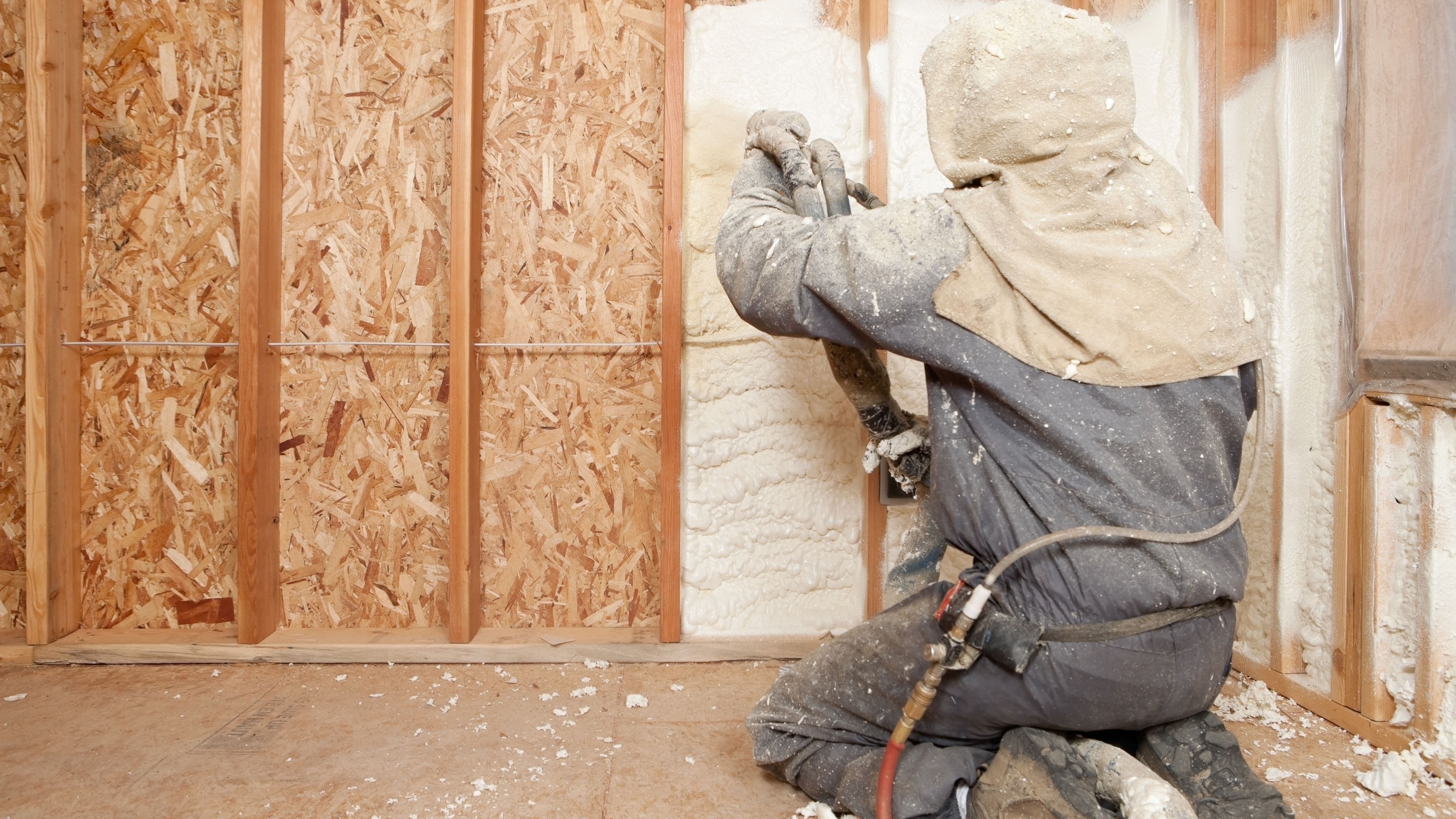
Air sealing is consistently one of the highest-return energy improvements available to homeowners, and it costs almost nothing to do properly. The US Department of Energy estimates that sealing air leaks can reduce heating and cooling costs by 10–20% in a typical home. Yet it's the improvement most people skip because it doesn't feel like a renovation – it feels like maintenance.
The places to focus are the gaps that aren't obvious. The visible crack under a door is easy to find. The air leaking around the electrical outlet on an exterior wall, or the penetration where a pipe enters the basement, or the poorly sealed attic hatch – those are the ones that add up.
Walk through your home on a cold or windy day with the back of your hand near window frames, door frames, baseboards on exterior walls, and anywhere a pipe or wire passes through an exterior surface. You'll feel the air movement that your heating system is working to compensate for. Weatherstripping on doors and windows is a one-afternoon job that costs $20–50 for a full door. Foam backer rod and exterior caulk handles gaps around penetrations. Foam outlet gaskets behind switch plates on exterior walls are a dollar each and take seconds to install.
The attic hatch is worth specific attention. Attic hatches are often uninsulated and unsealed, meaning there's essentially a direct thermal connection between your conditioned living space and an unconditioned attic. Adding weatherstripping around the hatch frame and a layer of rigid foam board to the hatch panel itself takes less than an hour and eliminates one of the most common invisible energy drains in older homes.
Cost: $20–100 for a full-home air sealing pass.
Time: Half a day.
Impact: Low to high depending on your home's current leakage level.
2. Adjust Thermostat Schedules to Match How You Actually Live
A programmable or smart thermostat you're not programming is no better than a manual one. And a manual thermostat left at the same temperature 24 hours a day, regardless of whether anyone's home or asleep, is costing more than it needs to.
The basic principle is simple: you don't need to heat or cool an empty house to the same temperature as an occupied one. The Department of Energy estimates that setting your thermostat back 7–10°F for 8 hours a day – while you're at work or asleep – can reduce annual heating and cooling costs by up to 10%. That's not a small number.
If you have a manual thermostat, start the habit of adjusting it manually before bed and before leaving the house. If you have a programmable thermostat that you've never set up, spend 20 minutes with the manual and create a schedule that reflects your actual routine. If you have a smart thermostat like a Nest or Ecobee, check whether it's actually learned your schedule accurately or whether it's running on defaults – many people install smart thermostats and never verify that the programming reflects how they live.
One nuance worth knowing: the common belief that it costs more energy to reheat or re-cool a home after a setback than you saved during it is largely a myth. Heat loss is proportional to the temperature differential between inside and outside – the colder your house gets during a setback period, the slower it loses heat. Reheating does require energy, but significantly less than maintaining the higher temperature continuously would have cost.
Cost: $0 if you already have a programmable or smart thermostat.
Time: 20 minutes to set up.
Impact: Up to 10% reduction in annual heating and cooling costs.
3. Switch to LED Lighting Throughout
If you still have incandescent bulbs anywhere in your home, replacing them with LEDs is one of the simplest energy improvements with one of the clearest payoffs. LEDs use roughly 75% less energy than incandescent bulbs for the same light output and last 15–25 times longer. The upfront cost – typically $3–8 per bulb – recovers itself within a year through energy savings alone in most households.
The hesitation most people have is that early LED bulbs had poor color rendering and an unpleasant blue-white light. That's largely a non-issue now. Modern LEDs are available across the full color temperature range, including warm whites (2700–3000K) that are indistinguishable from incandescent light in normal use. Look for the color temperature on the packaging – anything in the 2700–3000K range gives you warm, ambient light comparable to traditional bulbs.
Don't overlook exterior lighting and hard-to-reach fixtures. Outdoor security lights and porch lights often run for long periods and are worth prioritizing. Recessed can lights with LED retrofit kits are a straightforward swap that also eliminates a common air leakage point – many older recessed fixtures are uninsulated and leak conditioned air into the attic cavity above them.
Cost: $3–8 per bulb; $50–150 to convert a full home.
Time: One afternoon.
Impact: 10–15% reduction in total electricity use in homes still running incandescents.
4. Address Hot Water Waste at the Fixture Level
Water heating typically accounts for 15–20% of a home's energy use, making it the second-largest energy expense after heating and cooling in most homes. You don't need to replace your water heater to meaningfully reduce that cost.
Start with the temperature setting on your water heater. Most units are set to 140°F at the factory. The Department of Energy recommends 120°F for most households – hot enough for comfort and sanitation, but reducing standby heat loss (the energy your water heater burns just maintaining the tank temperature) and eliminating the need to mix in cold water at the tap to make the water usable. Reducing from 140°F to 120°F typically saves 4–22% on water heating costs annually depending on how much hot water your household uses.
Insulating the first few feet of hot water pipe coming out of the water heater also helps. Exposed pipes lose heat to the surrounding air, which means the water arriving at the tap is cooler than it should be – prompting longer run times to get hot water and more heat loss in the process. Foam pipe insulation is available in pre-slit lengths for around $1–3 per foot and takes minutes to apply.
Low-flow aerators on bathroom faucets and showerheads reduce hot water volume without noticeably affecting the feel of the water in most installations. A standard showerhead flows at 2.5 gallons per minute; a WaterSense-certified low-flow model flows at 2.0 gallons or less with little difference in perceived pressure. For a household that showers daily, this represents a genuine reduction in both water heating energy and water bills.
Cost: $0 for thermostat adjustment; $20–60 for pipe insulation and aerators.
Time: 1–2 hours for a full implementation.
Impact: 4–22% reduction in water heating costs.
5. Eliminate Phantom Load From Electronics and Appliances
Phantom load – also called standby power or vampire power – is the electricity consumed by devices when they're off but still plugged in. A television in standby, a cable box that never fully powers down, a phone charger without a phone attached, a microwave with a clock display – individually, these draw very little power. Collectively, the Lawrence Berkeley National Laboratory estimates that standby power accounts for roughly 10% of residential electricity use in the US.
The simplest approach is to use smart power strips for entertainment centers and home office setups. These strips detect when the primary device (the TV or computer) is powered off and cut power to the peripheral devices (gaming consoles, monitors, speakers, chargers) automatically. No behavioral change required after the initial setup.
For devices that do need to stay connected – a cable box that updates overnight, a router that needs to stay live – the audit process still clarifies which devices genuinely need to be on versus which ones are just left on by default. A quick walkthrough of your home with a plug-in energy monitor (around $15–25 at most hardware stores) tells you exactly which devices are drawing meaningful standby power and gives you the information to decide what to put on a smart strip or simply unplug.
Cost: $15–40 for smart strips and an energy monitor.
Time: One evening for a full audit and setup.
Impact: Up to 10% reduction in electricity use, depending on how many high-standby devices you have.
6. Improve Your Home's Thermal Barrier With Window Coverings
Your windows are the thinnest part of your building envelope – even a good double-pane window has significantly lower insulating value than an insulated wall. Without replacing the windows, the most effective way to improve their thermal performance is with the right window coverings used in the right way.
The key is using coverings actively based on conditions rather than leaving them in a fixed position. In winter, open south-facing window coverings during daylight hours to capture passive solar heat gain, then close all window coverings at night to retain heat and reduce radiant heat loss through the glass. In summer, close east and west-facing window coverings during the hottest parts of the day to block direct solar gain that your cooling system then has to work against.
Cellular (honeycomb) shades are the most thermally effective window covering for true insulation value – their air pockets create a measurable thermal buffer between the glass and the room. They're available at price points from around $30 for a basic single-cell shade to $150+ for double-cell and premium options. Exterior solar shades block solar gain before it enters the glass, which is more effective in cooling climates than interior shades that block it after it's already inside.
Heavy curtains with a thermal lining add insulating value and reduce drafts around window frames even when they don't fully close the gap. If your home has old single-pane windows that you're not ready to replace, heavy thermal curtains are a meaningful interim measure that costs a fraction of window replacement while providing real improvement.
Cost: $30–150 per window for cellular shades; $20–80 per window for thermal curtains.
Time: Varies; installation is straightforward for most hanging systems.
Impact: Reduction in heat gain and heat loss that varies by window quality, climate, and how actively the coverings are used.
What to Avoid
Focusing on upgrades before fixing basics. A new efficient HVAC system installed in a leaky, poorly insulated home will underperform its ratings because the building envelope is still losing the conditioned air it's producing. Air sealing and insulation first; efficiency equipment second.
Setting the thermostat lower in summer thinking it cools faster. Your air conditioning runs at the same rate regardless of how low you set the target temperature. Setting it to 65°F instead of 72°F doesn't cool the room faster – it just runs longer and costs more. Set it to the temperature you actually want.
Assuming smart devices automatically optimize. Smart thermostats and smart strips are tools. They need to be configured correctly to deliver savings. An out-of-box smart thermostat running on factory defaults isn't doing anything a manual thermostat wouldn't do.
Skipping the water heater temperature check. This is one of the fastest and most impactful adjustments available and takes two minutes to do. If you haven't verified what temperature your water heater is set to, check it before anything else on this list.
FAQ
Which of these six changes will save the most money? It varies by home, but air sealing and thermostat scheduling typically have the highest combined impact. Air sealing directly reduces the load on your HVAC system, and thermostat scheduling reduces how long that system runs. For homes with significant air leakage and inconsistent thermostat management, these two changes alone can reduce annual energy bills meaningfully.
Do I need a professional to seal air leaks, or can I do it myself? Most air sealing is genuinely DIY-friendly. Caulk, weatherstripping, foam gaskets, and spray foam for larger gaps are all available at hardware stores and don't require specialized tools or skills. A professional blower-door test can identify hidden leakage points in difficult-to-access areas like attic bypasses, but for most homes, a methodical self-assessment covers the majority of the problem.
How much can I realistically save by implementing all six changes? It depends on your home's starting condition, climate, and energy rates. Homes with significant air leakage, outdated lighting, and poor thermostat management could realistically see 15–25% reductions in energy bills. Homes that are already reasonably efficient will see smaller gains. None of these is a guaranteed number – but the cost of implementing all six is typically under $300, and the payback period in energy savings is usually under one year.
Are cellular shades worth the cost over standard blinds? For windows on exterior walls – particularly in climates with cold winters or very hot summers – yes. The thermal improvement over standard horizontal blinds is measurable. The ROI depends on window area, climate severity, and how diligently you open and close them seasonally. They're most cost-effective on large windows and in climates with significant heating or cooling seasons.
Does insulating hot water pipes actually make a noticeable difference? For pipes that run through unconditioned spaces (basements, crawl spaces, garages), yes – the difference in how quickly hot water arrives at the tap can be noticeable, which also reduces the water wasted running the tap waiting for hot water to arrive. For pipes running through conditioned living spaces, the impact on energy use is smaller but still real.
📚 Sources
US Department of Energy – Air sealing your home: https://www.energy.gov/energysaver/air-sealing-your-home
US Department of Energy – Thermostats and energy savings: https://www.energy.gov/energysaver/thermostats
US Department of Energy – Lighting choices to save you money: https://www.energy.gov/energysaver/lighting-choices-save-you-money
US Department of Energy – Water heating: https://www.energy.gov/energysaver/water-heating
Lawrence Berkeley National Laboratory – Standby power summary: https://standby.lbl.gov/summary-table.html
US Department of Energy – Window coverings: https://www.energy.gov/energysaver/window-coverings
EPA WaterSense – Showerhead specifications: https://www.epa.gov/watersense/showerheads