
Here's a practical comparison of both options across the factors that matter most in a small home.
How Each One Works
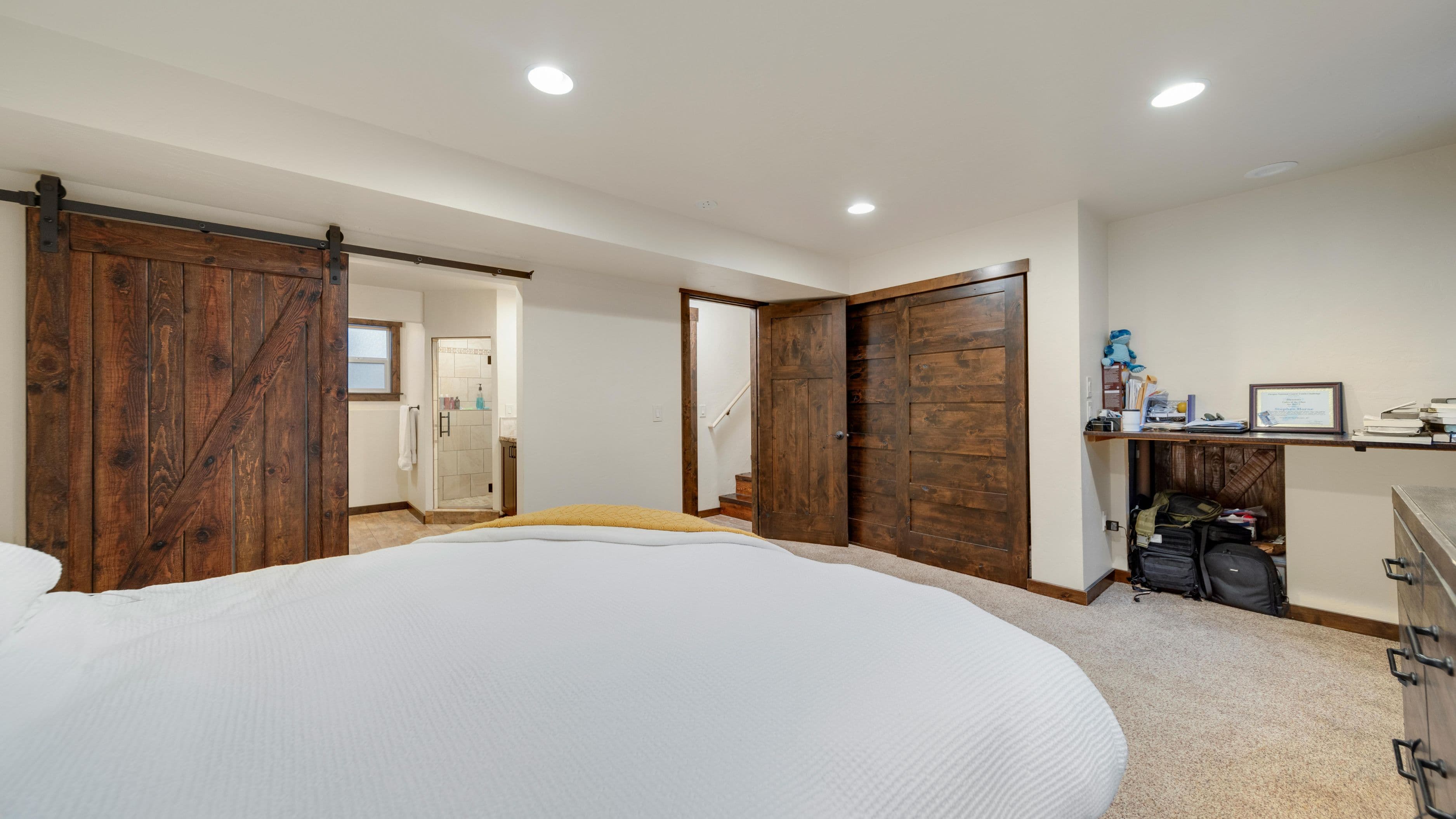
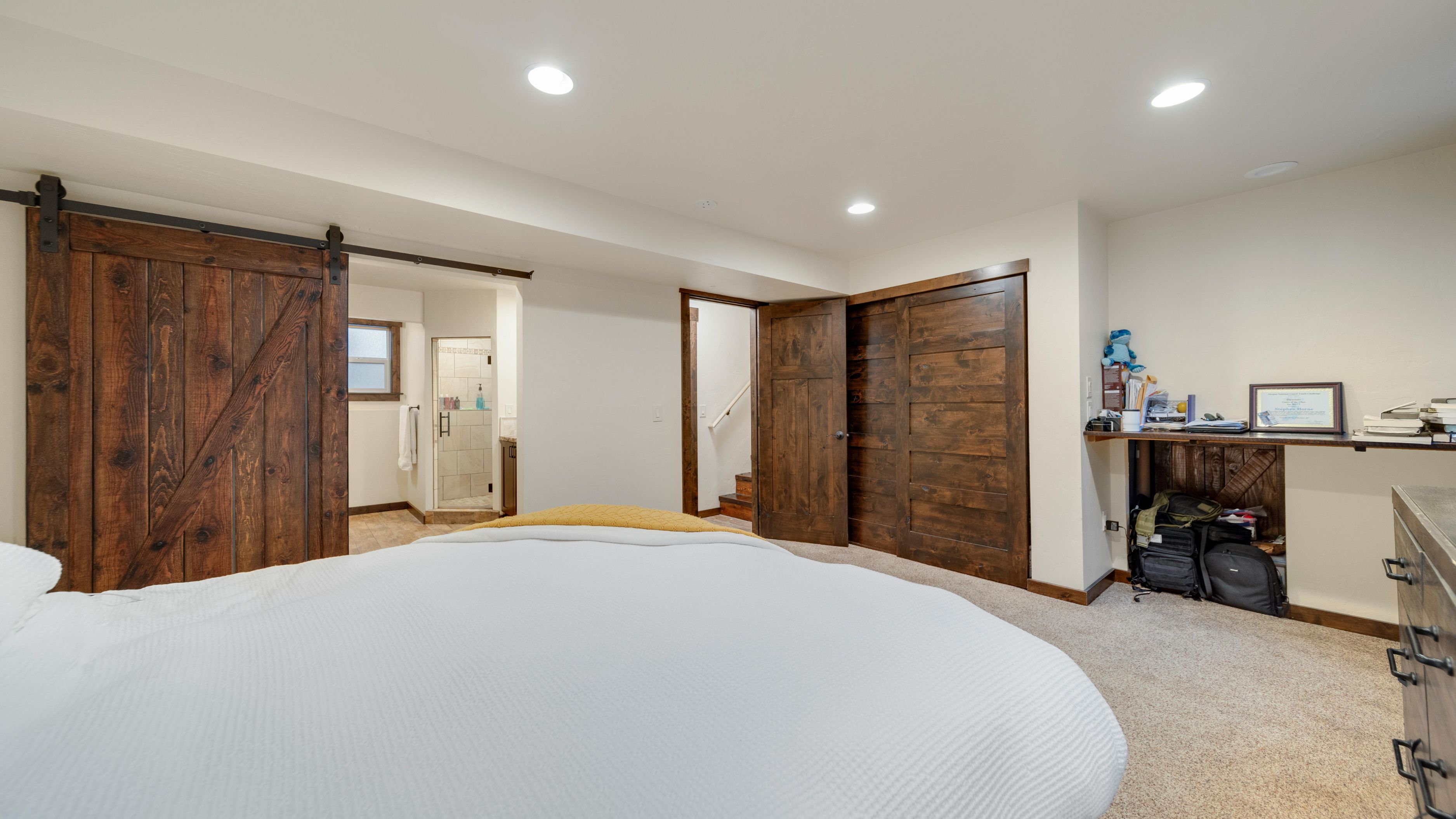
A sliding barn door hangs from a track mounted on the wall above the doorframe and slides horizontally across the wall surface when opened. The door is always visible – mounted on the face of the wall – and when open, it rests flat against the wall beside the opening. It requires clear wall space on at least one side of the door (typically equal to or slightly wider than the door itself) for the door to slide into when open.
A pocket door slides into a concealed cavity built into the wall itself. When the door is fully open, it disappears completely inside the wall and the opening is entirely clear. When closed, it looks like a standard door. The hardware and the door itself are hidden within the wall cavity, which requires the wall to be built or modified specifically to accommodate it.
Understanding this fundamental difference – one hangs in front of the wall, one lives inside it – is the key to making the right choice for any given situation.
Space Requirements: Where Each One Wins
For pure space efficiency, pocket doors are the clear winner when the wall construction allows for them. A fully open pocket door leaves zero visual or physical obstruction in the opening or on the adjacent wall. In a narrow hallway, a tight bathroom, or a small bedroom where every inch counts, this complete disappearance is a significant advantage. You can place furniture flush against the wall on either side without worrying about clearance.
Barn doors require a clear wall section beside the door opening equal to at least the width of the door plus a few inches of clearance. In practice, that means a 32-inch barn door needs roughly 34 to 36 inches of unobstructed wall space on one side. In a small room, that requirement can be genuinely problematic – it means you can't place a light switch, a picture frame, or a piece of furniture in that zone without it interfering with the door's operation. If the wall on one side of your opening has a switch, outlet, window, or built-in, a barn door may not be a workable option at all without relocating those elements.
For small homes specifically, this is the comparison that matters most. If you have the wall space beside the opening, barn doors work. If you don't, the pocket door's hidden installation is often the only practical sliding option.
Installation: What Each Project Actually Involves
This is where the two options diverge significantly in terms of cost, complexity, and disruption.
Installing a barn door is a surface-mounted project. The track goes on the wall above the door frame, the door hangs from the track hardware, and the work is largely done. A confident DIYer can install a barn door kit in a few hours with basic tools. The primary requirements are locating studs for secure track mounting (the track needs to bear the weight of the door), confirming adequate wall clearance, and leveling the track correctly. Barn door hardware kits with a door included run $200 to $600 for mid-range options, and installation adds minimal additional cost if you're doing it yourself. Hiring out the installation typically adds $150 to $300 in labor.
Installing a pocket door in an existing wall is a significantly more involved project. It requires opening the wall to frame a new cavity, installing a pocket door frame kit (a premade steel frame that creates the cavity), running any wiring or blocking around the new frame as needed, patching and finishing the drywall on both sides, and then installing the door itself. For a non-load-bearing interior wall, a reasonably experienced DIYer can handle this in a full weekend with the right tools, but it's genuinely a demolition-and-rebuild project rather than a hardware installation. The total cost for a pocket door conversion in an existing wall typically runs $500 to $1,500 or more, including materials and any drywall finishing, and $800 to $2,500 if you hire a contractor. Pocket doors in new construction or during a broader renovation where walls are already open are considerably less expensive to add than retrofitting into a finished wall.
The practical implication: barn doors are the easier and cheaper installation in an existing, finished home. Pocket doors are more cost-effective when walls are already open during a renovation.
Noise and Privacy
Neither option is airtight, but there are meaningful differences in how well each seals sound and provides privacy.
Pocket doors, when properly installed, can be fitted with seals or felt weatherstripping that create a reasonably tight closure. The door fully engages the door frame on all sides, which limits sound transmission. For a bathroom or bedroom in a small home where noise and privacy matter, a well-installed pocket door performs better than a barn door.
Barn doors, by design, have gaps – at the top, bottom, and sides between the door and the wall. Sound travels freely through those gaps, and light is also visible around the edges of a closed barn door. This makes barn doors a poor choice for bathrooms (where both visual and acoustic privacy matter), bedrooms (where sound containment helps sleep quality), or any space where you genuinely need a sealed closure. They work well as visual dividers between open-concept spaces, as closet doors, or as room separators in contexts where the primary function is defining a zone rather than providing true enclosure.
If privacy is a priority, pocket doors are the better choice. If the door is more aesthetic or architectural than functional as a privacy barrier, barn doors may be perfectly adequate.
Aesthetics and Style
This is genuinely a matter of preference, but a few honest observations are worth making.
Barn doors are a visible design statement. The hardware, the door itself, and the track are all exposed and become part of the room's visual character. They work well in spaces with a farmhouse, industrial, or relaxed aesthetic. In a contemporary, minimalist, or traditional home, they can feel incongruous – like a design element imported from a different context. They're also a trend that has peaked and is on its way down in some markets, which is worth considering if you're renovating with resale in mind.
Pocket doors are architecturally clean. When open, they disappear. When closed, they look like a conventional door. They don't impose a specific aesthetic on the space and work in virtually any home style. For a small home where you want the space to feel considered and functional without being overtly stylistic, pocket doors integrate more naturally.
One practical aesthetic note on barn doors: the bypass barn door configuration (two doors that overlap and slide in opposite directions) allows you to cover a wider opening without needing double the wall clearance on one side. This works well for closet openings or room separators where a single large door would require too much clearance.
Durability and Maintenance
Barn doors are mechanically simple and generally reliable. The main maintenance concerns are keeping the track clean (dust and debris can impede smooth sliding), occasional adjustment of the door's hang to keep it level, and monitoring the wall anchors over time to ensure the track remains securely mounted. Quality barn door hardware with sealed bearings lasts for many years with minimal attention.
Pocket doors have more potential failure points because the hardware is enclosed inside the wall and harder to access if something goes wrong. The most common issues are wheels or rollers that wear out over time (making the door hard to slide or causing it to drop), misalignment from settling or shifting in the wall framing, and damage to the door edges from being slid repeatedly against the frame. A pocket door that derails inside its cavity requires opening the wall to repair – a significant and frustrating project. Using quality pocket door hardware from the start reduces this risk considerably; cheap hardware fails faster and is harder to adjust.
For longevity and ease of maintenance, barn doors have an advantage. For clean aesthetics and functionality in privacy-sensitive spaces, that trade-off is often worth accepting.
The Decision Framework
Rather than declaring one option universally better for small homes, the right answer depends on a few specific questions about your situation.
If the opening is adjacent to a bathroom or bedroom and privacy matters, a pocket door is the right choice. If the wall beside the opening is clear of switches, outlets, windows, and furniture on at least one side, a barn door is a faster and less expensive installation. If you're in the middle of a broader renovation with walls already open, pocket doors are worth the extra effort because the installation cost is much lower than retrofitting later. If the door is more divider than enclosure – separating an office nook from a living area, for example – a barn door may be entirely sufficient and visually more interesting.
For a small bathroom specifically, the pocket door is almost always the better choice: it provides genuine privacy, takes up no wall space when open, and allows the bathroom door to be opened fully without hitting the vanity, toilet, or anyone standing inside. Barn doors in small bathrooms are a frequent renovation regret.
For a closet in a small bedroom, a barn door is often the cleaner choice: easier to install, lower cost, no privacy requirement, and the sliding operation is actually more convenient for accessing a closet than a pocket door's slightly slower engagement.
Cost Summary
Barn door installation (hardware + door, DIY): $200 to $600 Barn door installation (professional, hardware + labor): $400 to $900 Pocket door retrofit into existing finished wall (DIY): $400 to $900 Pocket door retrofit into existing finished wall (professional): $800 to $2,500 Pocket door in new construction or open walls: $200 to $600 total
These ranges assume standard 32-inch interior doors and mid-range hardware. Custom sizes, glass panels, or premium hardware push costs higher on both sides.
What to Avoid
Don't install a barn door where you actually need privacy – the gap around the door edge is real and visible, and no amount of door stops or guides fully eliminates it. Don't skip the stud-finding step when mounting a barn door track – a track mounted only into drywall will eventually pull away from the wall under the door's weight. Don't buy a pocket door frame kit for a load-bearing wall without consulting a contractor first – load-bearing walls require specific engineering and cannot simply have a cavity cut into them. And don't choose based on aesthetics alone without confirming you have the necessary wall space (barn door) or wall depth (pocket door) to make the installation work.
FAQ
Can a pocket door be added to any interior wall? Non-load-bearing interior walls are generally suitable for pocket door installation. Load-bearing walls require structural engineering assessment and are significantly more complex to modify. If you're not sure whether a wall is load-bearing, a contractor or structural engineer can confirm.
Do barn doors work for closets in small bedrooms? Yes, and they often work very well. Bypass barn doors (two panels sliding in opposite directions) can cover a full closet opening without requiring clearance on one side. They're one of the most popular small-bedroom closet solutions for exactly that reason.
How wide does the wall need to be for a pocket door? A pocket door frame requires a wall cavity at least as wide as the door being installed, plus a few inches. Standard pocket door frames are designed for 2x4 walls (3.5 inches of actual depth), which is typical for most interior walls. Thicker walls or walls with plumbing or electrical in them may require alternative solutions.
Are barn doors hard to keep from rattling or swinging? Good barn door kits include a bottom guide (a floor-mounted channel or pin) that prevents the door from swinging out from the wall and a wall stop that prevents it from sliding too far. Budget hardware that skips these elements is more prone to rattle and movement. Spending slightly more on a quality kit with guides and stops largely solves the problem.
Which option adds more resale value? Pocket doors are generally more universally appealing to buyers and tend to age better in terms of style relevance. Barn doors can be polarizing depending on the buyer's taste and the home's style. In a small home where space efficiency is a selling point, well-executed pocket doors in bathrooms and closets are a more durable value-add.
Both options are genuine upgrades over swing doors in a small home. The practical differences – in installation complexity, privacy performance, wall clearance requirements, and maintenance – make each better suited to specific situations rather than one being universally superior. Match the solution to the space, get the installation right, and either choice makes a small home feel noticeably more functional.
📚 Sources
This Old House. How to Install a Pocket Door. https://www.thisoldhouse.com/doors/21015476/how-to-install-a-pocket-door
Family Handyman. Barn Door Installation Guide. https://www.familyhandyman.com/project/barn-door-installation/
Bob Vila. Barn Door vs. Pocket Door: Which Is Right for Your Home? https://www.bobvila.com/articles/barn-door-vs-pocket-door/
National Association of Home Builders. Small Home Design Trends. https://www.nahb.org/nahb-data/housing-economics/guides/housing-trends-report
Consumer Reports. Home Renovation Guide. https://www.consumerreports.org/home-improvement/home-renovation-guide/