The good news is you don't have to pick between looks and livability. With the right layout decisions and a few smart pieces, a small living room can feel open, look pulled-together, and still do everything you need it to do. Here's a practical, step-by-step approach to getting both, along with realistic costs and the mistakes worth avoiding.
Step 1: Plan the Layout Before You Buy Anything
The single biggest factor in a small living room isn't the furniture – it's how you arrange it. Before spending a cent, measure your room and map out where things will go, because in a tight space, a few inches decide whether the room flows or jams up.
Start by identifying your traffic paths – the routes people walk to get in, out, and around the room. Keep these clear, aiming for roughly 30 inches of walkway where people regularly pass, so the room never feels like an obstacle course. Then decide on your focal point, usually the TV, a window, or a fireplace, and orient your main seating toward it. Anchoring the layout to one focal point instantly makes a small room feel intentional rather than crowded.
A simple, free way to test this is to outline furniture positions on the floor with painter's tape before buying or moving anything heavy. It costs almost nothing, takes an afternoon, and saves you from the expensive mistake of buying a sofa that turns out to swallow the room. Cost: low (just tape). Time: an afternoon. Impact: high – this step prevents the errors that everything else depends on.
Step 2: Choose Furniture That Fits the Scale
In a small room, the wrong-sized furniture is the fastest way to lose both space and style. The fix is choosing pieces scaled to the room, not the showroom they came from.
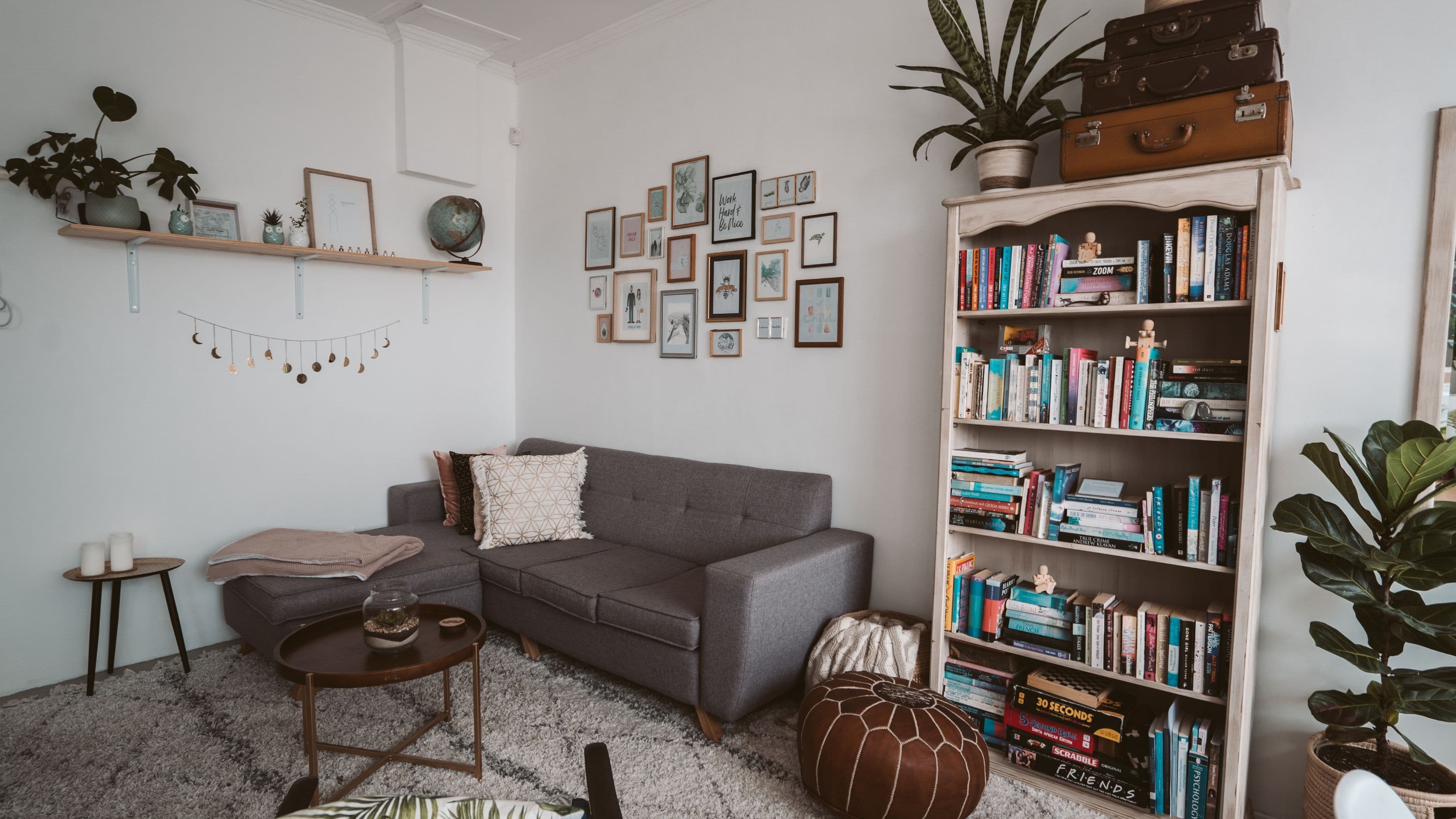
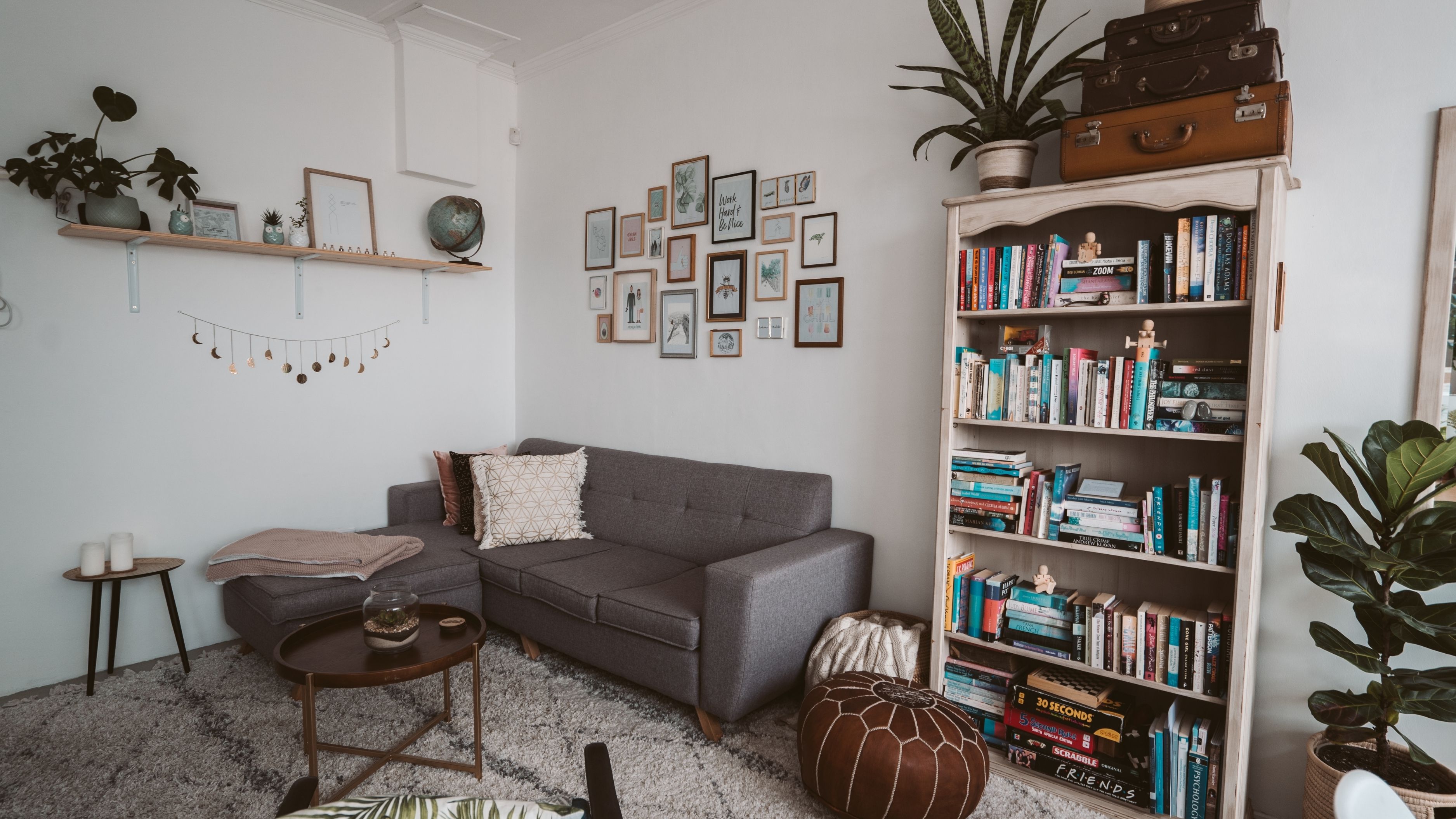
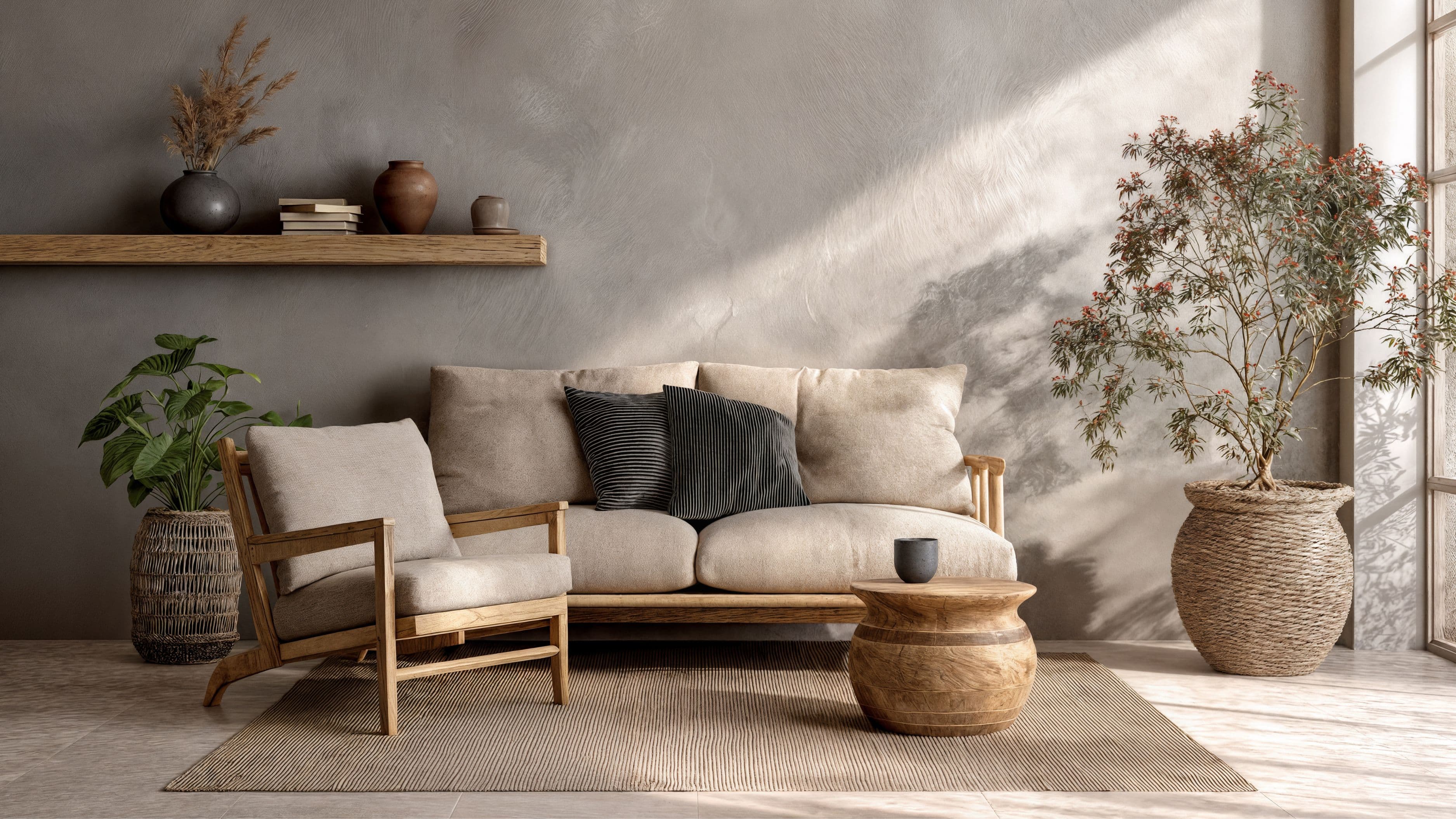
Look for furniture with a smaller footprint and visual lightness. A sofa with exposed legs, for example, lets you see the floor underneath, which makes the room read as more open than a bulky piece that sits flush to the ground – same seating, more breathing room. An apartment-sized or loveseat-scale sofa, slimmer-armed chairs, and a round or oval coffee table (which removes sharp corners from tight walkways) all help the space feel larger while still being fully functional.
Resist the urge to fill the room with many small pieces, which paradoxically makes it feel cluttered and busy. A few well-chosen, appropriately scaled items almost always beats a collection of little ones. Cost: medium to high depending on whether you're buying new (a quality apartment sofa often runs several hundred to over a thousand dollars). Time: varies with shopping. Impact: high – scale is where small rooms are won or lost.
Step 3: Make Every Piece Do Double Duty
This is where function and style truly meet. In a small living room, multi-functional furniture lets you keep everything you need without the room feeling packed, because each piece is quietly doing two jobs at once.
A storage ottoman works as a footrest, extra seating, and a hidden home for blankets and remotes. A coffee table or side table with drawers or shelves adds surface and storage in one footprint. A sofa bed or sleeper turns the living room into a guest room when needed. Nesting tables tuck away when unused and pull out when you have company. Even a slim console behind the sofa can hold storage and display without eating floor space.
The principle is simple: in a small room, prefer pieces that earn their footprint twice. This is what lets you stay organized and clutter-free, which matters even more for the feeling of space than the furniture itself. Cost: low to high depending on the piece (a storage ottoman can be quite affordable; a quality sleeper sofa is a bigger investment). Time: low. Impact: high for both function and the sense of openness.
Step 4: Use Vertical Space and Smart Storage
When floor space is limited, the walls are your best friend. Building upward keeps the floor clear – which is what makes a room feel open – while still giving you storage and display.
Floating shelves, tall narrow bookcases, and wall-mounted units draw the eye upward and add storage without consuming the footprint a wide, low cabinet would. Mounting the TV on the wall instead of using a bulky media console is one of the most effective space-savers in a small living room. The goal throughout is to keep the floor as clear as possible, since visible floor space is one of the strongest cues that a room feels larger than it is. Cost: low to medium (floating shelves are inexpensive; a wall-mount TV bracket is modest). Time: a few hours of DIY for most shelf and mount installs. Impact: medium to high.
A quick safety note: anchor tall bookcases and wall units to wall studs to prevent tipping, especially in homes with children or pets, and check that wall-mounted shelves and TV brackets are rated for the weight and fixed into studs or proper anchors. This is simple to do right and genuinely important.
Step 5: Style for the Illusion of Space
Once the function is handled, a handful of styling moves make the room look bigger and more finished – and they're mostly low-cost.
Light, cohesive colors on walls and large furniture reflect more light and create a more open feel than dark, heavy tones, though you can absolutely add personality through smaller accents. A well-placed mirror is one of the oldest and most effective tricks there is, bouncing light around and visually doubling the sense of space, especially opposite a window. Keeping window treatments simple and letting in natural light helps enormously, since bright rooms always feel larger. And a single larger rug that most of the seating sits on, rather than a tiny rug floating in the middle, actually makes the room feel bigger by defining one unified zone.
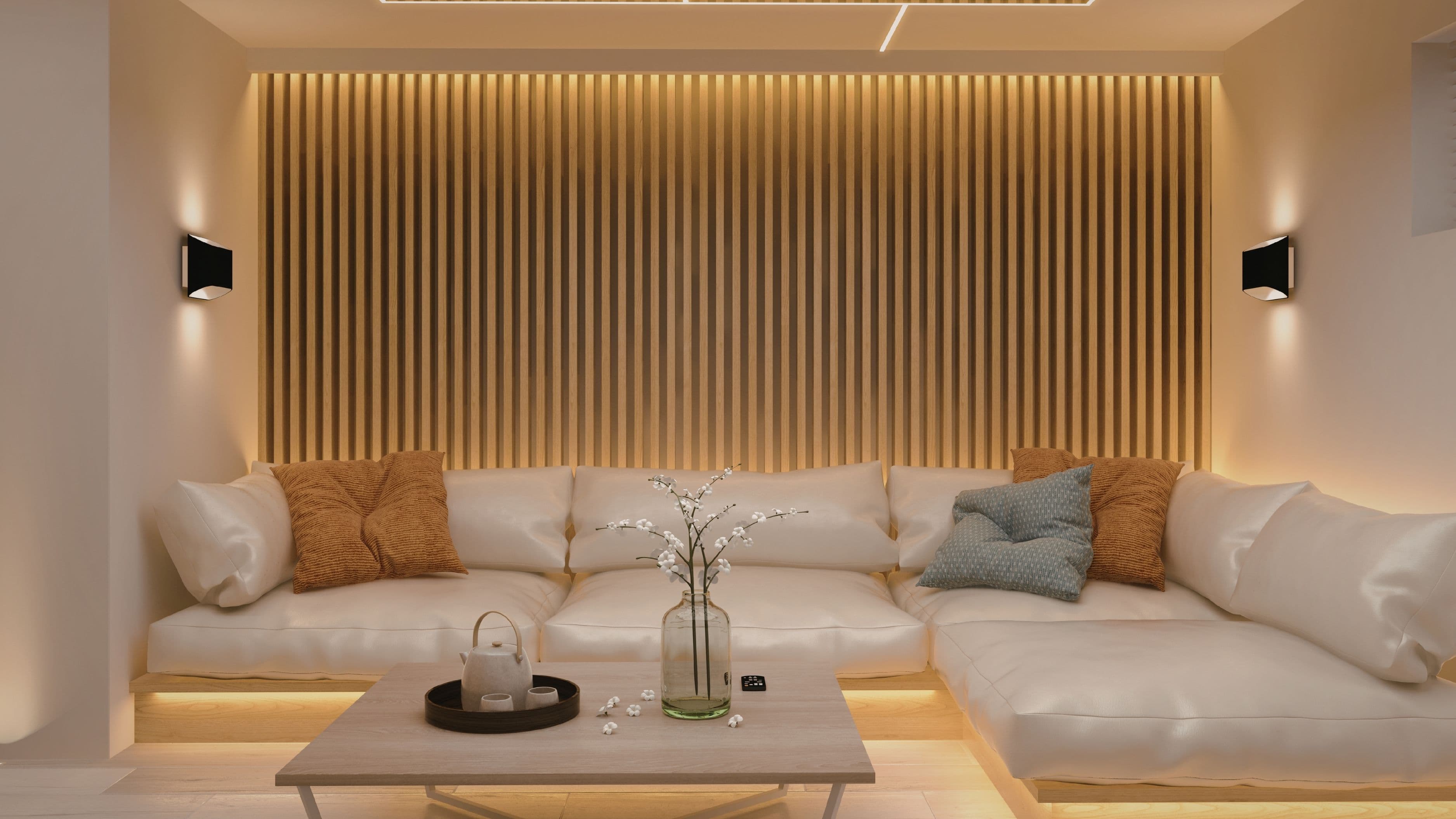
The styling layer is where personality comes in without sacrificing space: a few meaningful decor pieces, some greenery, and good lighting do far more than a room crammed with knickknacks. Cost: low to medium (paint, a mirror, a rug, and lamps are budget-friendly upgrades). Time: a weekend. Impact: medium to high on the look and feel.
What to Avoid
A few common mistakes quietly sabotage small living rooms, and steering around them is half the battle.
Avoid pushing all your furniture flat against the walls in the belief it opens up the center. It often makes the room feel like a hollow box, and a slight float of a piece or two can actually create better flow. Avoid oversized furniture bought for comfort alone – that enormous sectional may be cozy, but if it dominates the room and blocks walkways, it costs you more in livability than it gives in seating. Avoid clutter above all, since a small room shows mess far faster than a large one, which is exactly why the storage steps matter so much.
Be cautious about buying furniture without measuring both the room and the piece, including whether it'll fit through your doors and hallways – a surprisingly common and frustrating mistake. And avoid the trap of too many tiny decorative items; in a small space, a few intentional pieces always look more polished than many scattered ones.
FAQ
What's the most important first step for a small living room? Planning the layout before buying anything. Measure the room, map your walkways and focal point, and test arrangements with painter's tape on the floor. Layout determines whether the room flows or feels cramped, and getting it right first prevents costly furniture mistakes later.
How do I add storage without making the room feel smaller? Build upward and choose double-duty pieces. Floating shelves and tall narrow units use wall space instead of floor space, while storage ottomans and tables with drawers hide clutter inside furniture you already need. Keeping the floor clear is what preserves the sense of openness.
Do dark colors always make a small room look smaller? Not always, but light, cohesive colors generally make a small room feel more open because they reflect more light. If you love a darker, cozier look, you can still use it – just balance it with good lighting and keep clutter minimal, since the openness then comes from the layout and tidiness rather than the color.
Is a sectional a bad idea in a small living room? Not necessarily, but scale is everything. A compact apartment-sized sectional can work well and even maximize seating in a corner, while an oversized one will dominate and block flow. Measure carefully and prioritize a piece that leaves your walkways clear over one that simply seats the most people.
How much does it cost to restyle a small living room? It varies widely. A refresh using paint, a mirror, a rug, rearranged furniture, and some shelving can be done on a modest budget, while replacing major furniture like a quality sofa or sleeper pushes costs higher. The good news is that the highest-impact step – a smarter layout – costs almost nothing.
The Bottom Line
Styling a small living room is really about making deliberate choices, because in a tight space every piece has to pull its weight. Plan your layout first, choose furniture scaled to the room, lean on double-duty pieces and vertical storage to stay functional without clutter, then use light colors, a mirror, and good lighting to make it all feel open. You don't have to trade comfort and function for a room that looks good – done in this order, a small living room can deliver both, often on a surprisingly reasonable budget. Start with the painter's tape and the layout, and the rest gets much easier from there.
📚 Sources
U.S. Department of Energy – Tips for using daylighting and lighting to improve a space: https://www.energy.gov/energysaver/lighting-choices-save-you-money
Consumer Product Safety Commission – Anchor It! furniture tip-over prevention: https://www.anchorit.gov/
Better Homes & Gardens – Small living room layout and decorating ideas: https://www.bhg.com/rooms/living-room/makeovers/small-living-room-decorating-ideas/
This Old House – How to mount a TV on the wall safely: https://www.thisoldhouse.com/home-theater/21015027/how-to-mount-a-flat-screen-tv
HGTV – Small space decorating and multifunctional furniture tips: https://www.hgtv.com/design/decorating/design-101/small-space-decorating-tips
🔍 Explore Related Topics