


This guide covers what water sensors actually do, where they're worth placing, how they connect to the rest of your home, and whether the cost makes sense relative to the risk.
What Smart Water Sensors Are and How They Work
A smart water sensor is a small device – typically about the size of a hockey puck or a flat disc – that contains two electrical contact points on its base. When water bridges those contacts, the circuit completes and the sensor triggers an alert. Most send a notification to your phone through Wi-Fi or a hub connection within seconds of detecting moisture.
The technology itself is simple, which is part of why it's reliable. There are no moving parts, no complex calibration, and nothing to maintain beyond occasional battery replacement (most sensors run 1–3 years on a single battery set). Some higher-end models go further: they can measure temperature and humidity in addition to moisture, which helps detect pipe-freezing conditions before a burst happens, or sustained humidity levels that indicate a slow drip that hasn't pooled enough to trigger a contact sensor yet.
The more capable end of the market includes whole-home water monitoring systems that attach to your main supply line and use flow sensors to detect abnormal usage patterns – a toilet running continuously, water flowing for an extended period when no one is home, or a sudden pressure drop consistent with a burst pipe. These systems can automatically shut off your main water supply when a serious event is detected. That's a different product category from a simple contact sensor, and the cost and installation complexity reflect it.
Why It Matters: The Real Cost of Water Damage
The numbers make a compelling case on their own. According to the Insurance Information Institute, the average water damage claim costs homeowners around $11,000 – and that's the average, meaning many claims run significantly higher. Damage that reaches subfloor framing, insulation, or drywall requires remediation work that compounds quickly. A slow leak behind a washing machine that runs for two weeks can saturate the subfloor and require full replacement rather than a simple drying-out and paint job.
Homeowner's insurance covers sudden and accidental water damage in most policies, but not slow leaks that could have been detected and addressed sooner. That distinction matters. If a supply line bursts suddenly, you're generally covered. If an inspector determines that a drip has been ongoing for months and caused gradual damage, your claim may be denied or reduced on the grounds that the damage wasn't sudden or accidental. Smart sensors specifically protect you in the scenarios where insurance may not.
There's also the disruption factor that doesn't show up in dollar figures – weeks of contractor work, living with surfaces torn open, coordinating repairs while still inhabiting the space. Most homeowners who have dealt with significant water damage describe it as more disruptive than the financial cost alone suggests. Prevention at $20–$50 per sensor location is a straightforward trade.
Where to Place Them: The High-Priority Locations
Not every inch of your home carries equal risk. A few locations account for the large majority of water damage events in residential properties, and these are where sensors deliver the clearest return.
Under and behind washing machines is the single highest-priority location in most homes. Washing machine supply hoses are one of the most common failure points, and a burst hose can release water at the full pressure of your supply line – meaning a significant volume in a short time. Most failures happen when the machine is running and unattended. A sensor placed on the floor behind the machine catches any leak immediately. Cost: one sensor, $20–$40.
Under kitchen and bathroom sinks is the second most common source of water damage claims. Supply lines to faucets, drain connections, and garbage disposal seals all degrade over time. Sensors placed on the cabinet floor directly under the plumbing catch drips that would otherwise go unnoticed for weeks. In a home with multiple bathrooms, each sink cabinet is a candidate.
Near water heaters – both traditional tank heaters and tankless units have connection points that can fail, and tank heaters can also develop slow bottom corrosion that leaks before the unit fully fails. A sensor placed on the floor of the water heater closet or alcove catches early drips.
Under refrigerators with ice makers or water dispensers have supply lines that run behind and under the unit, out of sight and rarely checked. Ice maker line failures are a well-documented source of slow, sustained leaks that saturate kitchen flooring before discovery.
In basements or crawl spaces – any below-grade space in a home with plumbing, a sump pump, or ground-level water intrusion risk benefits from sensors. Multiple sensors spread across the floor can cover the space without requiring one at every possible point.
Near HVAC equipment – air handlers and condensate drain pans can overflow if the drain line becomes clogged, a common issue in high-humidity climates. A sensor in the drain pan catches this before it damages surrounding drywall or flooring.
Setup and Integration Basics
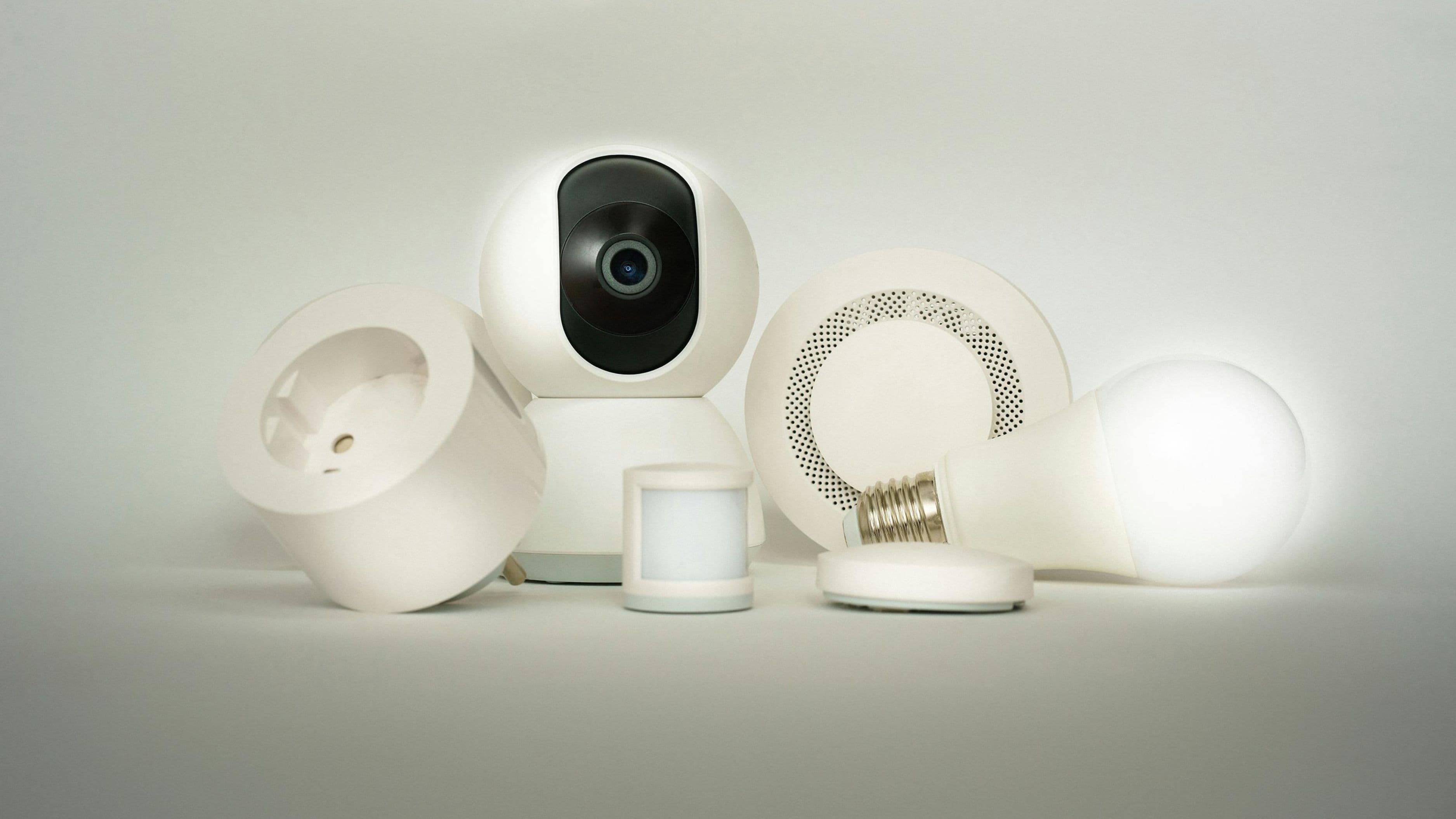
Most basic water sensors require nothing more than placing them, inserting batteries, and connecting them to an app. Wi-Fi-enabled sensors (Govee, Moen, and Wyze make accessible options) connect directly to your home network and send phone alerts. Zigbee-based sensors (Aqara, Samsung SmartThings) require a hub but integrate more deeply with smart home platforms and can trigger automations – like turning off a smart water valve or sounding a siren – when moisture is detected.
For most homeowners, a simple Wi-Fi sensor with phone notifications is sufficient. The notification itself is the intervention – you get the alert, you go investigate, you stop the source. No hub, no smart valve, no complex integration required to get meaningful protection.
If you want to go further, pairing sensors with a smart water shutoff valve installed on your main supply line creates an automated response to serious events. Brands like Moen Flo, Phyn, and Windy Nation make whole-home shutoff systems. These are more involved to install – typically a plumber-recommended installation – and cost $200–$600 for the valve system, but they provide protection when no one is home to respond to an alert. They're particularly worth considering for second homes, rental properties, or households where someone isn't always present.
Pros and Cons
What works well: Smart water sensors are among the lowest-cost, lowest-effort smart home upgrades available, and their core function – detecting moisture and sending an alert – is simple and reliable. Setup takes minutes. There's no subscription required for basic alert functionality on most models. Battery life is long. And the potential financial return from catching even a single leak before it becomes a claim is dramatically higher than the cost of the devices.
What to be realistic about: A basic contact sensor only detects water that has already pooled enough to reach the floor and bridge the contact points. A very slow drip into an enclosed space may evaporate before pooling if ventilation is adequate, meaning a sensor might not trigger even though moisture is present. Temperature and humidity sensors help here by detecting abnormal conditions before physical pooling occurs.
Phone alerts only work if someone receives them and can respond. If you're traveling and your phone is on do-not-disturb, an alert that goes unacknowledged for 12 hours doesn't prevent damage – it just provides earlier documentation. Paired automations (smart shutoff valves) or monitoring services that can escalate alerts address this, but add cost and complexity.
Integration with insurance is also worth investigating. Several major insurers offer discounts for homes with water detection systems – State Farm, Travelers, and others have documented programs – though the discount availability and amount varies by policy and location. Worth a phone call to your insurer before and after installation.
Real-World Use Case
A homeowner in a midwestern climate installs five sensors: one behind the washing machine, one under each of two bathroom sinks, one under the kitchen sink, and one near the water heater. Total hardware cost: approximately $120–$180 depending on brand. Installation time: 20–30 minutes, no tools required beyond inserting batteries and downloading an app.
Six months later, a slow drip develops at the supply connection under the master bathroom sink – a fitting that loosened over time. The sensor triggers a notification at 2am. The homeowner turns off the sink supply valve the next morning before the cabinet's particle board floor has absorbed enough moisture to require replacement. A plumber tightens the fitting for $80. No insurance claim, no cabinet replacement, no mold remediation.
That's the scenario these sensors are built for, and it happens more often than most homeowners expect.
Common Mistakes to Avoid
Placing sensors in locations they can't reach is a surprisingly common issue. A sensor placed on a high shelf "near" a water heater isn't going to catch a floor-level leak. Sensors need to be on or very close to the floor at the lowest point where water would pool in the event of a drip. Test placement by imagining where water would physically travel if the nearby source started leaking.
Ignoring low-battery warnings is another avoidable failure. Most sensors send a low-battery notification through the app weeks before the battery actually dies. Replacing the batteries when prompted – rather than dismissing the notification and forgetting – keeps the system functional. A dead-battery sensor sitting silently on the floor provides no protection at all.
Relying solely on phone notifications without a backup plan for when you're unreachable is a gap worth addressing. If you travel regularly or spend time in areas with poor reception, pairing sensors with a hub that can trigger a local alarm siren, or with a monitoring service, closes the loop.
FAQ
Do smart water sensors require a subscription to function? Basic alert functionality on most Wi-Fi-enabled sensors (Govee, Wyze, Moen Smart Water Detector) requires no subscription. Some brands offer premium features – extended alert history, monitoring services, or advanced automations – behind a subscription, but the core detection and notification function is typically free.
Can I install a whole-home water shutoff system myself? Some models are designed for DIY installation and connect inline at an accessible point on the supply line without cutting pipe. Others require soldering or press-fit connections that are better handled by a plumber. Check the specific model's installation requirements before purchasing. Most manufacturers recommend professional installation for peace of mind, but capable DIYers with basic plumbing experience handle these installs routinely.
Will my homeowner's insurance discount cover the cost of the sensors? Discount amounts vary significantly by insurer and policy. Some programs offer 5–15% discounts on the water damage portion of your premium. On an annual premium of $1,500, that might translate to $30–$75 in savings per year – meaningful over time but unlikely to recoup sensor cost in year one. The protection value is the primary case; the discount is supplementary.
How many sensors do I actually need? For a typical two-bathroom home with a kitchen, laundry room, and water heater, five to eight sensors covers the highest-risk locations. You don't need to cover every possible water source – focus on the locations where supply lines and drain connections exist behind closed cabinet doors or in spaces you don't regularly inspect.
What happens if a sensor triggers a false alarm? False alarms are rare on contact sensors – they require actual water to trigger. High humidity alone won't trigger a contact sensor (though humidity sensors can be set to alert at thresholds you define). If you receive an alert, it's almost always worth investigating even if you don't find an obvious source immediately.
📚 Sources
Insurance Information Institute – Homeowners Insurance Claims Statistics and Water Damage: https://www.iii.org/fact-statistic/facts-statistics-homeowners-and-renters-insurance
US Environmental Protection Agency – Water Sense: Indoor Water Use in the United States: https://www.epa.gov/watersense/how-we-use-water
This Old House – How to Prevent Water Damage at Home: https://www.thisoldhouse.com/plumbing/21017616/how-to-prevent-water-damage
State Farm – Water Damage Prevention Tips for Homeowners: https://www.statefarm.com/simple-insights/residence/tips-to-prevent-water-damage-in-your-home
Moen – Smart Water Security System Overview: https://www.moen.com/smart-home/flo-by-moen
Family Handyman – Where to Place Water Leak Detectors in Your Home: https://www.familyhandyman.com/article/where-to-place-water-leak-detectors/