
This comparison cuts through the marketing and gives you what you actually need to make the right call: how each material works, where each performs best, and which one makes sense for your specific project.
How Each Type Works
Understanding the basic mechanism of each product helps explain why they perform differently in different situations.
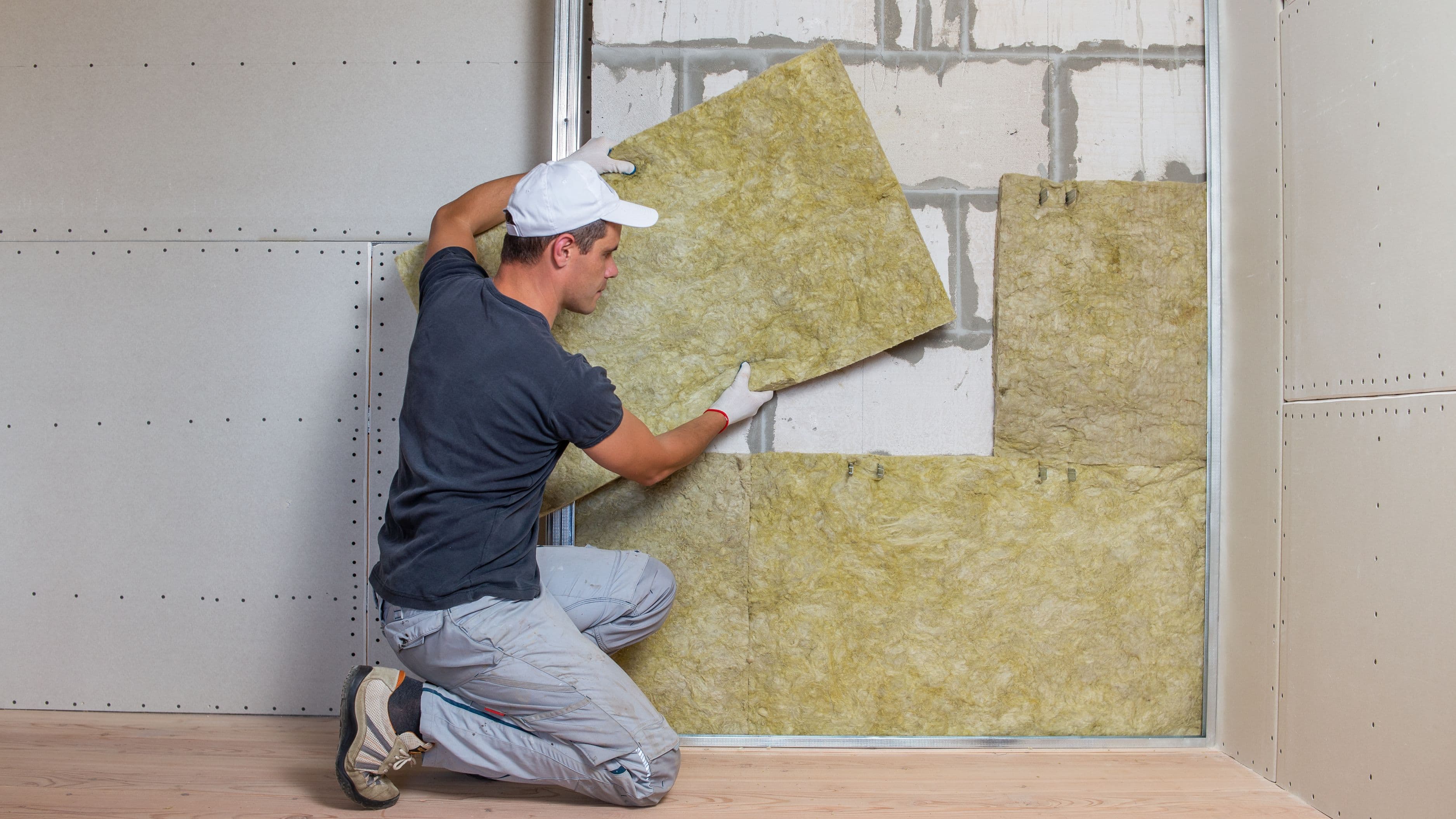
Batt insulation – available in fiberglass, mineral wool (rock wool), and cotton – comes in pre-cut panels or rolls sized to fit standard stud bays (16-inch or 24-inch on center). It works by trapping air within its fibrous structure, slowing the transfer of heat. Fiberglass batts are the most common and least expensive option. Mineral wool batts are denser, more fire-resistant, and better at blocking sound, but cost roughly 30–50% more. Neither type seals against air movement on its own – they slow conductive heat transfer but don't create an air barrier without additional materials like house wrap or a vapor barrier.
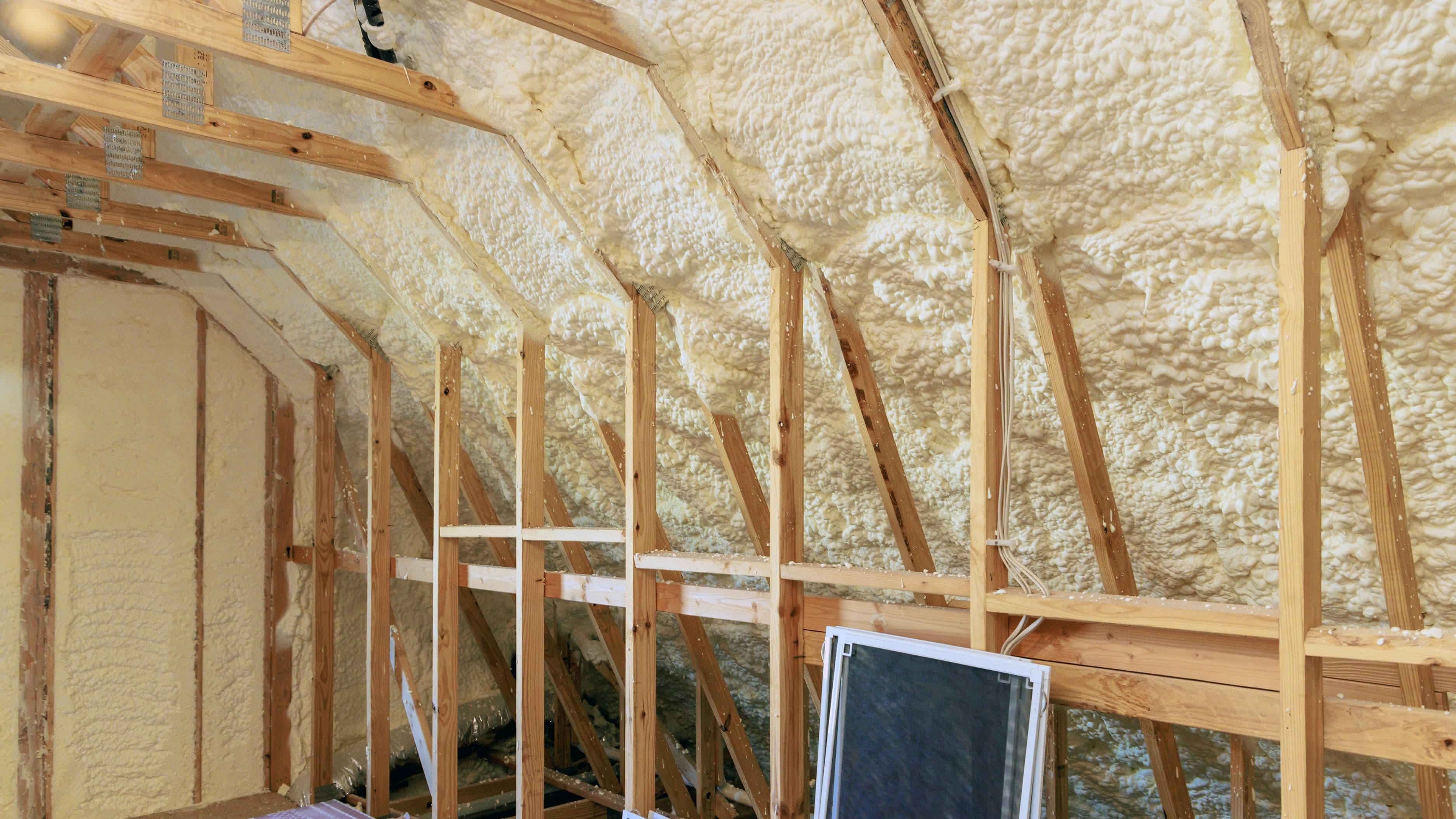
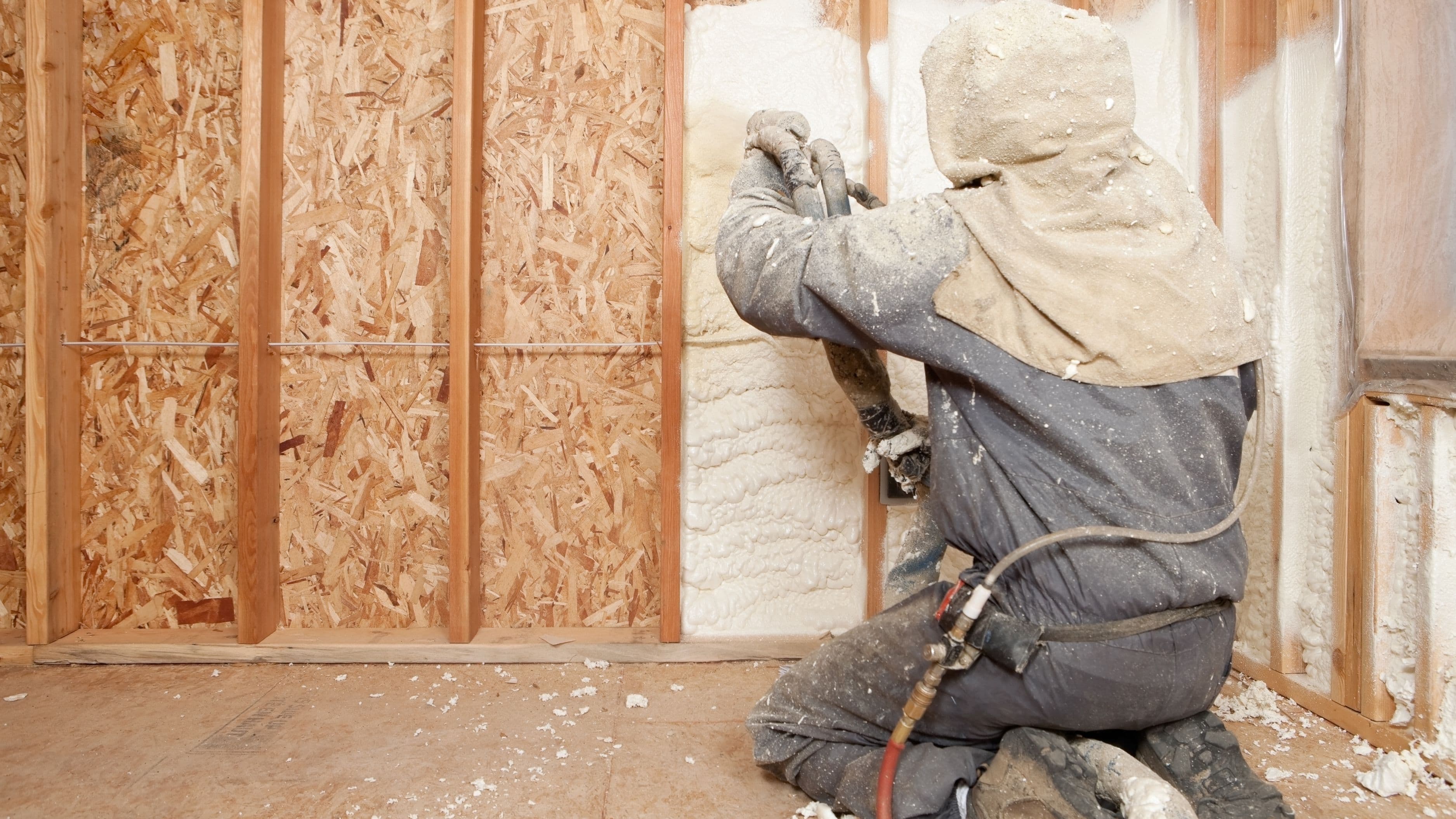
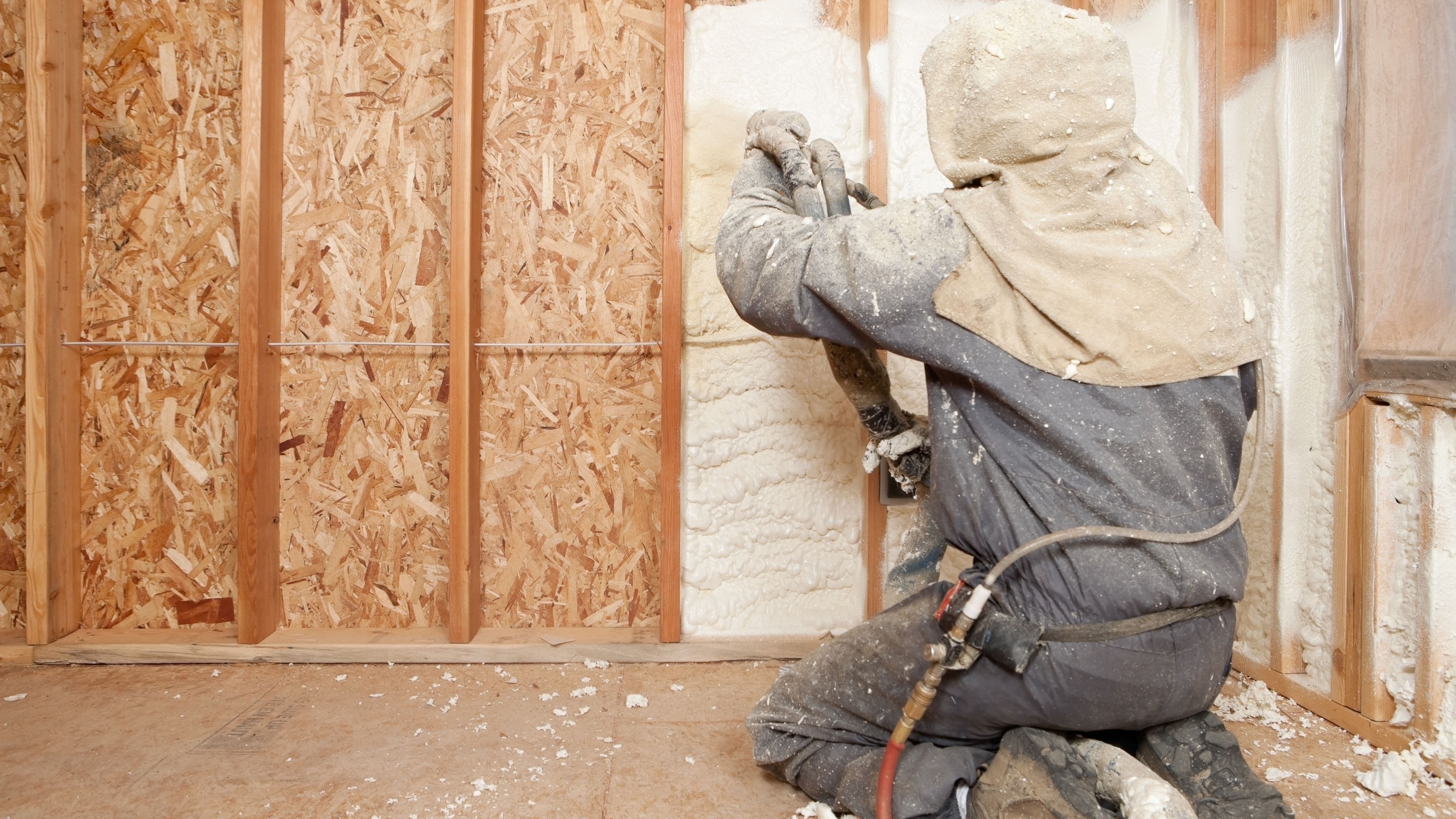
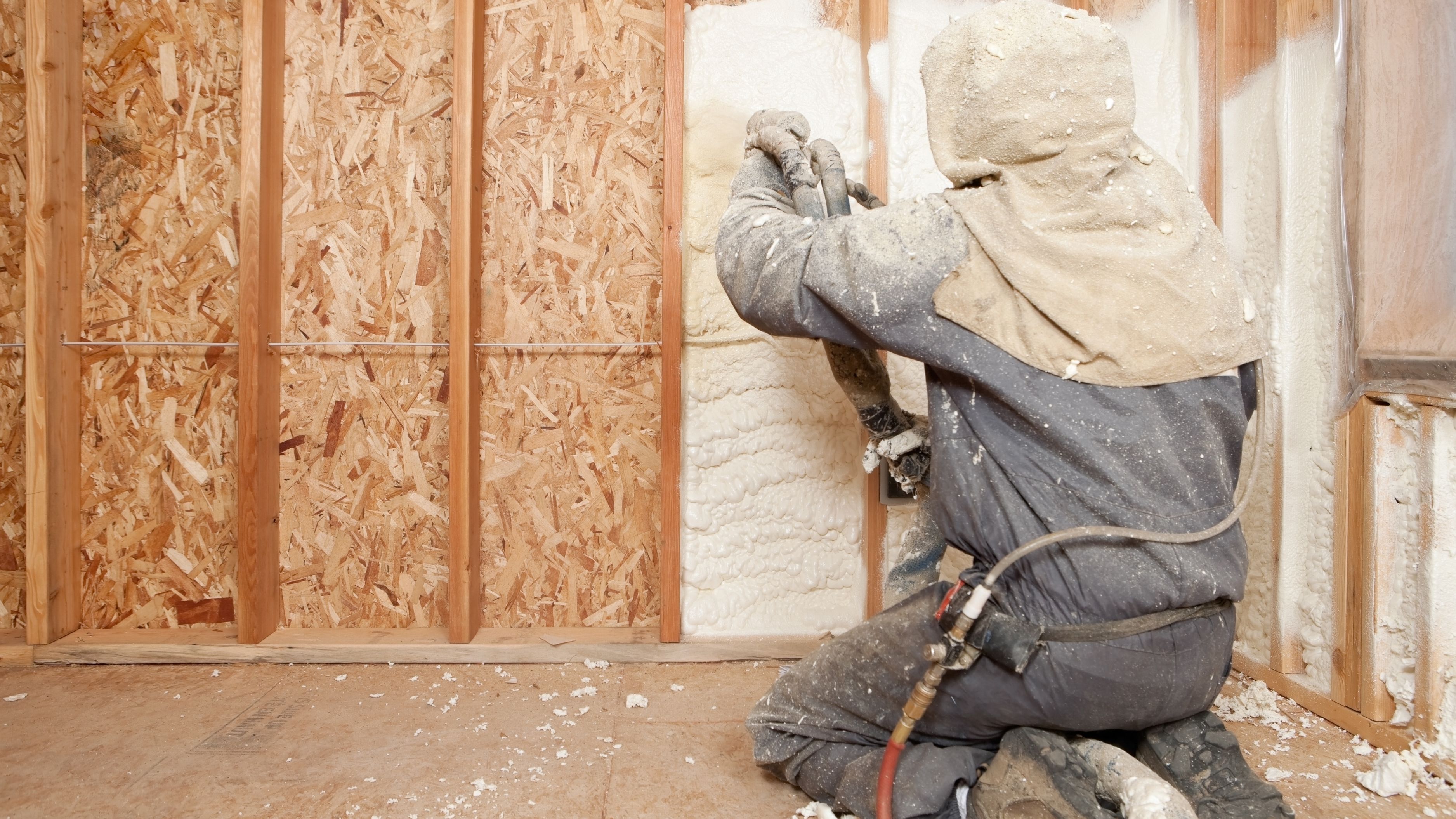
Spray polyurethane foam (SPF) is applied as a liquid that expands on contact and cures into a rigid or semi-rigid foam. It comes in two distinct types. Open-cell spray foam expands to a softer, spongy consistency and has an R-value of around R-3.5 to R-3.7 per inch. Closed-cell spray foam expands to a rigid, dense material with an R-value of R-6 to R-7 per inch – nearly double the performance per inch of thickness – and also creates a vapor barrier. Both types bond to surfaces as they cure and seal gaps, cracks, and penetrations in the process. This air-sealing property is what fundamentally distinguishes spray foam from batt insulation in wall applications.
R-Value Comparison
R-value is the standard measure of thermal resistance. Higher R-value means better insulation performance per inch of thickness.
For a standard 2x4 exterior wall with 3.5 inches of usable cavity depth:
Fiberglass batt (standard): R-11 to R-15, depending on density and type. Mineral wool batt: R-15 to R-16. Open-cell spray foam (full cavity fill): approximately R-12 to R-13. Closed-cell spray foam (full cavity fill): approximately R-21 to R-24.
Closed-cell foam wins on R-value in a 2x4 wall by a significant margin. But R-value alone doesn't tell the full performance story. A high-R-value batt with air gaps around it, or with improperly sealed edges, can perform significantly worse in practice than its rated value suggests. This is one of the key differences in real-world performance between batt and spray foam.
The Air Sealing Factor
This is where the comparison gets genuinely interesting, and where spray foam's performance advantage is most pronounced.
Building science research – including work published by the Department of Energy's Building America program – consistently shows that air infiltration accounts for 25–40% of heating and cooling losses in typical homes. In other words, a significant portion of your energy bill isn't just about how well your insulation material conducts heat – it's about how much conditioned air leaks through gaps, holes, and poorly sealed cavities.
Batt insulation does not air-seal on its own. When installed in a wall cavity, batts fill the space between studs but leave gaps around electrical boxes, plumbing penetrations, and anywhere the batt doesn't perfectly conform to the framing. Standard fiberglass batts are also somewhat air-permeable – air can move through the material itself, particularly at higher pressure differentials. Achieving true air sealing with batt insulation requires additional materials: caulk around every penetration, foam sealant at framing gaps, and a separate air barrier layer (house wrap, rigid foam board, or taped OSB sheathing). Done correctly, this approach can perform very well; done sloppily, air leakage undermines the batt's rated R-value significantly.
Spray foam air-seals as it cures. It expands to fill gaps, bonds to framing, and eliminates the pathways through which air moves. A wall cavity filled with spray foam – closed or open-cell – has dramatically less air infiltration than the same cavity filled with batts, even when those batts are carefully installed. In climates where heating and cooling loads are high, this translates to meaningfully lower energy bills.
Cost Comparison
This is where batt insulation wins decisively for most projects.
Fiberglass batt insulation: $0.30–$0.75 per square foot of wall area for materials. DIY-installable. Professional installation adds $0.50–$1.00 per square foot in labor. Total for a 2x4 exterior wall: $0.80–$1.75 per square foot installed.
Mineral wool batt insulation: $0.80–$1.50 per square foot for materials. Also DIY-installable. Installed cost: $1.30–$2.50 per square foot.
Open-cell spray foam: $0.75–$1.25 per board foot (one board foot = one square foot, one inch thick). A full 3.5-inch fill in a 2x4 wall = 3.5 board feet per square foot of wall area. Installed cost: $2.60–$4.40 per square foot of wall area. Requires professional application.
Closed-cell spray foam: $1.50–$3.00 per board foot. At 3.5 inches, installed cost: $5.25–$10.50 per square foot of wall area. Requires professional application.
For a 1,500 square foot home with approximately 600 square feet of exterior wall cavity to fill, the cost difference is stark. Fiberglass batt:
$480–$1,050. Closed-cell spray foam: $3,150–$6,300. The performance advantage of closed-cell spray foam is real – but at 3–6x the cost of batt installation, payback periods are long. In most climates, the energy savings from closed-cell foam over batt insulation don't recoup the cost difference within a typical homeownership timeline.
Where Each Wins: Project-by-Project Breakdown
New construction or open-wall renovation (existing walls removed): Either option is viable. If budget allows and the climate is extreme (very cold, very hot, or highly humid), closed-cell foam delivers superior performance. For budget-conscious projects in moderate climates, carefully installed mineral wool or high-density fiberglass batts with proper air sealing is a cost-effective choice that performs well. Many high-performance builders use a hybrid approach: spray foam on the bottom plate, top plate, and around all penetrations (where air leakage is highest), then batt insulation in the field of the cavity – getting most of the air-sealing benefit at a fraction of the all-foam cost.
Closed-wall retrofit (walls already finished): Both spray foam and batt insulation can be installed by drilling holes in the exterior or interior sheathing and injecting material into the cavity. Dense-pack cellulose or open-cell foam are commonly used for this application. Batt insulation cannot be retrofitted into closed walls – it requires an open cavity for installation.
Basement walls: Closed-cell foam is the preferred choice here for most climates. Basement walls are in contact with the ground, where moisture and vapor pressure are significant concerns. Closed-cell foam acts as both insulation and vapor barrier, preventing moisture migration into the wall assembly. In basements, the moisture-management advantage of closed-cell foam justifies the higher cost more readily than in above-grade wall assemblies.
Crawl spaces: Same logic as basements – closed-cell foam on the foundation walls and rim joists is a strong choice for moisture control.
Rim joists: This is one of the highest-value spray foam applications in an existing home. Rim joists – the framing that sits on top of the foundation wall – are a major air leakage point and difficult to insulate effectively with batt material because of the irregular gaps and framing members. A 2-inch application of closed-cell spray foam to rim joists delivers meaningful performance improvement at modest cost, because the total area is small and the per-square-foot cost is more manageable.
Interior walls (sound control): Mineral wool batt is typically the better choice for interior partition walls where sound attenuation is the goal. It has superior sound-dampening characteristics to fiberglass batt and costs far less than spray foam for an application where moisture control and high R-value aren't the primary drivers.
Environmental Considerations
Neither option is without environmental trade-offs.
Fiberglass batts contain recycled glass content (typically 20–30%) and are recyclable in principle, though most are not recycled in practice. They have a relatively low embodied energy compared to foam products.
Spray polyurethane foam – particularly closed-cell – uses blowing agents that have historically been potent greenhouse gases. The industry has been transitioning away from hydrofluorocarbon (HFC) blowing agents to lower-global-warming-potential alternatives, but this transition is ongoing and product-specific. If environmental impact is a priority, asking your spray foam contractor specifically about the blowing agent used and its global warming potential is a reasonable due diligence step.
Mineral wool batts have strong environmental credentials – they're made primarily from volcanic rock or recycled slag, are durable, and don't off-gas. For homeowners prioritizing sustainability, mineral wool batt is among the more defensible insulation choices.
Common Mistakes to Avoid
Choosing spray foam for the whole house based on R-value alone. The R-value advantage is real, but payback timelines are long. Spray foam makes the most financial sense in high-leakage areas (rim joists, around penetrations, basement walls) and in climates with extreme heating or cooling demand.
Installing fiberglass batts without addressing air sealing. Batt insulation installed in a wall with unsealed penetrations and poorly fitted edges will underperform its rating. If you choose batts, budget for caulk, foam sealant, and a proper air barrier layer – the cost is low and the performance impact is significant.
Using open-cell foam in below-grade applications. Open-cell foam is vapor-permeable, which is fine above grade but problematic in basements and crawl spaces where moisture vapor pressure is high. Always use closed-cell foam in below-grade or high-moisture applications.
Skipping the hybrid approach. In many renovations, the right answer isn't all-batt or all-foam – it's foam where air leakage is highest (plates, penetrations, corners, rim joists) and batt in the main cavity. This hybrid approach captures most of the performance benefit of spray foam at a fraction of the cost.
The Bottom Line
For most above-grade wall insulation projects where walls are open, carefully installed mineral wool batt insulation with proper air sealing delivers strong performance at a cost that makes financial sense. If your climate is extreme, if you're insulating below grade, or if air sealing is the top priority and budget is flexible, closed-cell spray foam justifies its premium. The hybrid approach – spray foam at the critical leak points, batt in the field – is often the most practical compromise and is increasingly standard practice in high-performance construction.
Don't choose based on brand marketing or a single metric. Choose based on climate, wall location, budget, and whether you'll be doing the work yourself or hiring it out.
FAQ
Can I install spray foam myself? Two-component spray foam kits for DIY use are available and suitable for small applications – sealing penetrations, filling gaps, spot insulating rim joists. Full wall cavity spray foam requires professional equipment and expertise; the chemical mixing ratios, temperature requirements, and safety protocols make it impractical for DIY full-wall application. Batt insulation is fully DIY-appropriate.
Does spray foam ever need to be removed? Spray foam is permanent and extremely difficult to remove once cured. This has implications for future renovations – if you need to access wiring, plumbing, or structural framing in a spray-foamed wall, it requires cutting or chipping the foam out. This isn't a reason to avoid it where appropriate, but it's worth factoring into decision-making for walls you might need to access in the future.
Does spray foam off-gas after installation? Yes, during and immediately after application – this is why professional installers use respirators and vacate the space during application. After the manufacturer's specified curing time (typically 24–72 hours), properly installed spray foam is considered safe. If you have chemical sensitivities, discuss off-gassing timelines with your contractor and plan to be out of the space during and after installation.
Is there an energy efficiency tax credit for insulation? Under the federal Inflation Reduction Act's Energy Efficient Home Improvement Credit (Section 25C), homeowners can claim a credit of up to 30% on qualifying insulation improvements, capped at $1,200 per year. Both spray foam and batt insulation may qualify if they meet the IECC performance standards for your climate zone. Consult a tax professional or the IRS guidelines for current eligibility details.
Which insulation is better for soundproofing? Mineral wool batt insulation is generally the best choice for interior sound control. It has a higher density than fiberglass and absorbs sound more effectively across a range of frequencies. Spray foam is not particularly effective at sound attenuation – its air-sealing properties reduce sound transmission through gaps, but the foam material itself is not a good sound absorber. For dedicated soundproofing applications, mineral wool in combination with resilient channels and acoustic sealant is the standard approach.
📚 Sources
U.S. Department of Energy – Insulation Types and R-Values: https://www.energy.gov/energysaver/insulation
Building America Solution Center – Air Sealing and Insulation Best Practices: https://basc.pnnl.gov/information-resources/guides/air-sealing-your-home
Oak Ridge National Laboratory – Thermal Performance of Building Envelope Systems: https://www.ornl.gov/division/btric/us-doe-funded-research/building-envelope-research
IRS – Energy Efficient Home Improvement Credit (Section 25C): https://www.irs.gov/credits-deductions/energy-efficient-home-improvement-credit
North American Insulation Manufacturers Association – Insulation Facts: https://www.naima.org/insulation-knowledge-base/